

Table of Contents
- Why Clay Soil Causes Driveways to Sink
- Driveway Drainage Solutions for Clay Soil
- Installing a Geotextile Membrane for Driveways
- Resin Bound Driveways: A Long-Term Solution for Clay
Last Updated: August 30, 2026
Why Clay Soil Causes Driveways to Sink
Clay soil is the primary culprit behind driveway subsidence. Unlike sandy or well-draining soils, clay expands when wet and contracts when dry, creating a cycle of movement that destabilises the surface above it. This shifting foundation makes driveways vulnerable to cracking, sinking, and uneven surfaces that worsen over time.
The problem intensifies during heavy rainfall or extended wet periods, common in Norfolk and surrounding regions. Water saturates the clay, increasing its volume and pressure beneath the driveway. As water drains away, the clay shrinks, leaving voids that cause uneven settlement. Homeowners often notice subtle dips or pronounced low spots where water pools after rain.
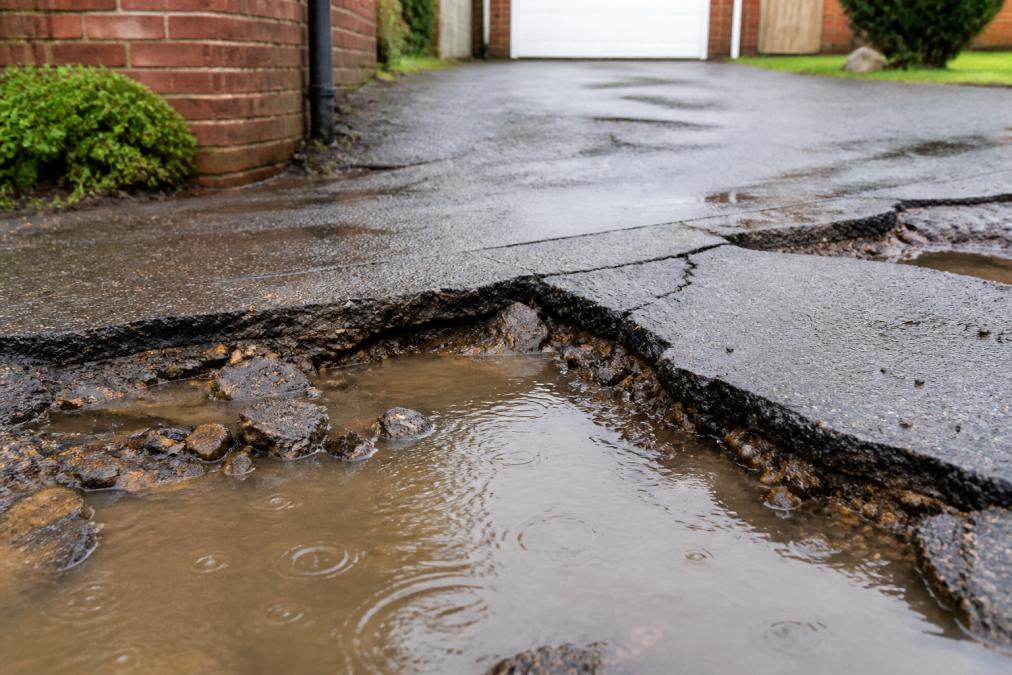
Understanding this mechanism is essential because it shapes every prevention strategy. The goal isn’t to stop clay from moving, that’s impossible, but to control how much movement occurs and protect the driveway structure through proper drainage, reinforcement, and material selection.
Driveway Drainage Solutions for Clay Soil
Effective drainage is the cornerstone of preventing driveway sinking on clay soil. Water management directly reduces the expansion and contraction cycles that destabilise the surface.
Surface drainage involves sloping the driveway so water runs off rather than pooling. A gentle gradient, typically 1 in 40 to 1 in 50, directs water away from low spots and toward drainage channels. Subsurface drainage tackles water trapped beneath the driveway through a perforated drainage pipe installed along the driveway’s perimeter, with gravel acting as a filter to allow water flow whilst preventing soil clogging. French drains offer another solution for properties with persistent water issues, redirecting water away from the driveway entirely.
Installing a Geotextile Membrane for Driveways
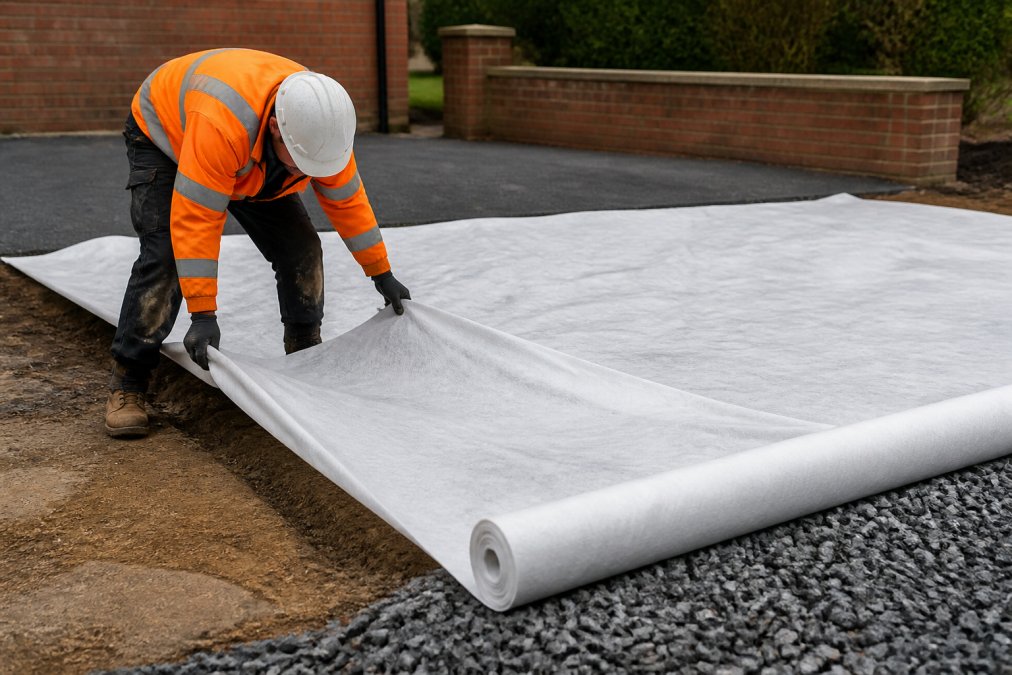
A geotextile membrane acts as a separation layer between clay soil and the driveway structure, preventing direct contact and distributing loads more evenly. This fabric reinforcement stabilises the sub-base and reduces the impact of clay movement by holding aggregate particles in place whilst slowing water infiltration into the clay layer below.
Installation requires levelling and compacting the clay surface before laying the membrane. The geotextile is unrolled across the entire base area with overlaps of at least 300mm to ensure complete coverage. A layer of aggregate, typically 100-150mm of Type 1 material, is spread over the membrane to distribute weight and provide drainage. Professional installers ensure the membrane is properly tensioned and free from wrinkles, which could create weak points.
Resin Bound Driveways: A Long-Term Solution for Clay
Resin bound driveways represent a modern, durable solution for preventing driveway sinking on clay soil. Unlike traditional asphalt or concrete, resin bound surfaces are flexible and can tolerate minor ground movement without cracking.
Resin bound driveways consist of aggregate stones bound together with polyurethane or epoxy resin, creating a permeable surface that allows water to drain through rather than pooling. The permeability reduces water pressure on the clay beneath, minimising expansion and contraction cycles. Installation requires a properly prepared sub-base with geotextile reinforcement and effective drainage before the resin bound layer is applied, creating a seamless finish that performs exceptionally well on unstable soils.
Resin bound driveways also offer aesthetic benefits, available in many colours and finishes whilst solving subsidence problems. KT Lake Paving and Landscaping specialises in resin bound driveways for properties across Norfolk, with expertise in managing challenging clay soil conditions through proper drainage design, geotextile reinforcement, and high-quality resin installation.
Driveway subsidence on clay soil isn’t inevitable, it’s preventable with the right approach. Proper drainage, geotextile reinforcement, and quality installation create a durable foundation that withstands clay soil movement. KT Lake Paving and Landscaping offers free, no-obligation consultations to assess your property’s specific needs and recommend the best solution for your soil conditions and budget. Contact the team for expert advice on preventing driveway sinking and enhancing your property’s long-term value.
Frequently Asked Questions
Why does clay soil cause driveways to sink?
Clay soil expands when wet and contracts when dry, creating movement beneath your driveway. This constant shifting weakens the sub-base and causes the surface to settle unevenly. Poor drainage on clay compounds the problem, as water saturates the soil and reduces its load-bearing capacity.
What is the best sub-base for a driveway on clay soil?
A robust sub-base on clay requires at least 150mm of well-compacted Type 1 or Type 3 aggregate, combined with a geotextile membrane to separate the aggregate from the clay beneath. The membrane prevents soil migration while allowing drainage. Proper compaction in 50mm layers is essential to achieve stability. Many professionals also recommend adding a drainage layer to manage water movement and protect the sub-base from saturation.
Can resin bound driveways be installed on clay soil?
Yes, resin bound driveways can be installed on clay soil when the sub-base is prepared correctly with geotextile membranes and proper drainage solutions. The flexible nature of resin bound surfaces helps accommodate minor ground movement better than rigid alternatives. However, the foundation work is critical; without it, even a quality resin surface will fail. Professional installation following British Standards ensures the sub-base can support the resin layer long-term.


