
Table of Contents
- Why Driveway Sub-Base Depth Matters
- Recommended Sub-Base Depth for Driveways UK
- Signs of Driveway Sub-Base Failure
- Resin Bound Driveway Base Preparation and Drainage Requirements
- Frequently Asked Questions
Last Updated: August 31, 2026
Why Driveway Sub-Base Depth Matters
A driveway’s foundation determines its longevity. Without adequate support beneath the surface, even the finest asphalt or resin bound material will fail within years. The sub-base is the critical layer that prevents movement, manages water, and distributes vehicle weight across the soil below.
Poor sub-base preparation is the single largest cause of premature driveway failure (peer-reviewed research). Cracks, sinking, and surface deterioration almost always trace back to foundations that were either too shallow or inadequately compacted. At KT Lake Paving and Landscaping, we’ve spent over 30 years installing driveways in Norfolk, and the difference between a driveway lasting 20 years and one failing in five often comes down to millimetres of sub-base depth and compaction quality.
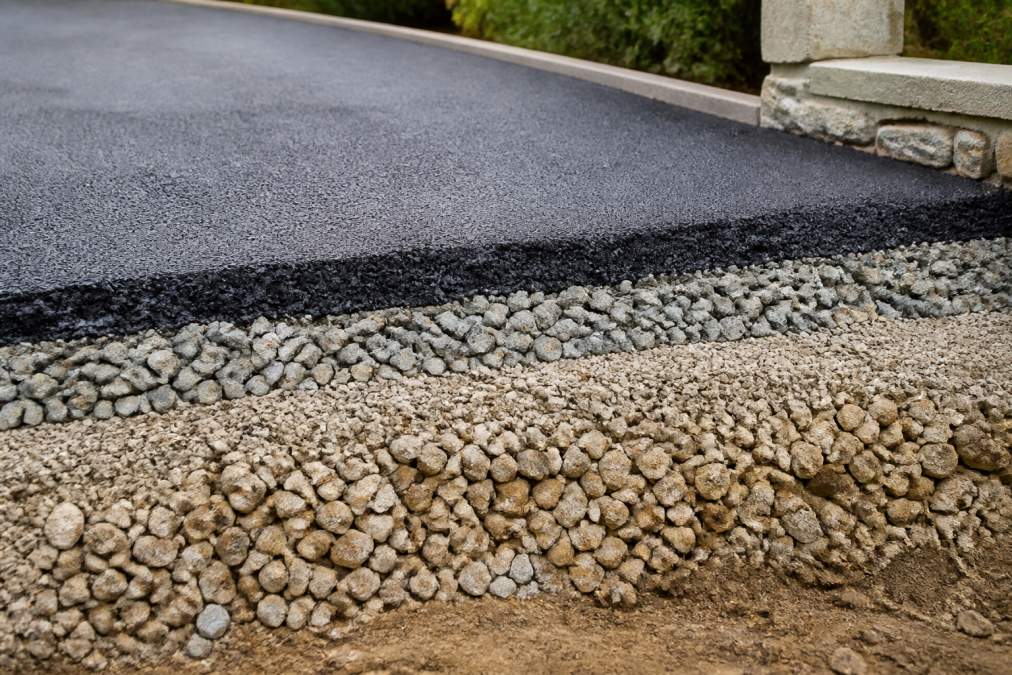
The sub-base absorbs and disperses vehicle loads, spreading weight across a wider area to keep the surface stable. Proper depth prevents uneven compression and soft spots that eventually crack and sink. Water management is equally critical, moisture trapped beneath a driveway accelerates deterioration and frost damage. The sub-base allows water to drain away rather than pooling under the surface.
Recommended Sub-Base Depth for Driveways UK
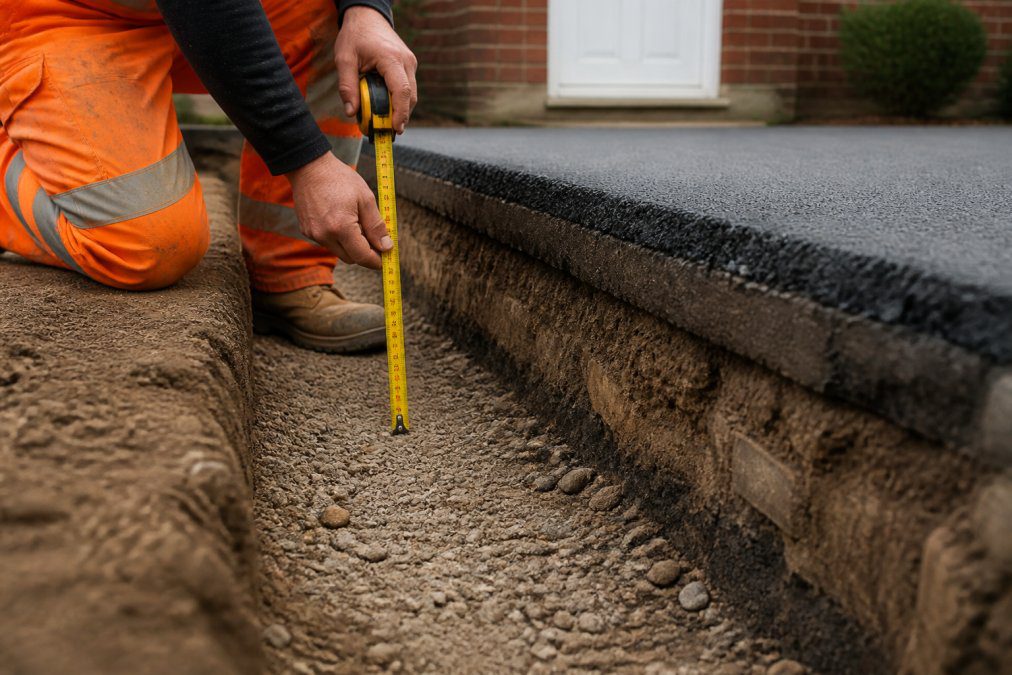
For residential driveways in Norfolk carrying standard family vehicles, 100-150mm of sub-base is typical (gov.uk). Heavier use with delivery vehicles or multiple heavy cars requires 150-200mm to handle concentrated loads without accelerating wear.
Soil conditions matter significantly. Clay and silt soils are weaker than gravel or sandy soils, often requiring deeper sub-bases. A site survey before installation reveals actual soil type and bearing capacity, informing the final specification.
Frost heave is a specific UK concern. In colder winters, water in the sub-base can freeze and expand, pushing the surface upward (bgs.ac.uk). Adequate depth and proper drainage reduce this risk. Professional installers assess the specific site and specify accordingly, matching sub-base depth to actual conditions rather than applying a one-size-fits-all rule.
Signs of Driveway Sub-Base Failure
Alligator cracking, a pattern of interconnected cracks resembling crocodile skin, indicates uneven settlement caused by a failing sub-base. The surface breaks because the support beneath has become unstable or is settling unevenly.
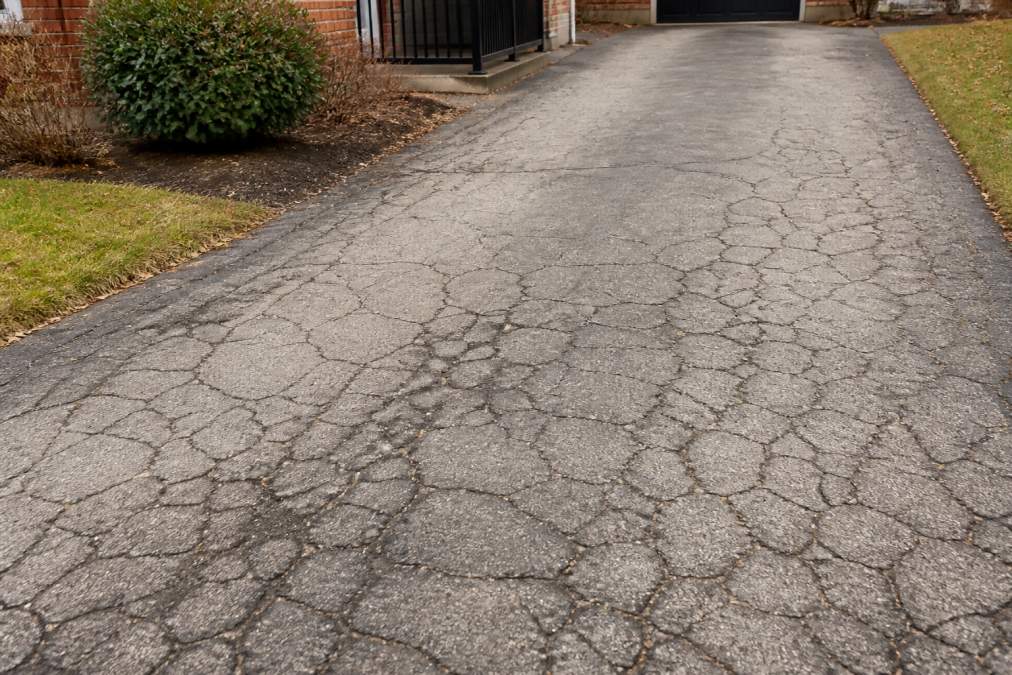
Sinking or heaving creates visible depressions or raised areas. Potholes and spalling develop where the surface has lost support entirely. Repairing the surface without addressing the sub-base is temporary, the hole returns within months. Drainage problems visible at driveway edges indicate sub-base failure, as water pooling or seeping from beneath the surface means water is trapped in foundation layers, accelerating deterioration. These failures are expensive to repair because they require removing the failed surface, excavating the damaged sub-base, and rebuilding the entire structure to proper depth and compaction standards.
Resin Bound Driveway Base Preparation and Drainage Requirements
Resin bound surfaces require more precise base preparation than conventional asphalt. The resin itself is thin, typically 6-8mm, so any movement or settlement in the sub-base telegraphs directly to the surface.
The sub-base for a resin bound driveway must be compacted to 95% of maximum density. A typical specification includes a 150mm compacted sub-base layer, followed by a 50mm levelling course of smaller stone, then the resin layer applied to a dust-free surface.
Drainage requirements are particularly demanding. Excess moisture beneath the surface causes the resin to fail prematurely and can create bubbling or delamination. The sub-base must allow water to drain freely, either through a permeable sub-base layer or via a drainage system installed at the edges. Permeable resin bound surfaces are increasingly common in Norfolk because they meet drainage requirements and reduce surface water runoff. Poor drainage is a leading cause of resin bound driveway failure, as water trapped beneath the surface weakens the bond between resin and base, leading to cracking and surface failure.
Understanding sub-base depth transforms how you approach driveway installation or repair. The foundation is where durability is built, not on the visible surface. Whether planning a new driveway or addressing failures in an existing one, proper sub-base specification prevents costly failures and extends the life of your investment. KT Lake Paving and Landscaping provides free, no-obligation consultations to assess your driveway’s requirements and ensure the base is built to the correct depth and compaction standards for your property’s specific conditions.
Frequently Asked Questions
What is the recommended sub-base depth for a residential driveway in the UK?
Most residential driveways require a sub-base depth of 100-150mm, depending on soil type and expected traffic. Heavier-use areas or poor soil conditions may need 150-200mm. The British Standards recommend assessing your specific ground conditions before installation. A proper survey of your soil type and drainage characteristics ensures your driveway sub-base depth is adequate for long-term durability.
What happens if a driveway sub-base is too thin?
An inadequate driveway sub-base depth leads to premature failure. Without sufficient foundation, the surface layer lacks support and shifts under vehicle weight, causing cracks, ruts, and sinking. Water penetrates more easily, accelerating deterioration. Poor compaction of a shallow sub-base allows settlement, making repairs costly. A properly installed, adequate sub-base prevents these issues and extends your driveway’s lifespan significantly.
Does the type of soil in Norfolk affect driveway sub-base requirements?
Yes, soil type significantly affects sub-base depth needs. Clay-heavy soils common in Norfolk require deeper, more robust sub-bases because they retain water and shift seasonally. Sandy or well-draining soils may need less depth. A professional survey identifies your soil composition and recommends appropriate driveway sub-base depth. This assessment ensures your installation suits local conditions and prevents water-related damage.


