

Table of Contents
- Why Driveway Drainage Solutions Matter During Heavy Rain
- Permeable Block Paving: SUDS Compliant Driveway Regulations UK
- Resin Bound Driveway Drainage Benefits for Water Management
- How to Install a Channel Drain in a Driveway
Last Updated: August 23, 2026
Why Driveway Drainage Solutions Matter During Heavy Rain
Heavy rainfall in Norfolk poses a genuine challenge for homeowners. Without proper driveway drainage, water pools on the surface, creating puddles, accelerating wear, and potentially damaging the sub-base beneath. The right solution manages water efficiently, protecting your investment and maintaining curb appeal.
Effective driveway drainage prevents water pooling, protects structural integrity, and extends surface lifespan. The best solution depends on your driveway material, slope, soil type, and budget.
1. Permeable Block Paving: SUDS Compliant Driveway Regulations UK
Permeable block paving allows rainwater to drain directly through the blocks into a permeable sub-base, eliminating traditional surface drainage systems. This approach aligns with Sustainable Urban Drainage Systems (SUDS) requirements, which many UK local authorities now encourage or mandate for new residential developments (gov.uk).
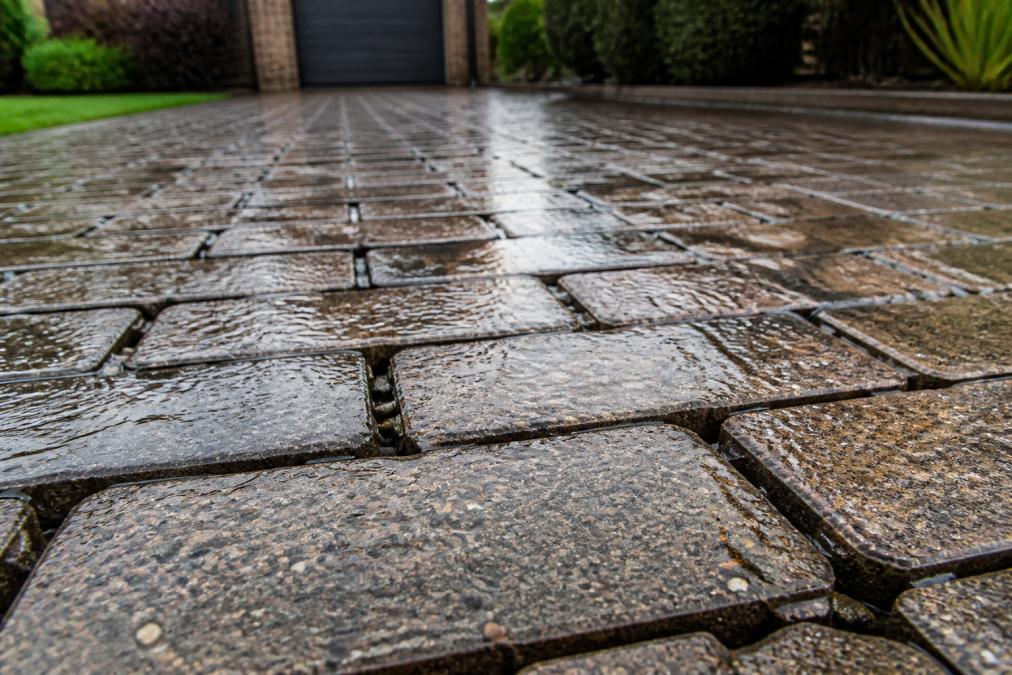
Benefits:
- Reduces surface water runoff and flood risk
- Meets SUDS compliance for new-build properties
- Maintains traditional aesthetic with modern drainage
Drawbacks:
- Requires specialist installation for correct sub-base preparation
- Higher initial material cost than standard block paving
- Needs periodic maintenance to prevent joint clogging
2. Resin Bound Driveway Drainage Benefits for Water Management
Resin bound surfaces offer a seamless, permeable finish that drains water efficiently whilst providing a modern appearance. Success depends entirely on correct sub-base preparation, a compacted, well-draining foundation ensures water moves through the resin layer into the ground below.
Benefits:
- Seamless, attractive finish in numerous colours and aggregate styles
- Excellent drainage performance when sub-base is correctly prepared
- Durable and low-maintenance surface
Drawbacks:
- Requires expert installation; poor sub-base preparation leads to failure
- Higher upfront cost than block paving or gravel
- Potential for cracking if foundation shifts
The most common cause of resin bound driveway failure is inadequate sub-base compaction. A professional installer will specify and verify sub-base depth and density before applying the resin layer.
3. Channel Drain Systems for Driveways
Channel drains (also called linear drains or slot drains) collect water running across the driveway surface and direct it away to a soakaway or drainage system. These systems blend subtly with block paving, featuring minimal visual impact once installed.
Benefits:
- Effective at capturing and directing surface water
- Can be installed alongside existing driveways
- Minimal visual impact when chosen carefully
Drawbacks:
- Requires proper slope toward the drain to function effectively
- Debris and sediment can clog the slot over time
- Installation involves excavation and disruption
4. How to Install a Channel Drain in a Driveway
Installing a channel drain requires careful planning. Identify where water runs during heavy rain and mark the line where the channel will sit, ensuring it slopes gently toward a soakaway or surface water outlet.
Step 1: Excavate the Channel Trench
Excavate a trench along the marked line, deep enough to accommodate the channel and its connection to the outlet pipe.
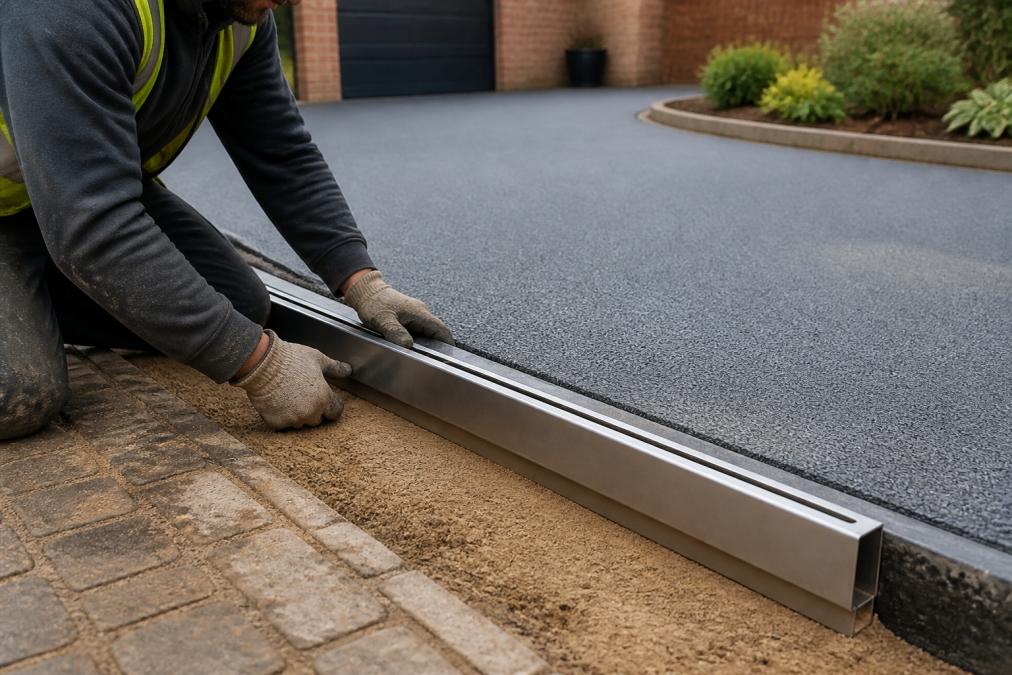
Step 2: Prepare the Bedding
Lay a 50mm sand or concrete bedding layer in the trench, providing a stable foundation for the channel.
Step 3: Install and Connect
Position the channel sections into the bedding, ensuring proper alignment and slope toward the outlet. Attach the outlet pipe to direct it to a soakaway or surface water drain.
Step 4: Backfill and Finish
Backfill around the channel with sand or concrete, depending on the channel type and your driveway material. Allow concrete to cure fully before opening the driveway to traffic.
5. Underground Soakaway and Attenuation Systems
For properties where surface drainage isn’t practical, underground systems store or infiltrate water below ground. Modular geocellular units installed beneath the driveway create a storage chamber that slowly infiltrates water into the soil, particularly useful on flat sites or where ground conditions prevent traditional soakage (ciria.org).
Benefits:
- Stores water for gradual infiltration, reducing flood risk
- Invisible once installed, preserving driveway aesthetics
- Suitable for various site conditions and soil types
Drawbacks:
- Requires significant excavation during installation
- Higher cost than surface drainage systems
- Requires professional design and installation
6. Gravel Stabilisation Grids with Permeable Base
Gravel driveways are inherently permeable but suffer from rutting and loose material migration. Stabilisation grids lock gravel in place whilst allowing water to drain freely through both the gravel and grid into the sub-base, maintaining 100% permeability.
Benefits:
- Maintains traditional gravel appearance with improved stability
- Completely permeable for excellent drainage
- Reduces maintenance compared to loose gravel
Drawbacks:
- Requires careful installation to ensure proper gravel depth
- Gravel still requires occasional refreshing
- Not suitable for very steep slopes
7. Hot Tar and Chip Surfacing with Slope Management
Hot tar and chip is a semi-permeable surface combining durability with drainage capability. The surface is laid with a slight slope to direct water toward the edges or a drainage channel, offering a rustic, attractive appearance with effective water management.
Benefits:
- Rustic, attractive appearance
- Semi-permeable surface aids drainage
- Durable and relatively low-maintenance
Drawbacks:
- Requires proper slope design for effective drainage
- Can soften in very hot weather
- Periodic recoating needed every 5-7 years (asphaltpavement.org)
Choosing the Right Solution for Your Driveway
| Solution | Best For | Key Consideration |
|---|---|---|
| Permeable block paving | New builds, SUDS compliance | Requires expert sub-base preparation |
| Resin bound | Modern aesthetics, low maintenance | Depends entirely on sub-base quality |
| Channel drains | Flat driveways, edge collection | Needs proper slope toward drain |
| Underground soakaway | Flat sites, space constraints | Higher installation cost |
| Gravel stabilisation | Traditional appearance, permeability | Requires initial proper installation |
| Hot tar and chip | Rustic character, sloped driveways | Needs slope design for drainage |
Your choice depends on your driveway’s current condition, property slope, soil type, local building regulations, and aesthetic preferences. Properties in Norfolk with clay soils may benefit more from surface drainage systems like channel drains, whilst sandy soils support infiltration-based solutions like permeable paving.
Poor sub-base preparation is the leading cause of driveway drainage failure. Investing in professional sub-base work prevents costly repairs later.
Key Takeaways
- Heavy rain demands effective driveway drainage to prevent pooling and structural damage
- Permeable block paving and resin bound surfaces offer modern, compliant solutions aligned with SUDS requirements
- Channel drains work well for flat driveways where surface water needs active collection
- Underground systems suit properties with space constraints or challenging ground conditions
- Gravel stabilisation maintains traditional aesthetics whilst improving durability and drainage
- Professional installation and proper sub-base preparation are critical to any system’s success
A driveway that handles heavy rain effectively protects your property’s structural integrity and maintains its appearance for years. For homeowners in Norfolk seeking expert guidance on driveway drainage solutions tailored to their property, KT Lake Paving and Landscaping offers free, no-obligation consultations and estimates. With over 30 years of industry experience and Brett Approved Premier Installer status, the team ensures every project meets rigorous British Standards and includes a 10-year product guarantee. Get in touch to discuss which driveway drainage solution suits your needs best.
Frequently Asked Questions
Do I need planning permission for driveway drainage in the UK?
Most residential driveway drainage improvements do not require planning permission, especially permeable solutions like SUDS-compliant paving. However, if you're installing underground systems or making significant changes to surface water management, it's wise to check with your local planning authority. Sustainable drainage systems (SUDS) are encouraged under UK building regulations, and many solutions qualify for permitted development. Always consult your local council before starting work to confirm requirements for your specific property.
What are the resin bound driveway drainage benefits for heavy rain?
Resin bound surfaces offer excellent drainage through their permeable structure, allowing water to pass through to the sub-base below. This reduces surface pooling and flooding during heavy downpours. The system is SUDS compliant, helping to manage surface water sustainably whilst maintaining an attractive finish. Professional installation with a properly prepared sub-base ensures long-term performance and durability. When installed correctly by specialists, resin bound driveways can handle heavy rainfall without cracking or subsiding.
How do I stop my driveway from flooding during heavy rain?
The most effective approach combines proper surface drainage with underlying water management. Choose a permeable surface like block paving or resin bound systems, install channel drains along edges or low points, and ensure your sub-base has adequate depth and compaction. For properties with persistent water issues, underground systems like geocellular storage units or proper pipe drainage can store excess water temporarily. Grading your driveway slightly to direct water away from buildings is also essential. Professional assessment of your site's drainage characteristics will identify the best solution for your property.


