

Table of Contents
- What Are Resin Bound Driveways?
- Resin Bound vs Resin Bonded Driveways: Key Differences
- Installation Process for Resin Bound Driveways
- Resin Bound Driveway Planning Permission in the UK
Last Updated: August 10, 2026
What Are Resin Bound Driveways?
Resin bound driveways are permeable paving surfaces created by combining high-quality resin with decorative aggregate stones in a trowel-applied method. The resin binds the stones together to form a seamless, hardwearing surface that’s both aesthetically pleasing and functionally superior to traditional alternatives. Unlike loose gravel or standard tarmac, resin bound driveways create a solid, non-slip finish whilst remaining porous enough to allow water drainage.
The installation involves carefully preparing a sub-base, then applying a UV-stable polyurethane resin mixed with aggregate stones to the desired thickness. This creates a flexible surface that can accommodate minor thermal expansion and contraction without cracking. KT Lake Paving and Landscaping specialises in resin bound driveway installation across Norfolk, utilising Brett-approved installation methods that meet British Standards. The 10-year product guarantee provided by Brett reflects the quality and longevity of properly installed resin bound surfaces.
Resin Bound vs Resin Bonded Driveways: Key Differences
Understanding the distinction between resin bound and resin bonded is crucial before committing to a driveway upgrade. Resin bonded driveways apply resin as a thin surface layer over an existing base, bonding loose gravel or chippings to the substrate. Resin bound driveways thoroughly mix resin with aggregate stones before application, fully encapsulating the stones within the resin matrix for superior durability and drainage.
| Feature | Resin Bound | Resin Bonded |
|---|---|---|
| Aggregate encapsulation | Full (throughout) | Partial (surface only) |
| Thickness | 12-14mm typical | 6-8mm typical |
| Permeability | Excellent (suDS compliant) | Good (varies by application) |
| Lifespan | 7-10 years+ | 4-6 years typical |
| Surface texture | Smooth, uniform | Slightly textured |
| Maintenance | Minimal | Regular cleaning required |
For Norfolk properties seeking long-term durability and minimal maintenance, resin bound represents superior value.
Installation Process for Resin Bound Driveways
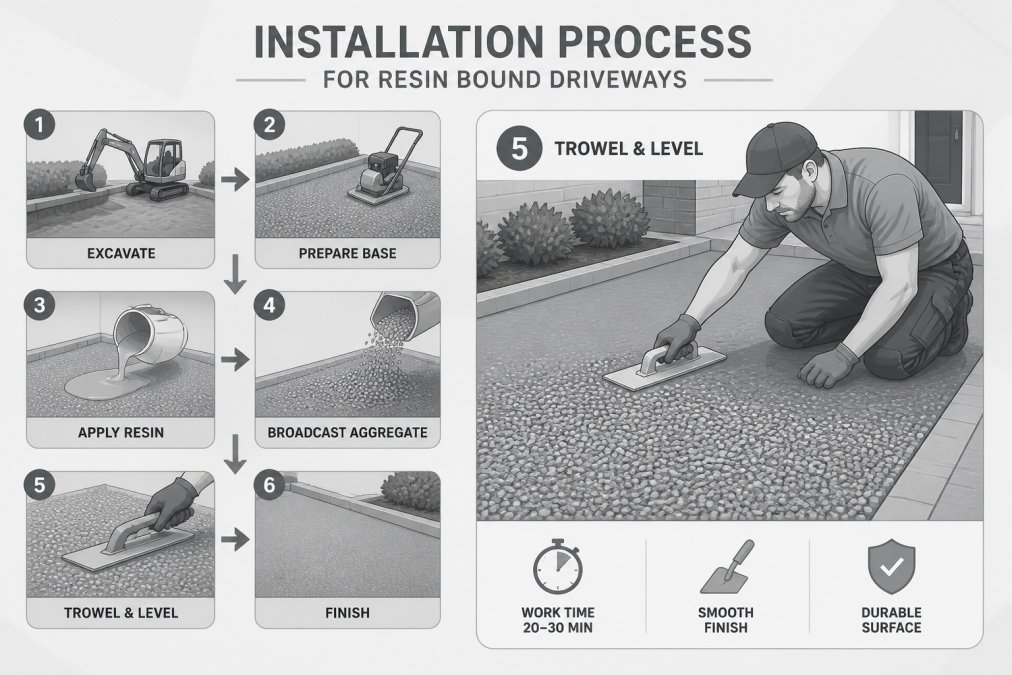
The installation of a resin bound driveway involves several critical stages, each requiring precision and expertise.
Sub-base preparation forms the foundation of any successful installation. The existing surface must be excavated to the correct depth, typically 100-150mm, depending on soil type and load-bearing requirements. A properly compacted Type 1 aggregate base provides the load-bearing capacity needed for domestic driveways. Poor sub-base work is the most common cause of premature failure.
Surface priming and edge restraint comes next. The sub-base is primed with a resin bonding agent to ensure adhesion, and edge restraints are installed to create clean, defined borders.
Resin and aggregate mixing requires precise measurement of the resin-to-stone ratio. Too much resin creates a glossy, potentially slippery surface; too little leaves a porous, weak finish. Curing time varies depending on ambient temperature and humidity, typically 24-48 hours before the surface is walkable, with full cure achieved after 5-7 days.
Application and finishing involves spreading the mixed resin and aggregate across the prepared surface using a trowel. Professional installers like KT Lake Paving and Landscaping follow suDS (Sustainable Drainage Systems) compliance requirements, ensuring proper water management. The installation typically takes 2-3 days depending on driveway size and weather conditions.
Resin Bound Driveway Planning Permission in the UK
Planning permission requirements for resin bound driveways in Norfolk depend on several factors, including whether the work constitutes a material change of use or falls within permitted development rights.
Permitted development typically allows driveway resurfacing without formal planning permission, provided the work doesn’t increase the impermeable surface area beyond 50% of the curtilage. Since resin bound surfaces are permeable and suDS compliant, they often fall within these guidelines. However, local planning authorities occasionally impose stricter rules, particularly in conservation areas or properties with listed status.
Building Regulations compliance is mandatory regardless of planning permission. The installation must meet current Building Regulations standards for surface durability, slip resistance, and drainage. Conservation areas and listed properties may require specific approval from the local planning authority. It’s advisable to contact your local Norfolk planning office before commencing work if your property falls into these categories.
Experienced installers like KT Lake Paving and Landscaping understand these requirements and can advise whether formal applications are necessary for your specific property.
Why Choose Resin Bound for Your Property
Resin bound surfaces deliver practical advantages that extend beyond aesthetics. For Norfolk homeowners, the combination of durability, maintenance simplicity, and visual appeal justifies the investment.
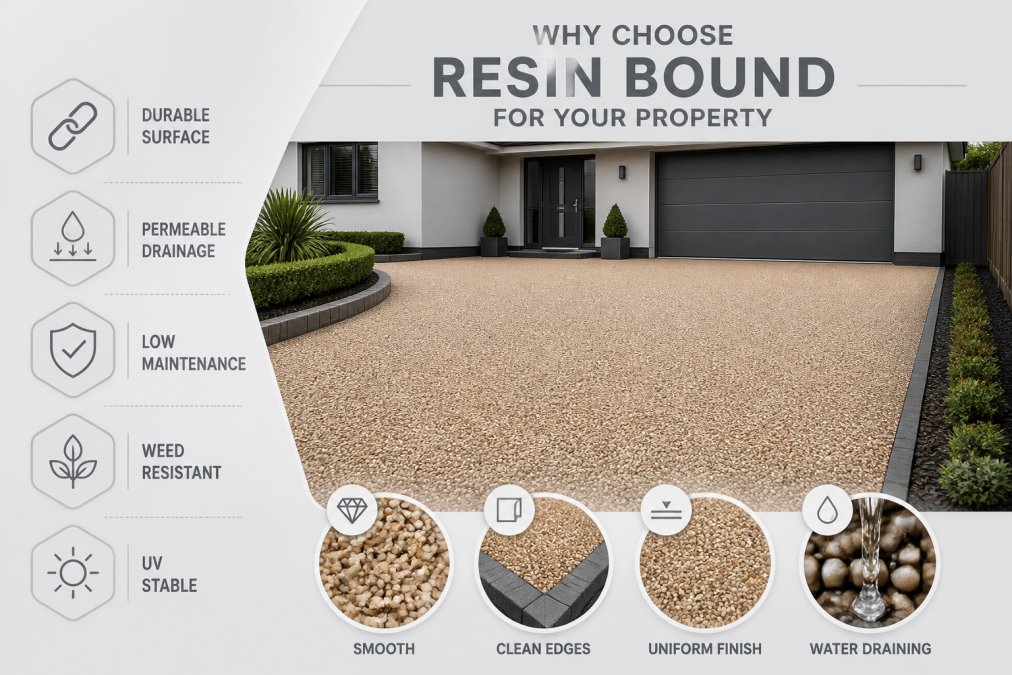
Durability and longevity stand out as primary benefits. Properly installed resin bound driveways withstand 7-10 years or longer without significant degradation, significantly outperforming loose gravel or standard tarmac. The flexible surface accommodates minor movement without cracking, whilst the UV-stable resin resists fading.
Permeability and drainage address environmental and practical concerns. The porous surface allows water to drain through the aggregate, reducing surface water pooling and supporting suDS compliance. This reduces flooding risk during heavy rainfall, increasingly important for Norfolk properties prone to waterlogging.
Low maintenance requirements appeal to busy homeowners. Unlike gravel driveways that need raking and topping up, or traditional tarmac requiring regular sealing, resin bound surfaces need only occasional cleaning.
Aesthetic flexibility allows customisation to match property style. Decorative aggregate stones come in numerous colours and sizes, enabling finishes ranging from subtle earth tones to bold contemporary looks. The uniform, professional appearance enhances curb appeal and property value.
Non-slip properties provide safety benefits, especially important for properties with elderly residents or young children.
Maintenance and Long-Term Care
Maintaining a resin bound driveway properly extends its lifespan and preserves appearance. The maintenance burden remains minimal compared to alternative surfacing options.
Regular cleaning should occur seasonally or as needed. Sweep loose debris regularly and wash the surface with water and mild detergent using a soft-bristled brush. Avoid high-pressure washers, which can damage the resin and dislodge stones.
Weed management requires attention, particularly in spring and summer. Remove weeds by hand rather than using harsh herbicides that may damage the resin.
Winter care in Norfolk involves protecting the surface from de-icing salt and repeated freeze-thaw cycles. Avoid rock salt, which can damage the resin. Use sand or proprietary de-icing products designed for permeable surfaces.
Repair and patching becomes necessary only if damage occurs. Minor cracks or stone displacement can be repaired by a qualified installer, who’ll remove the damaged section and apply fresh resin-aggregate mixture.
Resin bound driveways represent a significant investment in your Norfolk property’s appearance and functionality. Choosing an experienced, qualified installer makes the difference between a surface that delivers for a decade and one that disappoints within years. KT Lake Paving and Landscaping brings over 30 years of industry expertise to every installation, with Brett Approved Premier Installer status and a 10-year product guarantee backing every project. Request a free, no-obligation estimate to explore how resin bound surfacing can enhance your property’s curb appeal and value.
Frequently Asked Questions
Do I need planning permission for a resin driveway in the UK?
Most resin bound driveways do not require planning permission if they are less than 5 square metres or you are simply resurfacing an existing driveway. However, if your driveway is larger than 5 square metres and is a new surface, you may need to apply for prior approval under permitted development rights. Check with your local planning authority, as rules vary by council. Permeable surfaces like resin bound are often favoured under drainage regulations, but it is best to confirm before starting work.
What is the difference between resin bound and resin bonded driveways?
Resin bound driveways mix aggregate stones thoroughly with polyurethane or epoxy resin before application, creating a smooth, porous surface with superior durability. Resin bonded surfaces apply resin over existing aggregate, resulting in a thinner, less durable finish. Resin bound surfaces are hardwearing, offer better slip resistance, and last longer. They are also suDS compliant and provide better drainage. Resin bonded is typically cheaper but requires more frequent maintenance and replacement.
How long does a resin bound driveway last?
A well-installed resin bound driveway typically lasts 15-20 years or more with proper maintenance. The lifespan depends on sub-base quality, UV-stable resin selection, climate conditions, and how heavily the surface is used. Regular cleaning and prompt repair of minor cracks extend the lifespan significantly. Many installers, including Brett Approved Premier Installers, offer 10-year product guarantees, providing confidence in durability. Winter maintenance and avoiding harsh chemicals help preserve the surface longer.
Can you lay a resin bound driveway over an existing surface?
Yes, you can apply resin bound over an existing concrete or tarmac base, provided the surface is structurally sound, clean, and properly prepared. The existing surface must be assessed for cracks, movement, or moisture issues. A poor or failing base will compromise the new resin bound surface. Proper edge restraint and moisture sensitivity checks are essential. Professional installers inspect the sub-base carefully to ensure load-bearing capacity before proceeding.
What are the main downsides of resin bound driveways?
Resin bound driveways require proper sub-base preparation, which adds to installation complexity and cost. They are moisture-sensitive during application and curing, making weather conditions critical. In very cold climates, frost resistance can be a concern without proper installation. The initial cost is higher than some alternatives, though longevity offsets this. Repairs must be done by professionals, and patching can be visible. UV-stable resin helps prevent fading, but colour can shift slightly over time with sun exposure.
What maintenance does a resin bound driveway actually require?
Resin bound driveways are low-maintenance compared to gravel or unsealed surfaces. Sweep regularly to remove debris, and rinse with a hose or pressure wash on low settings. Avoid harsh chemicals and salt-based de-icers in winter. Weeds rarely grow through a sealed resin surface, and stains from oil or algae can be cleaned with mild detergent. Cracks should be sealed promptly to prevent water ingress. A maintenance schedule of twice-yearly cleaning and annual inspection keeps the surface in excellent condition for years.
Is resin bound worth the cost for a small driveway?
For small driveways, resin bound offers excellent value because it eliminates ongoing maintenance costs associated with gravel or unsealed surfaces. The 15-20 year lifespan means you avoid frequent replacement. Resin bound enhances curb appeal and property value, which matters for resale. It is also child and pet-friendly, with a non-slip finish and no loose stones. Whilst initial cost is higher than some options, the durability, aesthetic appeal, and reduced maintenance make it a sound investment, even for modest-sized properties.
What happens if the sub-base fails after installation?
A properly prepared sub-base is critical to resin bound longevity. Brett Approved Premier Installers assess soil type, drainage, and load-bearing capacity before work begins. If movement or subsidence occurs due to poor sub-base preparation, the resin surface will crack or sink. Most reputable installers, including those with 10-year product guarantees, stand behind their work and address sub-base failures under warranty. Choosing an experienced, certified installer significantly reduces this risk. Regular inspections help catch early signs of movement.


