

Table of Contents
- Understanding Sand Types for Block Paving
- How to Apply Block Paving Sand Correctly
- How Much Sand Do I Need for Block Paving
- Preventing Weeds in Block Paving Joints
Last Updated: August 8, 2026
Understanding Sand Types for Block Paving
Block paving requires two distinct types of sand: base sand for the sub-base layer and jointing sand for filling gaps between pavers. Many homeowners in Norfolk mistake these as interchangeable, leading to poor drainage, weed growth, and premature deterioration.
Kiln-dried sand is the standard choice for jointing. It’s been heated to remove moisture, ensuring consistent compaction and better binding when combined with polymeric additives. This offers superior stability compared to wet sand, which shifts and settles unpredictably.
Polymeric sand is increasingly popular for block paving joints. When moisture is applied, polymeric binders activate and harden, creating a semi-rigid joint that resists weeds and prevents sand loss. However, improper application can leave a haze on pavers that’s difficult to remove.
Silica sand serves as the base layer beneath pavers. This coarser material provides drainage and compaction support but isn’t suitable for joints, as fine particles wash away easily. Using the wrong sand in the wrong location compromises the entire installation.
For Norfolk properties, where rainfall is moderate to heavy, drainage is crucial. Poor sand choice leads to water pooling, frost damage, and accelerated joint erosion. The right selection extends block paving life by years.
How to Apply Block Paving Sand Correctly
Proper application determines whether your block paving lasts five years or fifteen.
Start by ensuring the sub-base is properly compacted using a vibrating plate until firm and level. This prevents settlement, which causes joints to crack and sand to fall out prematurely.
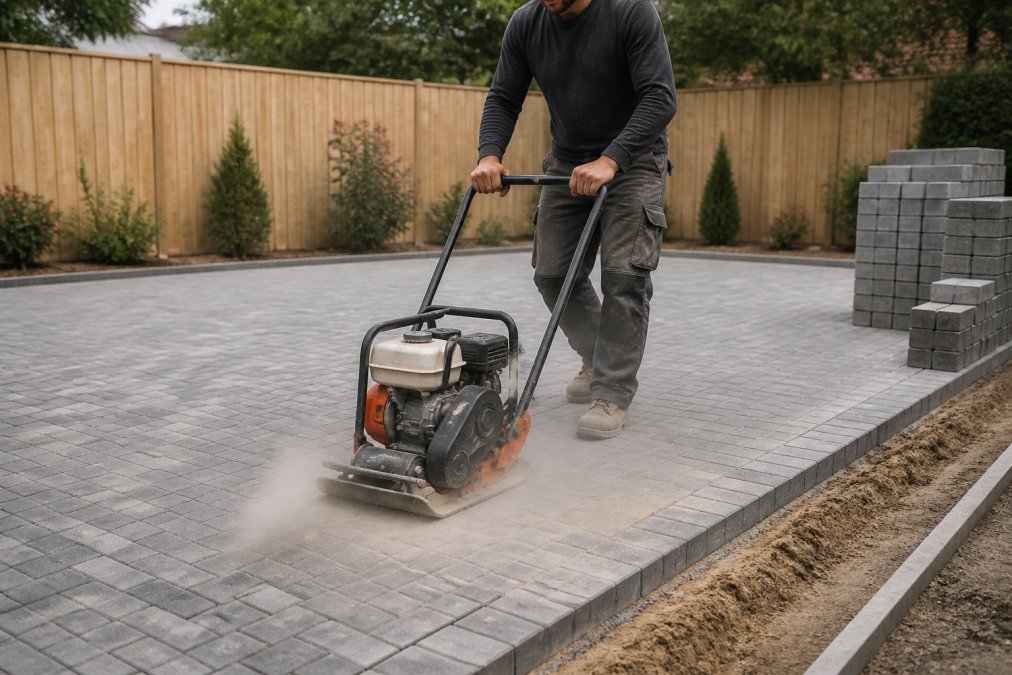
Spread jointing sand evenly across the paved surface. For kiln-dried sand, use a broom to sweep it into joints diagonally across pavers, ensuring complete filling. Multiple passes may be needed.
If using polymeric sand, follow manufacturer instructions precisely. Most require sweeping sand into joints, light compaction with a vibrating plate, then water application to activate the binder. Common mistakes include applying water too early or using too much, which creates uneven activation and haze.
Allow adequate curing time. Polymeric sand typically needs 24-48 hours before foot traffic or rain. Plan applications for dry weather when possible.
Maintenance matters. Even quality sand benefits from occasional re-sweeping to address debris accumulation and seasonal movement, preventing larger problems later.
How Much Sand Do I Need for Block Paving
Calculating sand requirements prevents shortages and wasteful overordering. The amount depends on paved area, joint width, and sand type.
For a typical residential driveway in Norfolk, estimate roughly 1.5 to 2 kilograms of jointing sand per square metre for standard 10-15mm joint widths. A 25kg bag of kiln-dried sand typically covers 12-15 square metres depending on joint width.
Don’t underestimate. Excess sand can be stored for future maintenance. Running short forces project pauses and risks inconsistent joint filling.
For base sand, plan for approximately 50-75mm depth across the entire sub-base area, translating to roughly 75-100kg per square metre before compaction. Supplier data sheets provide precise figures based on your specific requirements.
In Norfolk’s damp climate, kiln-dried sand eliminates moisture variables, making coverage rates easier to predict.
Preventing Weeds in Block Paving Joints
Weed growth in block paving stems directly from sand choice and application technique. Traditional silica sand offers no weed inhibition; seeds settle in loose sand and germinate readily.
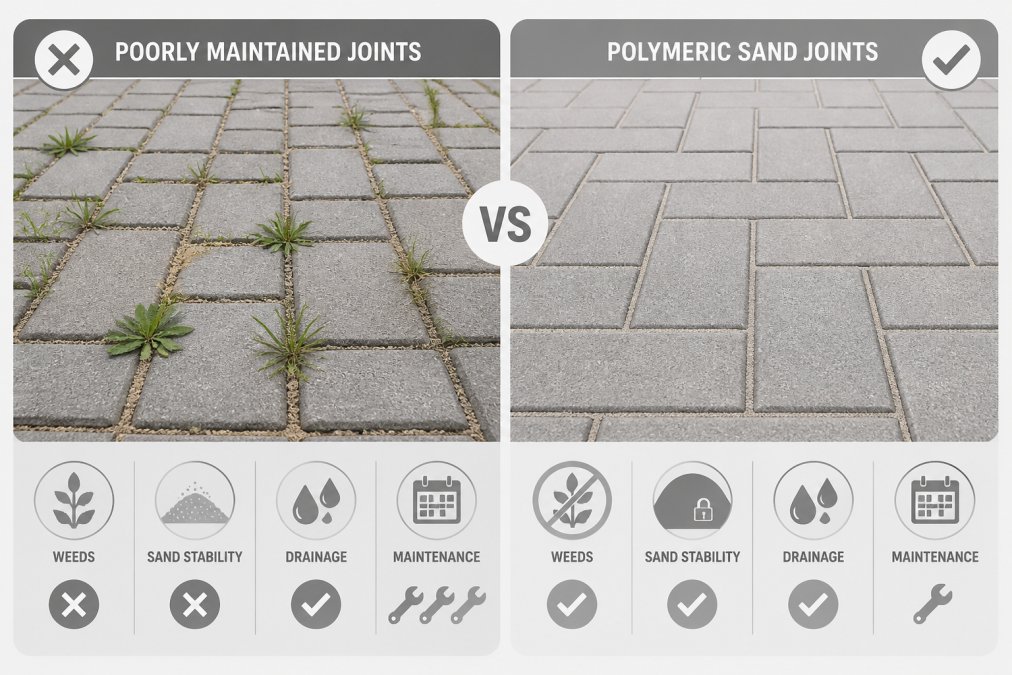
Polymeric sand addresses this by creating a semi-rigid barrier. The binding agent hardens when activated by moisture, locking particles together and making it extremely difficult for weed seeds to establish.
Weeds need loose soil to germinate. Polymeric sand eliminates that environment. Regular maintenance enhances the effect. Sweeping away debris prevents organic matter accumulation that feeds weed growth. Ensure proper drainage so water doesn’t pool and create ideal germination conditions.
Installation technique matters as much as sand type. Incomplete joint filling leaves pockets where weeds establish. Proper compaction and multiple sweeping passes ensure joints are completely filled.
For Norfolk properties with persistent weed problems, combine polymeric sand with regular maintenance. Sweep joints quarterly, remove emerging weeds promptly, and ensure drainage remains clear. This approach keeps block paving looking professional for years.
Choosing the right sand for your block paving project is the foundation of long-lasting results. Whether planning a new driveway installation or maintaining existing paving in Norfolk, the sand type you select determines how well your investment performs. KT Lake Paving and Landscaping has worked with Norfolk homeowners for over 30 years, helping them understand these distinctions and select materials that deliver durability. For professional guidance on which sand type suits your specific project, contact KT Lake Paving and Landscaping for a free, no-obligation consultation and estimate.
Frequently Asked Questions
What is the best sand for block paving?
The best sand for block paving depends on your priorities. Kiln-dried sand offers affordability and works well for standard installations, while polymeric sand provides superior weed inhibition and durability. For most homeowners, kiln-dried sand is the practical choice; polymeric sand justifies its higher cost if you want minimal maintenance and long-term joint stability. Your paver material and climate also influence the choice.
Can I use kiln-dried sand for block paving?
Yes, kiln-dried sand is one of the most common choices for block paving. It has been dried in a kiln to remove moisture, which helps prevent compaction issues and settlement. However, kiln-dried sand does wash away over time in wet weather and offers no weed inhibition. For driveways in Norfolk's climate, you'll need to re-sand periodically, typically every 2-3 years depending on rainfall and foot traffic.
How often should you re-sand block paving?
With kiln-dried sand, most homeowners re-sand every 2-3 years, though this varies based on rainfall, traffic, and drainage. Polymeric sand lasts longer, often 5-7 years or more, because the binding agent resists erosion. Signs you need re-sanding include visible joint erosion, sand loss after heavy rain, or increased weed growth. Regular sweeping and proper drainage extend the interval between applications.
How much sand do I need for block paving?
Calculate the area in square metres and multiply by 0.03 to 0.05 cubic metres per square metre, depending on joint width. For example, a 50 square metre driveway typically needs 1.5 to 2.5 cubic metres of sand. Polymeric sand coverage is similar, though you may need slightly less because it doesn't compact as much. Always order 10% extra to account for settling and future top-ups.


