

Table of Contents
- What Is a Tar and Chip Driveway?
- Tar and Chip vs Asphalt: Key Differences
- How Long Do Tar and Chip Driveways Last?
- Tar and Chip Driveway Maintenance: Essential Care
- Frequently Asked Questions
Last Updated: August 4, 2026
What Is a Tar and Chip Driveway?
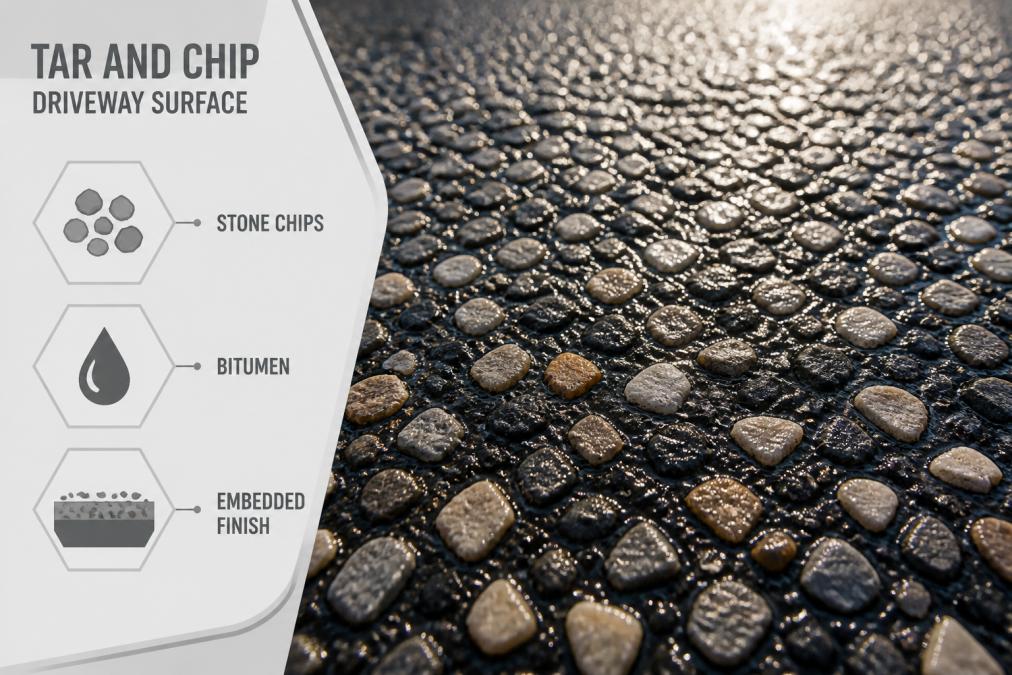
A tar and chip driveway is a practical surfacing solution that sits between gravel and asphalt. It consists of a layer of liquid bitumen (asphalt emulsion) sprayed onto a prepared base, followed immediately by small stone chips that bond to the sticky surface as it cures. The result is a textured, aggregate-rich surface with genuine traction and distinctive appearance. Unlike loose gravel, the binder holds everything in place. Unlike solid asphalt, installation is faster and less disruptive.
The technique is also called chip and seal or surface dressing. Both cold-applied (more common for residential work) and hot-applied variants rely on the same principle: aggregate particles embed into the binder as it sets, creating a cohesive, skid-resistant surface within days.
The curing process typically takes 48-72 hours before light traffic is permitted, and 7-10 days before full strength is reached. Loose chips may shed slightly during this time; this is normal and settles after the first few weeks of use.
Tar and Chip vs Asphalt: Key Differences
Asphalt requires heating to 150°C and specialist equipment; tar and chip uses ambient-temperature emulsion and simpler machinery, making it faster and typically less expensive upfront. Asphalt is smooth and uniform, whilst tar and chip is deliberately rough and textured, providing excellent grip in wet conditions, a genuine advantage in Norfolk’s damp climate.
Durability favours asphalt: a well-maintained asphalt drive lasts 15-20 years, whilst tar and chip typically delivers 7-10 years before needing resurfacing. Asphalt develops a harder, more weather-resistant skin over time, whilst tar and chip remains slightly more permeable and vulnerable to UV degradation.
Maintenance requirements differ significantly. Asphalt needs regular sealcoating every 2-3 years. Tar and chip requires less intensive care, mainly sweeping to manage loose gravel and patching small damaged areas, but benefits from a rejuvenating seal coat after 5-7 years, which reactivates the binder and locks down loose chips.
Choose asphalt for maximum longevity and a polished appearance. Choose tar and chip if budget matters more than lifespan, or if you value the textured finish and lower installation disruption.
How Long Do Tar and Chip Driveways Last?
In Norfolk’s typical residential setting with moderate use, most tar and chip drives perform well for 7-10 years before the binder begins to break down noticeably. The degradation process is gradual: years 1-3 see the surface at its best, with chips locked firmly in place and excellent skid resistance. By years 5-7, UV exposure and traffic wear become visible, with the binder becoming slightly brittle and loose chips appearing more frequently. By years 8-10, visible wear patterns develop where vehicles regularly park or turn.
A properly compacted base layer (100-150mm of crushed stone) extends lifespan significantly by preventing sub-base movement and water pooling. Conversely, poor base preparation allows water to penetrate underneath, causing premature failure. Traffic load is critical: a lightly-used driveway may reach 12 years, whilst a heavily-trafficked drive might need resurfacing by year 6. Heavy vehicles accelerate wear considerably.
Tar and chip handles freeze-thaw cycles reasonably well because its permeability allows water to drain rather than accumulate beneath the surface, making it adequate for Norfolk’s winters.
Tar and Chip Driveway Maintenance: Essential Care
Maintaining a tar and chip driveway extends its life considerably. The core principle is managing loose aggregate and preventing water penetration.
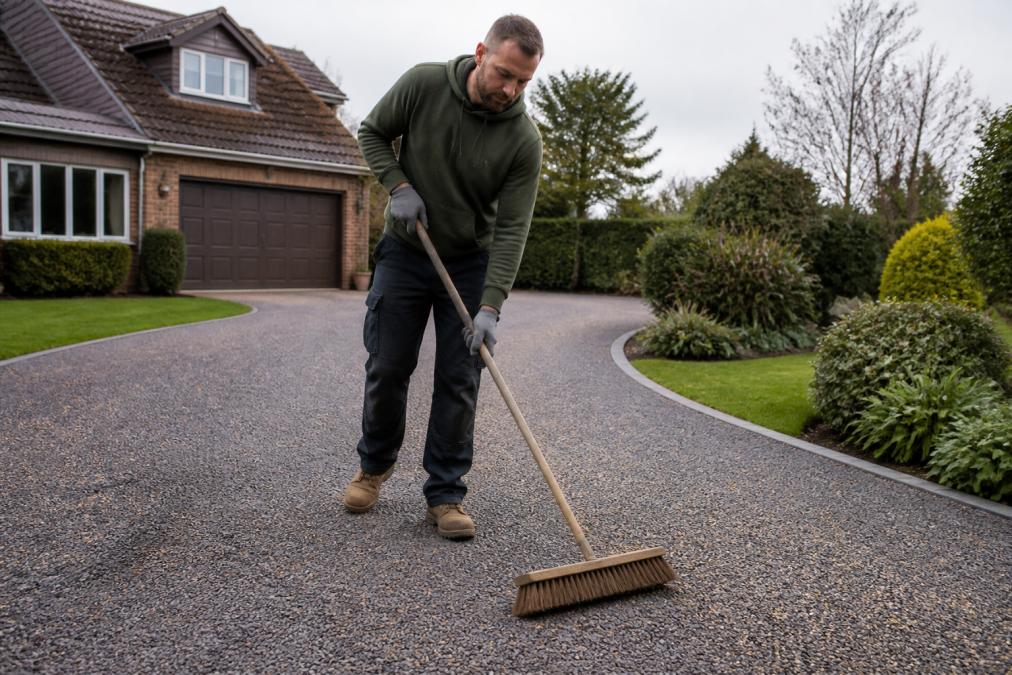
Regular sweeping and raking should be your first line of defence. After installation, loose chips shed naturally for the first 4-6 weeks. Sweep seasonally (spring and autumn) thereafter to clear debris and prevent organic matter from trapping moisture.
Pothole and crack repair keeps small damage from becoming major problems. Address areas where chips have dislodged promptly with fresh bitumen emulsion and matching stone chips. Larger potholes (deeper than 25mm or wider than 100mm) warrant professional attention.
Winter maintenance in Norfolk requires specific attention. Sweep salt and grit away once ice melts rather than allowing them to work into the surface. Use a soft broom or plastic shovel for snow removal, never a metal spade, which can gouge the surface and dislodge chips.
Never use de-icing chemicals containing chlorides directly on a new tar and chip surface (first 12 months). These accelerate binder breakdown. Instead, use grit or sand for traction, and remove it once conditions improve.
Sealcoating and rejuvenation extends lifespan significantly. After 5-7 years, a rejuvenating seal coat reactivates the bitumen and locks down loose chips, effectively adding 3-5 years to your driveway’s life.
Drainage management prevents common problems. Ensure water runs off the driveway rather than pooling. A gentle slope (3-5% grade) directs water away and prevents sub-base saturation.
Avoiding heavy loads on young driveways protects the binder before it fully cures. Avoid parking heavy vehicles for at least 2 weeks after installation. Once cured, normal car traffic is fine, but sustained heavy loads accelerate wear.
Tar and chip driveways offer genuine value for Norfolk homeowners who prioritise affordability and a distinctive textured finish. For professional installation that ensures proper sub-base preparation and correct aggregate sizing, factors that determine whether your drive lasts 7 years or 10, KT Lake Paving and Landscaping brings over 30 years of experience and a Brett Approved Premier Installer accreditation. Every project meets British Standards, backed by a 10-year product guarantee, and starts with a free, no-obligation consultation to match the right solution to your property.
Frequently Asked Questions
What is a tar and chip driveway and how is it made?
A tar and chip driveway is a surface made by applying hot liquid bitumen (asphalt emulsion) to a prepared base layer, then immediately spreading stone chips or aggregate across it. The stones bond to the bitumen as it cures, creating a textured, durable surface. This method, also called chip and seal or surface dressing, is commonly used for driveways and roads across the UK because it provides good traction and a distinctive appearance whilst being more affordable than full asphalt.
How long do tar and chip driveways last in the UK?
A well-maintained tar and chip driveway typically lasts between 5 to 7 years, though some can reach 10 years with proper care. Lifespan depends on traffic load, climate exposure, and maintenance frequency. UK weather, particularly freeze-thaw cycles and heavy rain, can accelerate wear. Regular brushing to redistribute loose gravel, prompt pothole repair, and avoiding harsh chemicals help extend durability. Professional installation with correct sub-base preparation significantly improves longevity.
What is the difference between tar and chip and asphalt driveways?
Tar and chip uses a thinner application of liquid bitumen with visible stone aggregate on top, while asphalt is a thicker, fully bound mixture of bitumen and aggregate throughout. Asphalt is smoother and typically lasts longer (10-15 years), but tar and chip costs less initially and offers better skid resistance. Tar and chip requires more frequent maintenance, including re-chipping and loose stone management, whereas asphalt needs sealcoating every few years. Both are durable options; the choice depends on budget, traffic volume, and maintenance commitment.
What maintenance does a tar and chip driveway require?
Tar and chip driveways need regular brushing to redistribute loose gravel and prevent accumulation in gutters or at edges. Sweep away debris monthly and after heavy rain. Address pothole damage promptly with patching compound or by requesting professional repair. Avoid harsh chemicals and excessive water pressure. In winter, use salt alternatives if possible, as standard salt can degrade the bitumen. Reapply aggregate or resurfacing may be needed every 3-5 years depending on wear. Professional maintenance contractors can assess condition and recommend timely interventions.


