

Table of Contents
- Is Tar and Chip Cheaper Than Asphalt? Quick Answer
- Tar and Chip Driveway Cost Per Square Foot Explained
- Tar and Chip vs Asphalt: Durability and Lifespan
- Tar and Chip vs Asphalt Maintenance: What You’ll Actually Do
Last Updated: July 19, 2026
Is Tar and Chip Cheaper Than Asphalt? Quick Answer
Tar and chip typically costs 30-40% less upfront than asphalt, but the real story involves durability, maintenance, and long-term value. Tar and chip combines liquid asphalt with crushed stone for a rustic, textured surface. Asphalt uses hot-mix blended aggregate for a smooth, uniform finish. The cost difference at installation is significant, yet maintenance requirements, lifespan, and aesthetic preferences shift the equation considerably.
Understanding whether tar and chip is truly cheaper requires looking beyond the initial quote. According to industry paving standards and durability research, the choice depends on traffic volume, climate exposure, and how long you plan to keep the driveway.
Tar and chip costs 30-40% less upfront but lasts 5-10 years. Asphalt costs more initially but lasts 15-30 years with proper maintenance. The cheaper option depends on your timeline and traffic patterns.
Tar and Chip Driveway Cost Per Square Foot Explained
Installation pricing for tar and chip driveways typically ranges from £5 to £10 per square foot. A typical residential driveway of 500 square feet would cost between £2,500 and £5,000. Cost-per-square-foot varies based on site access, existing surface condition, and stone colour selection.
Tar and chip offers genuine affordability because the application process is labour-intensive but less complex than hot-mix asphalt paving. Crushed stone aggregate is bonded with liquid asphalt emulsion and rolled into the warm binder in layers.
One often-overlooked expense is the initial curing period. Fresh tar and chip requires 48-72 hours before heavy use, and some homeowners budget for additional sealcoating or chip replacement in year one, adding £500-£1,500 to the total project cost.
Request estimates from multiple contractors. Pricing varies significantly based on sub-base quality, site access, and material sourcing. A cheap quote often signals corner-cutting on preparation or lower-grade binder.
Tar and Chip vs Asphalt: Durability and Lifespan
Durability represents the critical distinction between these surfaces. Tar and chip driveways typically last 5-10 years under normal residential use, whilst asphalt lasts 15-30 years with proper maintenance.
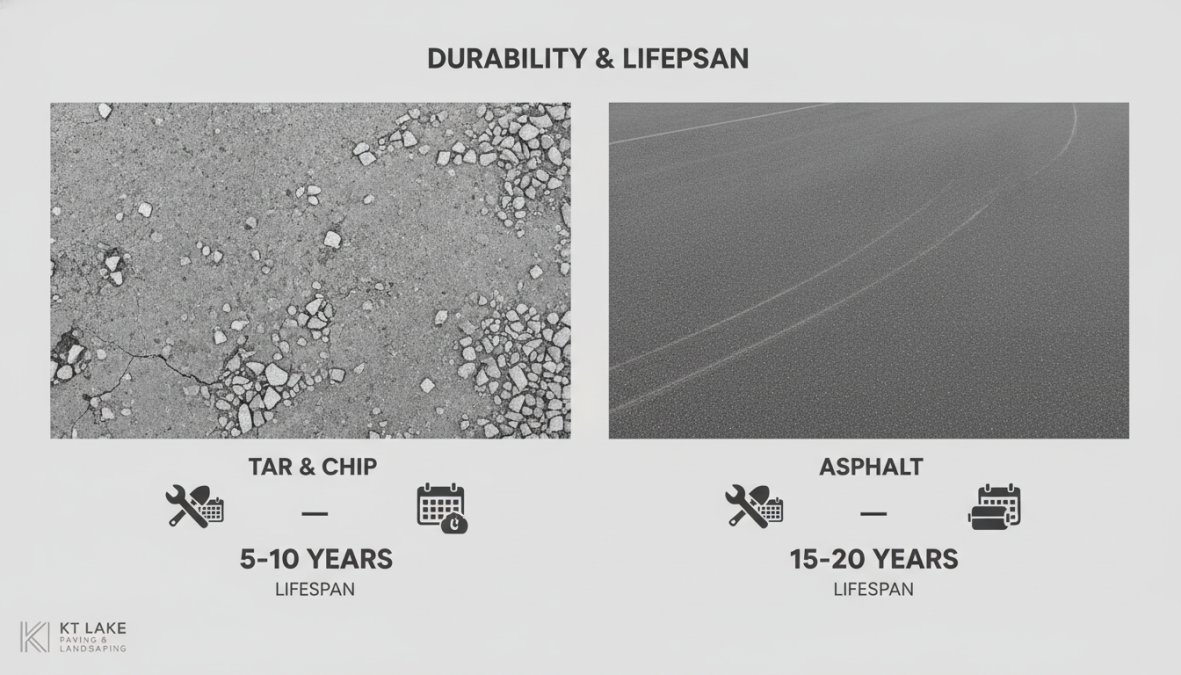
Tar and chip’s shorter lifespan stems from its construction. The binder gradually oxidises and hardens, losing flexibility. Freeze-thaw cycles crack and separate the stone aggregate from the binder. Once cracks appear, water penetrates the sub-base, accelerating deterioration. Resurfacing often requires complete removal and reapplication rather than targeted repairs.
Asphalt handles temperature fluctuations better due to superior flexibility and cohesion. Sealcoating every 3-5 years extends asphalt’s life significantly by protecting the binder from UV exposure and oxidation. With consistent maintenance, asphalt driveways routinely reach 20-30 years.
For homeowners planning to stay 15+ years, asphalt’s extended lifespan often justifies the higher upfront cost. For those expecting to move within 5-10 years, tar and chip’s lower initial expense makes economic sense.
Loose stones on tar and chip can damage vehicles and create slipping hazards. If your driveway shows significant stone loss after year two, full resurfacing is often more cost-effective than patching.
Tar and Chip vs Asphalt Maintenance: What You’ll Actually Do
Maintenance demands differ sharply between these surfaces, affecting your long-term costs and effort investment.
| Maintenance Task | Tar and Chip | Asphalt | Frequency |
|---|---|---|---|
| Stone replacement | Yes, ongoing | No | Every 2-3 years |
| Sealcoating | Optional | Essential | Every 3-5 years |
| Crack filling | Limited options | Standard | As needed |
| Sweeping/raking | Recommended | Not needed | Monthly |
| Pothole repair | Full resurfacing | Patching possible | As needed |
Tar and chip maintenance centres on managing loose aggregate through monthly sweeping or raking. After 2-3 years, you’ll likely need fresh stone chips in worn areas, costing considerably less than full resurfacing but becoming routine.
Asphalt maintenance is more structured. Sealcoating every 3-5 years protects the binder from sun and water damage. Small cracks can be filled before widening. Potholes can be patched without full removal. This targeted approach keeps asphalt serviceable for decades.
In practice, tar and chip homeowners often underestimate maintenance needs. What appears "low maintenance" initially becomes tedious stone replacement. Over 20 years, cumulative maintenance costs often exceed asphalt’s initial premium.
Norfolk’s maritime climate brings salt spray and freeze-thaw cycles that accelerate tar and chip degradation. Asphalt’s superior resistance makes it more resilient in your region.
Key Differences: Aesthetic Appeal and Performance
Tar and chip delivers a rustic, textured appearance that blends naturally with countryside properties. The stone chips create visual warmth and non-slip traction, particularly appealing for sloped driveways.
Asphalt offers a clean, uniform dark surface that suits modern homes. The smooth finish feels more refined and professional. Aesthetic preference is genuinely subjective, but your property’s character should guide this choice.
Tar and chip’s textured surface provides excellent traction in wet conditions. Asphalt can become slippery when wet, though sealcoating improves grip slightly. Tar and chip allows slightly better water drainage through its textured surface, reducing standing water.
Choosing between tar and chip and asphalt hinges on your priorities: immediate cost savings versus long-term value, and rustic aesthetics versus modern finish. For properties in Norfolk where freeze-thaw cycles and salt exposure are considerations, asphalt’s durability often proves more cost-effective over 15-20 years. However, if you value rustic character and accept more frequent maintenance, tar and chip delivers genuine savings upfront.
KT Lake Paving and Landscaping brings over 30 years of experience helping Norfolk homeowners navigate this decision. Our Brett Approved Premier Installer status means every installation meets rigorous British Standards, backed by a 10-year product guarantee. We offer free, no-obligation consultations where we assess your specific site conditions, traffic patterns, and long-term plans, then recommend the option that genuinely suits your needs. Get in touch today for a professional assessment and transparent quote.
Frequently Asked Questions
Is tar and chip cheaper than asphalt upfront?
Tar and chip generally offers lower upfront installation costs than asphalt. However, exact pricing depends on your property size, site conditions, and local contractor rates. The initial cost advantage typically ranges from 30-40% less, though this can vary significantly. Contact KT Lake Paving and Landscaping for a free, no-obligation estimate tailored to your Norfolk driveway.
What is the difference in tar and chip driveway cost per square foot versus asphalt?
Research data shows tar and chip generally costs less per square foot than asphalt at installation. Both are project-based and vary by contractor, location, and site preparation needs. Factors like sub-base compaction, aggregate choice, and labour availability all influence final pricing. For accurate figures for your property, request a quotation from a local paving contractor or KT Lake Paving and Landscaping.
How does tar and chip vs asphalt maintenance affect long-term costs?
Tar and chip requires less frequent maintenance than asphalt, as small cracks often self-heal and loose stones typically settle within weeks. Asphalt requires regular sealcoating every 3-5 years and more frequent crack repairs. Over 10-15 years, these maintenance costs can add significantly to asphalt's total cost of ownership, potentially offsetting its initial price premium and making tar and chip more economical overall.
What are the main pros and cons of tar and chip driveways?
Tar and chip offers excellent traction, a rustic aesthetic, lower upfront costs, and minimal maintenance. Drawbacks include a shorter lifespan (5-10 years versus 15-30 for asphalt), loose stones initially, and difficulty repairing sections, full reapplication is often required. It's ideal for rural or low-traffic properties but less suitable for high-traffic areas or homeowners wanting a smooth, uniform finish.
Can I apply tar and chip over an existing asphalt driveway?
Yes, tar and chip can often be applied over existing asphalt if the base is stable and properly prepared. The existing asphalt serves as a sub-base, reducing preparation costs. However, the underlying asphalt must be free of significant cracks, potholes, and debris. A professional paving contractor will assess your current surface to determine suitability and prepare it correctly for optimal adhesion and durability.


