
Table of Contents
- Sub-Base and Sub-Grade: Definitions and Purpose
- Driveway Sub-Base Depth Requirements and Materials
- How to Prepare Sub-Grade for Paving
- Why Both Layers Matter for Durable Driveways
- Frequently Asked Questions
Last Updated: September 4, 2026
Sub-Base and Sub-Grade: Definitions and Purpose
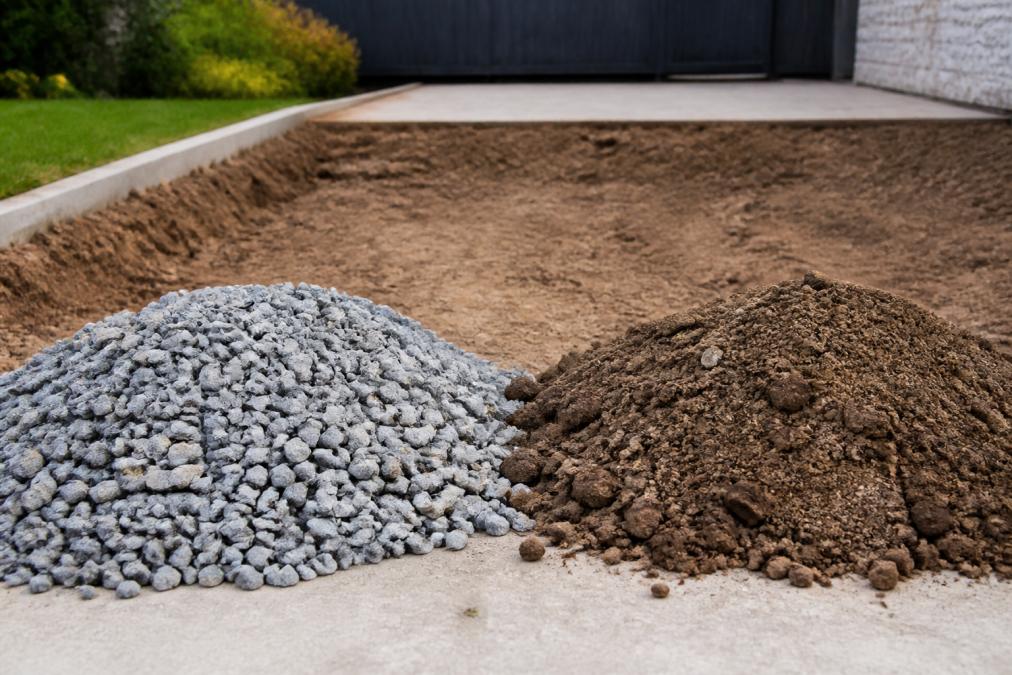
Sub-grade is the natural soil or prepared ground layer that forms the foundation for all driveway construction. Sub-base is the engineered aggregate layer placed directly on top of the sub-grade to provide structural support and distribute vehicle loads evenly across the soil beneath.
The difference between sub-base and sub-grade for driveways is fundamental to understanding how a durable surface is built. The sub-grade is what you start with, existing earth, often uneven or unstable. The sub-base transforms that unstable foundation into something capable of supporting the finished driveway surface, whether that’s resin bound, block paving, or tarmac.
Both layers work together. Neglect either one, and the finished driveway will fail, cracking, subsiding, or developing ruts within months. According to Marshalls’ guidance on sub-base requirements, a properly graded aggregate sub-base compliant with Department for Transport specifications is essential for load-bearing capacity and effective drainage.
Driveway Sub-Base Depth Requirements and Materials
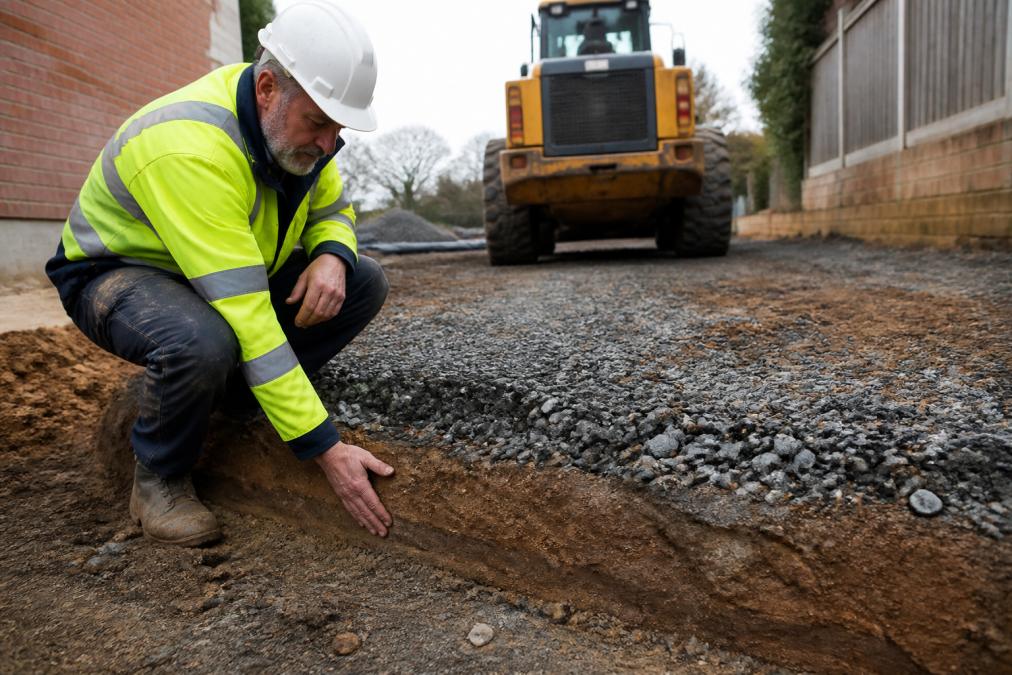
The typical sub-base depth for a residential driveway ranges from 100 to 150 millimetres, depending on soil conditions and expected vehicle loads. MOT Type 1 aggregate, a graded crushed stone blend, is the industry standard material across the UK.
MOT Type 1 meets Department for Transport specifications and compacts into a dense, stable layer that prevents “pumping” of fine soil particles from below. This material is non-frost-susceptible, meaning it won’t heave or shift during winter freeze-thaw cycles. The crushed stone composition distributes weight evenly, preventing the surface from subsiding unevenly.
Materials like those supplied by Armstrongs Group sub-base aggregates are engineered specifically to prevent driveway failure by providing uniform platform support. Proper compaction of the sub-base is equally critical, loose aggregate will compress under vehicle weight, causing the finished surface to crack and settle.
How to Prepare Sub-Grade for Paving
Preparing the sub-grade begins with excavation to remove topsoil, vegetation, and any unstable material. The exposed sub-grade must then be assessed for stability and drainage characteristics.
If the sub-grade is clay-heavy or poorly draining, it may require stabilisation before the sub-base is laid. This prevents water retention beneath the driveway, which causes frost heave and subsidence. The sub-grade should be compacted to a firm, level surface, any soft spots or high points will cause uneven settlement.
Professional assessment is essential here. At KT Lake Paving and Landscaping, site evaluation determines whether standard sub-base installation will suffice or whether additional measures are needed. This expertise prevents costly failures after the driveway is complete.
Why Both Layers Matter for Durable Driveways
A driveway fails when either the sub-grade or sub-base is inadequate. The sub-grade provides the base stability; the sub-base distributes loads and manages drainage. Skipping proper sub-base installation to save money typically results in surface failure within 2-3 years.
The relationship between these layers is why professional installation matters. As documented in guidance on driveway construction standards, both layers must meet British Standards for the finished surface to perform reliably. This is why KT Lake Paving and Landscaping, as a Brett Approved Premier Installer, assesses and prepares both layers to specification, ensuring the driveway lasts decades rather than years.
| Aspect | Sub-Grade | Sub-Base | Why It Matters |
|---|---|---|---|
| What it is | Natural or prepared soil | Engineered aggregate layer | Foundation quality determines surface durability |
| Purpose | Provides base stability | Distributes loads and manages drainage | Both prevent subsidence and cracking |
| Material | Existing earth or clay | MOT Type 1 crushed stone | Correct materials prevent frost heave and pumping |
| Typical depth | Varies by excavation | 100-150mm compacted | Insufficient depth causes early failure |
| Preparation | Excavation and compaction | Grading and compaction | Proper preparation prevents surface settlement |
Frequently Asked Questions
What is the difference between sub-grade and sub-base?
The sub-grade is the natural soil or prepared ground beneath your driveway, whilst the sub-base is the engineered layer of aggregates placed on top of it. The sub-grade provides the foundation, and the sub-base distributes weight evenly and prevents soil movement. Think of the sub-grade as the starting point and the sub-base as the protective buffer that ensures your driveway surface remains stable and level.
How deep should a driveway sub-base be?
Most residential driveways require a sub-base depth of 100-150 mm, though this can vary depending on soil conditions and expected vehicle loads. Poorly draining clay soils may need a deeper sub-base to prevent water retention, whilst stable granular soils can sometimes manage with less. A qualified installer will assess your specific sub-grade and recommend the appropriate depth to ensure long-term durability.
What happens if the sub-grade is not properly prepared?
Poor sub-grade preparation leads to cracking, rutting, and uneven settling of your driveway surface. Water can become trapped, frost heave can occur in winter, and the surface may develop potholes or sink in patches. Proper compaction and removal of soft material prevent these problems. This is why professional assessment and preparation of the sub-grade is essential before any sub-base or surface layer is installed.
Driveway failure often traces back to sub-base or sub-grade issues that weren’t visible during installation. Get a professional site assessment from KT Lake Paving and Landscaping to ensure both layers are prepared correctly. With over 30 years of experience and Brett Approved Premier Installer status, the team delivers free, no-obligation consultations and guarantees workmanship meets British Standards, backed by a 10-year product guarantee.


