

Table of Contents
- What Is Resin Bound Driveway Permeability?
- How Resin Bound Driveways Work: The Mechanism of Permeability
- Resin Bound vs. Resin Bonded: Understanding Permeability Differences
- SuDS Compliant Driveways UK: Planning Permission and Regulations
Last Updated: 29 July 2026
What Is Resin Bound Driveway Permeability?
Resin bound driveway permeability refers to the ability of a resin-bound surface to allow water to drain through it rather than pooling on top. Traditional surfaces like solid concrete or tarmac shed water entirely, directing it into overwhelmed drainage systems. Resin bound driveways are designed with deliberate voids between natural stone aggregates that allow rainwater to infiltrate through the surface and into a prepared sub-base below. This delivers reduced flooding risk, lower maintenance demands, and compliance with Sustainable Urban Drainage Systems (SuDS) regulations that now govern many planning decisions across the UK.
The permeability rate of a properly installed resin bound driveway typically ranges from 100 to 200 millilitres per second, meaning water passes through the surface quickly and efficiently. This performance depends entirely on correct installation and material selection.
How Resin Bound Driveways Work: The Mechanism of Permeability
A resin bound surface consists of natural stone aggregates mixed with a UV-stable resin binder, trowelled onto a carefully prepared sub-base. When rain falls, water filters downward between aggregate particles. The resin-to-stone ratio creates deliberate voids, typically 15-20% of the surface volume, that act as drainage channels. Water moves through these voids into the wearing course and then into the base construction below, where a permeable sub-base captures the water and allows it to percolate into the ground or drainage system, reducing surface runoff and flood risk.
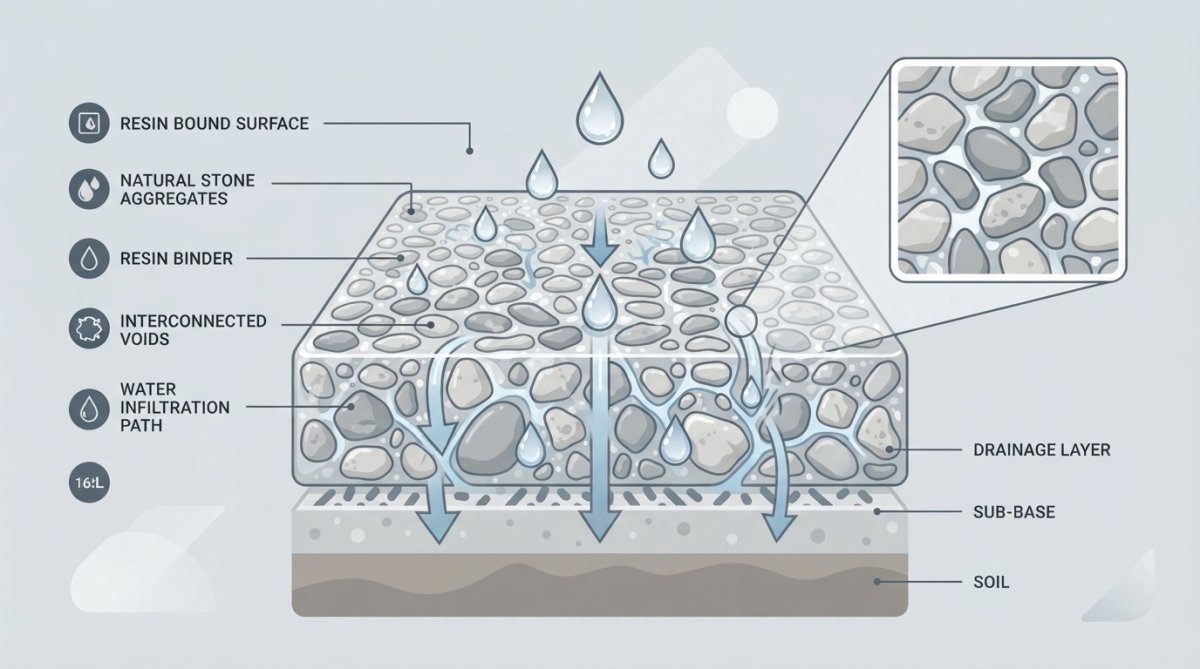
The critical factor is aggregate grading. Professional installers use cold-pour mixture techniques and precise trowelling to achieve the balance that makes permeability work. A quality UV-stable resin maintains flexibility and prevents cracking under freeze-thaw cycles, which is essential in Norfolk’s climate.
Improper sub-base preparation is the leading cause of resin bound driveway failure. If the base isn’t compacted correctly or lacks adequate drainage layers, water pools beneath the surface rather than draining away, causing the resin to lift, crack, and fail within 2-3 years. This is why professional installation matters.
Resin Bound vs. Resin Bonded: Understanding Permeability Differences
Confusion between resin bound and resin bonded driveways is common, but the permeability difference is absolute.
| Feature | Resin Bound | Resin Bonded |
|---|---|---|
| Installation | New surface on prepared sub-base | Applied over existing surface |
| Permeability | Fully permeable (100-200 ml/s) | Non-permeable (water runs off) |
| Drainage | Water infiltrates through surface | No water infiltration |
| Sub-base Requirement | Essential; carefully engineered | Not required |
| SuDS Compliance | Fully compliant | Does not meet SuDS standards |
| Longevity | 15-20 years with proper care | 10-15 years typically |
Resin bonded driveways are surface coatings applied to existing concrete, tarmac, or block paving. They’re thinner and quicker to install, but offer zero permeability. Water runs off them exactly as it does off solid concrete. In areas subject to SuDS regulations or where surface water management is a planning condition, resin bonded systems cannot be used. Resin bound driveways are purpose-built permeable surfaces requiring excavation, sub-base construction, and professional application. For homeowners in Norfolk facing planning requirements or flood-prone properties, resin bound is the only option that delivers genuine permeability.
Benefits of Permeable Resin Bound Driveways
Permeable resin bound driveways deliver benefits extending far beyond the driveway itself. Traditional impermeable driveways contribute to surface water flooding by sending every rainstorm into overwhelmed storm drains. Permeable surfaces intercept this water, allowing it to infiltrate naturally, reducing puddle formation and standing water even after intense rainfall.
Because water drains through the surface rather than pooling on top, resin bound driveways remain dry and usable minutes after rain stops. Water that doesn’t pool doesn’t leave mineral deposits, algae growth, or moss, so maintenance demands are significantly lower than solid surfaces. Many local authorities now require SuDS-compliant surfaces for new driveways, and a permeable resin bound driveway meets these requirements without needing separate drainage systems. Groundwater recharge reduces pressure on mains water supplies, whilst surface runoff pollution is filtered through the sub-base rather than flowing into watercourses. Permeable resin bound driveways also come in hundreds of colour and aggregate combinations, delivering aesthetic flexibility without compromising drainage performance.
SuDS Compliant Driveways UK: Planning Permission and Regulations
SuDS (Sustainable Urban Drainage Systems) compliance is now mandatory for new residential driveways and extensions in most UK local authorities. These regulations stem from the Environment Agency’s recognition that traditional impermeable surfaces contribute to flooding, water pollution, and overwhelmed drainage infrastructure.
For residential driveways, the standard approach is simple: use a permeable surface with an appropriate sub-base. A resin bound driveway with proper base construction automatically satisfies SuDS requirements without needing additional swales, retention ponds, or complex engineering. In Norfolk, it’s advisable to confirm requirements with your local planning department before commencing work. Building Regulations Part H addresses drainage and waste, and permeable driveways support both by reducing surface water runoff and reducing the need for mechanical drainage systems.
SuDS compliance isn’t optional for new driveways in most of the UK. A permeable resin bound surface is the simplest, most cost-effective way to meet these regulations without elaborate drainage infrastructure.
Installation Process and Key Factors for Permeability
Achieving genuine permeability requires meticulous installation. The existing surface must be excavated to a depth of 100-150mm, depending on soil conditions and local drainage requirements. The sub-base is then built in layers: a geotextile membrane to prevent soil migration, a main drainage layer of 75-100mm crushed stone or recycled materials, and a top layer of 25mm finer stone to create a level surface for the resin-bound wearing course. Each layer must be compacted to specification, as loose sub-bases collapse under vehicle weight, destroying drainage performance.
The stone used in the resin-bound mix directly affects permeability. Aggregates must be graded to create consistent voids, typically a mix of stones ranging from 2mm to 8mm selected to leave approximately 15-20% void space. The resin-to-stone ratio is critical: too much resin fills the voids and reduces permeability; too little leaves loose stones. Resin bound surfaces are trowelled by hand onto the prepared sub-base using specific techniques to create an even, well-compacted layer. Thickness typically ranges from 12-15mm for residential driveways. After application, the resin must cure fully, typically 48-72 hours depending on temperature and humidity.
Maintenance for Permeable Resin Driveways
Maintaining a permeable resin bound driveway is straightforward. Weekly or fortnightly sweeping removes leaves, dirt, and debris before they settle into the surface, this is the single most important maintenance task. Annual pressure washing at moderate pressure (100-150 bar) keeps the surface clean. Avoid harsh chemicals; plain water or mild detergent is sufficient.
Weeds occasionally germinate in the top layer and should be hand-pulled. Minor cracks are cosmetic and don’t affect permeability. Larger cracks or potholes should be repaired promptly by professional installers. Avoid parking vehicles leaking oil on the driveway long-term, and clean spills promptly with mild detergent and water. Properly maintained resin bound driveways require minimal effort, far less than traditional surfaces.
Durability and Lifespan of Resin Bound Driveways
A well-installed resin bound driveway typically lasts 15-20 years, with some systems performing reliably for 25 years or more. Quality resin binders include UV stabilisers that prevent the surface from becoming brittle under sunlight. Cheaper systems without adequate UV protection begin cracking within 5-7 years. Professional installers use premium resins formulated for UK climate conditions, which experience significant UV exposure and freeze-thaw cycles.
Norfolk winters bring freeze-thaw stress. Quality resin remains flexible even in cold conditions, accommodating this stress without cracking. Properly installed resin bound driveways support standard vehicle loads indefinitely, as the sub-base provides structural support and the resin layer distributes loads evenly. If the driveway is well-maintained, permeability remains stable throughout its lifespan. Regular sweeping prevents debris accumulation that gradually reduces drainage efficiency.
Resin bound driveways are best for homeowners in Norfolk seeking permeable, low-maintenance surfaces that comply with SuDS regulations and enhance property aesthetics. They’re ideal for properties with drainage concerns or those where planning conditions require sustainable surface water management.
Permeable resin bound driveways represent the modern standard for residential surfaces across the UK. They manage water responsibly, comply with regulations, and require minimal maintenance. If you’re planning a new driveway or replacement in Norfolk, choosing a permeable system isn’t just environmentally sound, it’s increasingly a planning requirement.
KT Lake Paving and Landscaping brings over 30 years of experience installing resin bound and landscaping solutions that meet British Standards and deliver lasting results. As a Brett Approved Premier Installer, the team ensures every project includes proper sub-base preparation, quality materials, and expert application. Contact them for a free, no-obligation estimate and discover how a permeable resin bound driveway can enhance your property’s value and performance.
Frequently Asked Questions
What is resin bound driveway permeability and why does it matter?
Resin bound driveway permeability refers to the surface's ability to allow water to infiltrate through the porous layer into the sub-base below, rather than creating surface runoff. This matters because it reduces flooding risk, prevents puddles, supports groundwater recharge, and helps comply with UK SuDS (Sustainable Urban Drainage Systems) regulations. Permeable surfaces are increasingly required for new driveways and extensions under planning permission rules in many UK councils.
How does resin bound permeability differ from resin bonded driveways?
Resin bound driveways are fully permeable because they use a cold-pour mixture of resin and natural stone aggregates with intentional voids that allow water to drain through. Resin bonded systems apply resin to an existing surface, creating a thin, non-permeable wearing course. This fundamental difference means resin bound is SuDS-compliant and eco-friendly, whilst resin bonded does not support water infiltration or groundwater recharge.
What installation factors are critical for maintaining permeability in a resin bound driveway?
Proper sub-base construction is essential, it must be compacted correctly to support load bearing whilst allowing water to drain. Aggregate grading and the resin-to-stone ratio must be precisely balanced; too much resin blocks voids and reduces permeability, whilst too little compromises durability. Professional installation ensures the wearing course is trowelled to the correct thickness and that no compaction damages the porous structure, maintaining the permeability rate needed for SuDS compliance.
How do I maintain a permeable resin driveway to keep it draining properly?
Regular maintenance preserves permeability: sweep debris and leaves regularly to prevent voids from clogging, avoid using high-pressure washers that can dislodge aggregates, and address any algae growth promptly. If puddles appear despite proper installation, it may indicate sub-base settlement or blockage. Professional inspection can identify whether the issue is surface contamination (easily remedied) or structural (requiring specialist attention). Most permeable resin driveways remain effective for 15+ years with basic care.


