

Table of Contents
- How to Clean Resin Driveways Without Damaging the Surface: The Essentials
- Pressure Washing Resin Driveways UK: Safety and Technique
- Best Resin Driveway Cleaner UK: Chemical Compatibility Guide
- Removing Weeds from Resin Driveway UK: Prevention and Removal
Last Updated: July 28, 2026
How to Clean Resin Driveways Without Damaging the Surface: The Essentials
Understanding how to clean resin driveways without damaging surface integrity is essential for homeowners across Norfolk who want to preserve their investment. Resin driveways are durable, attractive surfaces, but they require thoughtful maintenance to avoid costly repairs. This guide from KT Lake Paving and Landscaping covers the practical steps, tools, and techniques that keep your resin bound or resin bonded driveway looking pristine.
The challenge most homeowners face is distinguishing between effective cleaning and methods that cause permanent damage. Aggressive pressure washing, harsh chemicals, and incorrect techniques can compromise resin surface integrity. Success comes down to understanding the specific vulnerabilities of resin surfaces and respecting their material limitations.
The most common mistake is using high-pressure jet wash settings. Even at moderate pressure, water can penetrate the resin bond and damage the aggregate beneath. Always use low-pressure settings (below 80 bar) and maintain a lance angle of at least 45 degrees from the surface.
Routine Maintenance and Sweeping: The Foundation of Driveway Care
Regular sweeping is the single most effective way to prevent debris accumulation and maintain your resin driveway’s appearance. A stiff-bristled broom removes loose dirt, leaves, and grit before they settle into the surface or create staining issues. Sweep weekly during dry conditions, this takes 10-15 minutes for an average driveway and prevents more intensive cleaning later.
Routine debris removal also reduces the risk of algae and moss establishing themselves on the surface. When organic matter sits on resin for extended periods, it creates conditions where spores germinate.
| Maintenance Task | Frequency | Best Time |
|---|---|---|
| Sweeping with stiff-bristled broom | Weekly | Dry conditions |
| Visual inspection for stains | Fortnightly | After rain |
| Debris removal after storms | As needed | Within 24 hours |
| Deep clean with low-pressure wash | Quarterly | Dry season |
Pressure Washing Resin Driveways UK: Safety and Technique
Pressure washing remains one of the most effective cleaning methods for resin driveways when executed correctly. The fundamental rule is: never exceed 80 bar pressure, and maintain a lance angle of at least 45 degrees from the surface. This approach removes stubborn grime, algae, and moss without forcing water into the resin bond.
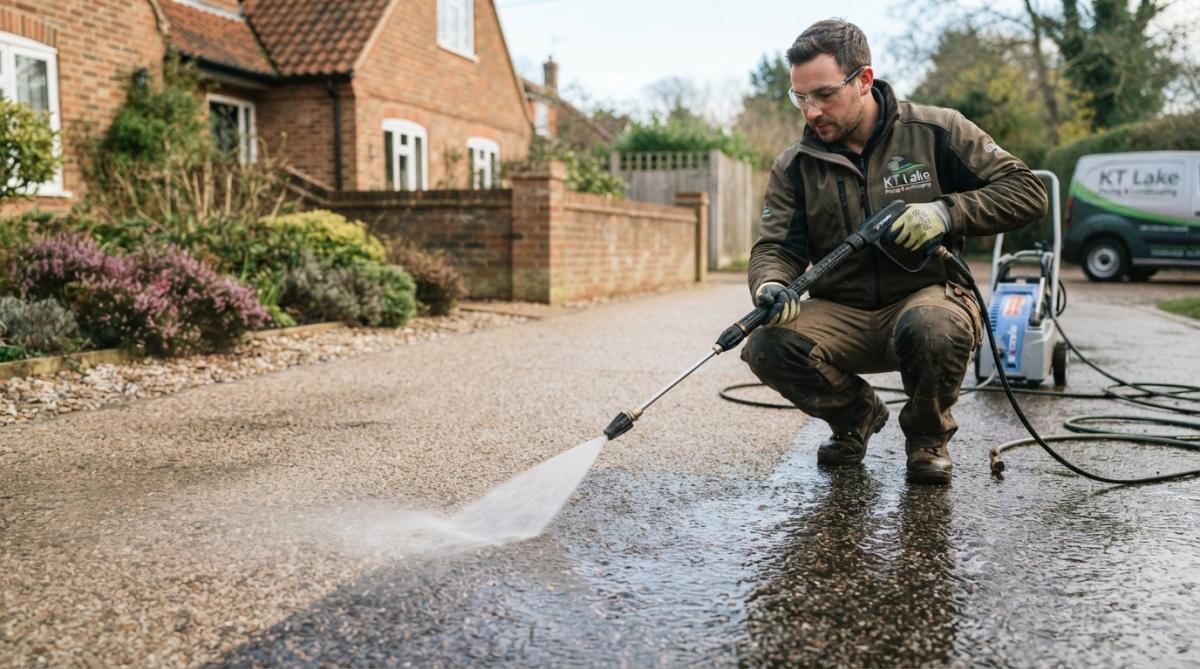
Start at the highest point of your driveway and work downward, moving the lance in overlapping passes. Keep the nozzle moving; never hold it stationary on one spot, as this concentrates pressure and creates surface damage. A sweeping motion across the driveway is far safer than point-focused cleaning. Water jetting at correct pressure and angle removes most surface contaminants effectively without forcing water deep into the resin structure.
Using high-pressure settings above 100 bar or holding the lance at a shallow angle (under 30 degrees) can create permanent damage including surface pitting, aggregate displacement, and resin cracking. Once compromised, water penetration accelerates deterioration. Repair requires full section replacement, which is expensive.
Best Resin Driveway Cleaner UK: Chemical Compatibility Guide
Selecting the right cleaning solution is critical because certain chemicals interact negatively with resin surfaces. pH-neutral cleaners are the safest choice, cleaning effectively without degrading the resin binder or discolouring the aggregate.
For routine cleaning, warm soapy water with a pH-neutral detergent addresses most stains and dirt. Apply the solution with a soft-bristled brush or mop, allow it to sit for 10-15 minutes, then rinse thoroughly with low-pressure water. For stubborn stains like oil residue or rust marks, specialist resin-safe cleaners are available. Always check the product label to confirm pH neutrality and test any new cleaner on an inconspicuous area first.
Avoid bleach, strong acids, and solvent-based degreasers entirely. These chemicals can bleach the aggregate, soften the resin, or create permanent staining that cannot be reversed.
Removing Weeds from Resin Driveway UK: Prevention and Removal
Weeds and moss are persistent challenges for resin driveway owners in Norfolk, particularly during wet seasons. The best approach is prevention, maintaining good drainage and eliminating conditions where seeds germinate. A clean, dry driveway discourages weed establishment far more effectively than removing weeds after they’ve taken root.
For sprouting weeds at early stages, manual removal is safest. Use a flat weeding tool to gently lift weeds from the surface, working carefully to avoid gouging the resin. For moss and algae, a stiff-bristled brush combined with pH-neutral cleaner removes most growth without chemicals. Scrub gently in circular motions, allowing the cleaner solution to sit for 10 minutes before brushing and rinsing thoroughly.
If chemical treatment becomes necessary, use moss and algae killers specifically formulated for permeable surfaces and resin compatibility. Apply according to manufacturer instructions, then brush and rinse thoroughly.
The most effective weed prevention is maintaining good surface drainage and keeping debris cleared. Weeds need moisture, organic matter, and stable conditions to germinate, remove these factors and sprouting becomes rare.
Tools and Equipment Required for Safe Cleaning
Effective resin driveway cleaning requires minimal specialist equipment. A stiff-bristled broom is essential for weekly maintenance. A soft-bristled brush or mop handles chemical cleaning and algae removal without scratching the surface.
For pressure washing, a low-pressure washer set to 80 bar or below is necessary. Use a wide-angle nozzle rather than a concentrated jet, a 25-degree or 40-degree nozzle is safer than narrow jets. A flat weeding tool handles manual weed removal effectively, whilst a garden vacuum removes fine dust and debris after pressure washing.
Frequency of Cleaning and Seasonal Maintenance
Cleaning frequency depends on environmental factors, usage, and local weather patterns in Norfolk. A typical schedule involves sweeping weekly, visual inspection fortnightly, and deeper cleaning quarterly. During autumn and winter months when organic debris accumulates and moisture lingers, increase sweeping frequency to twice weekly.
Spring cleaning removes winter grit and salt residue using low-pressure washing and pH-neutral cleaner. Summer maintenance focuses on algae and moss prevention through regular sweeping and drainage checks. After heavy rain or storms, inspect your driveway for debris accumulation and standing water, clearing debris within 24 hours.
Avoiding Surface Damage: What Not to Do
Never use high-pressure jet wash above 100 bar, this is the single most common cause of resin driveway damage. Even at 80-100 bar, maintain proper lance angles and never hold the nozzle stationary on one spot.
Do not use harsh chemicals including bleach, strong acids, or solvent-based cleaners. Test any new cleaning product on a hidden area first. Avoid wire brushes, scouring pads, and abrasive tools that scratch or gouge the surface. Never allow standing water to remain on the driveway for extended periods, as moisture encourages algae, moss, and biological staining.
Maintaining a resin driveway requires understanding the material’s specific vulnerabilities and respecting its limitations. The techniques covered here, routine sweeping, low-pressure washing, pH-neutral cleaning, and manual weed removal, keep your driveway in excellent condition for decades. KT Lake Paving and Landscaping, a Brett Approved Premier Installer with over 30 years of experience, understands resin surface care deeply. Whether you’re managing a recently installed driveway or addressing long-term maintenance, the team offers professional guidance, free no-obligation consultations, and a 10-year product guarantee backed by rigorous British Standards compliance. Proper maintenance protects your investment and ensures your resin driveway retains its aesthetic appeal and structural integrity throughout its lifespan.
Frequently Asked Questions
Can you pressure wash a resin driveway without damaging it?
Yes, you can pressure wash a resin driveway safely if you follow proper technique. Use a low-pressure setting (below 100 bar) and keep the lance at a shallow angle to avoid surface damage. Never use a high-pressure jet wash directly on the resin, as this can erode the aggregate and compromise surface integrity. Always maintain a distance of at least 30 centimetres from the surface and move the nozzle in consistent, overlapping motions.
What cleaning products are safe for resin driveways?
Only pH-neutral cleaning solutions are safe for resin driveways. Warm soapy water with a mild detergent works well for routine cleaning. Avoid bleach, acidic cleaners, and harsh chemicals, as these can damage the resin binder and cause discolouration or surface degradation. For stubborn stains, use specialist resin-safe cleaners specifically formulated for permeable surfaces. Always test any new product on a small, inconspicuous area first.
How often should a resin driveway be cleaned?
Routine cleaning with a stiff-bristled broom should be done weekly to remove debris and prevent grime accumulation. A deeper clean with water and mild detergent is recommended every 3-6 months, depending on usage and weather conditions. In autumn and winter, increase frequency to address fallen leaves, moss, and algae growth. Regular maintenance extends driveway longevity and maintains aesthetic value.
How do I remove oil stains from a resin driveway?
For fresh oil stains, absorb excess oil with absorbent material like cat litter or sand, then sweep away. Apply a pH-neutral degreaser designed for permeable surfaces and allow it to sit for 15-20 minutes before scrubbing gently with a soft brush. Rinse thoroughly with clean water using a low-pressure jet wash. For stubborn stains, repeat the process or consult a professional cleaning service. Avoid using harsh solvents that can damage the resin binder.


