

Table of Contents
- What You’ll Need to Prepare a Driveway Sub-Base
- Step 1: Excavate and Set the Driveway Sub-Base Depth
- Step 2: Lay and Level MOT Type 1 Sub-Base for Driveways
- Step 3: How to Compact a Driveway Sub-Base and Check Drainage and Falls
- Frequently Asked Questions
Last Updated: October 8, 2026
What You’ll Need to Prepare a Driveway Sub-Base
A driveway sub-base is the compacted stone layer beneath your finished surface that carries the weight of every vehicle. Get it wrong and even the best paving in Norfolk will sink. This guide from KT Lake Paving and Landscaping covers how to prepare a driveway sub-base in two stages.
Also called the MOT Type 1 layer, it spreads the load, keeps the surface stable, and helps water drain away.
Here is what you’ll need before you start:
- A spade, shovel, and wheelbarrow
- A tape measure and wooden pegs
- String line and a spirit level
- A rake and a heavy roller or plate compactor
- MOT Type 1 crushed stone
- A geotextile membrane
- Safety gloves, boots, and eye protection
Step 1: Excavate and Set the Driveway Sub-Base Depth
Driveway sub-base depth usually falls between 100mm and 150mm once compacted, and up to 200mm or more for heavier vehicles, depending on the ground and traffic.
Mark the area with pegs and string, then dig down to allow for the sub-base plus your finished surface, for a resin bound driveway, add around 15mm to 18mm on top. Digging too shallow is a common mistake: if the finished level sits too high, water runs towards the house instead of away from it.
- Remove all topsoil and soft ground
- Check the depth against your pegs as you dig
- Keep the base firm and free of roots
For advice on how deep your own driveway should be, check the official guidance on driveway construction and drainage.
Step 2: Lay and Level MOT Type 1 Sub-Base for Driveways
MOT Type 1 sub-base for driveways should be laid in two layers, not one. Spread the first to about half the final depth, rake it level, then compact it with a plate compactor or roller. Repeat for the second layer.
A geotextile membrane under the stone stops the sub-base mixing with the soft ground below, keeping the layer strong for longer (Do I need a Membrane?).
- Spread stone evenly, roughly 50mm to 75mm at a time
- Compact each layer until the stone stops moving
- Check levels often with a spirit level and straight edge
Skipping the membrane or compacting in one thick layer is the fastest way to a sunken driveway. The surface will crack within a year or two.
Step 3: How to Compact a Driveway Sub-Base and Check Drainage and Falls
To compact a driveway sub-base properly, work in passes across the whole area until the stone is tight and firm. A plate compactor suits small driveways; a roller suits larger ones.
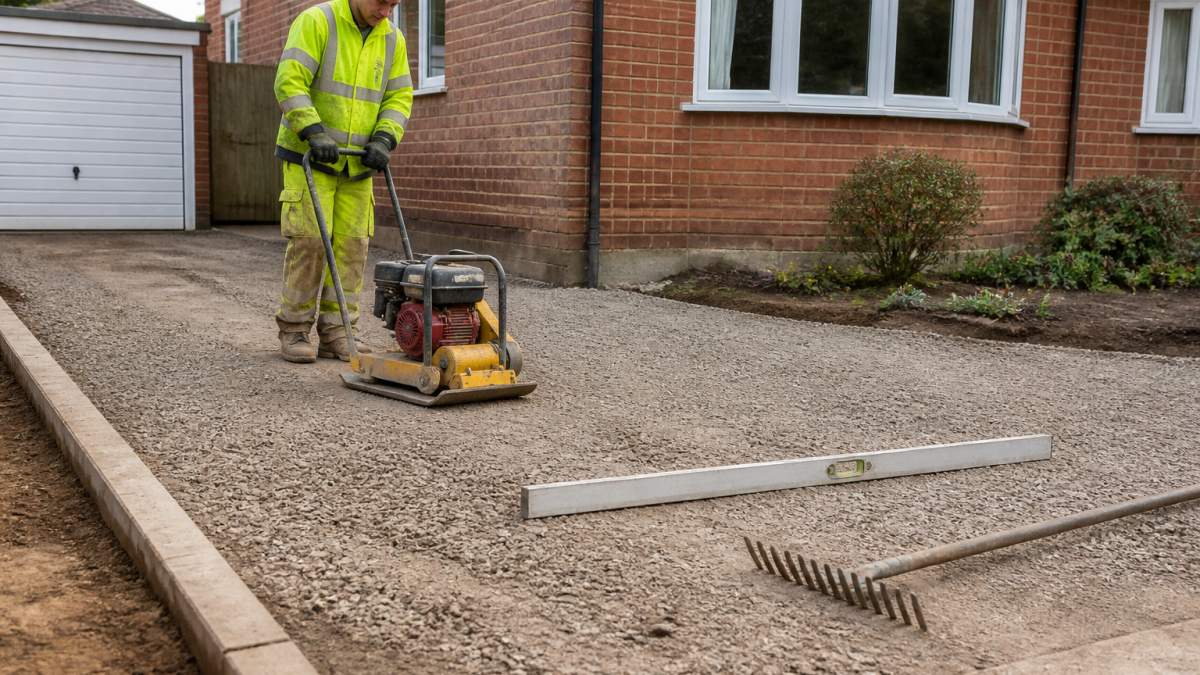
Driveway sub-base drainage and falls matter as much as strength. Aim for a fall of about 1 in 60 to 1 in 80, a small drop across the width of the drive, enough to shed water without being obvious.
- Compact in overlapping passes, not random spots
- Check the fall with a spirit level as you go
- Make sure water runs towards a drain or the road
For homes in Norfolk, standing water after rain is the clearest sign the falls are wrong.
Once the sub-base is solid, level, and draining well, the finished surface can go down. KT Lake Paving and Landscaping has over 30 years of experience preparing sub-bases for resin bound driveways, and every job meets approved British Standards with a 10-year product guarantee.
Frequently Asked Questions
How deep should a driveway sub-base be?
For most domestic driveways, a compacted MOT Type 1 sub-base of around 100mm is suitable for pedestrian and light vehicle use, while 150mm or more is typical where regular car traffic is expected. The right driveway sub-base depth depends on ground conditions, the finished surface, and how the driveway will be used. Weak or clay-heavy ground often needs a deeper layer to spread the load. As a Brett Approved Premier Installer, KT Lake Paving and Landscaping can advise on the correct depth for your specific site.
What is the best sub-base material for a driveway in the UK?
MOT Type 1 is the standard choice for a UK driveway sub-base. It is a well-graded crushed aggregate that compacts into a firm, stable layer and is widely specified for domestic and commercial drives. It drains reasonably well and provides a solid platform for resin bound, block paving, or tarmac finishes. The key is to lay it in layers and compact each one thoroughly rather than tipping it all in at once.
How do you compact a driveway sub-base properly?
Spread MOT Type 1 in layers of around 75mm and compact each layer with a vibrating plate or roller before adding the next. Work in overlapping passes across the whole area, then check levels with a straight edge and spirit level. Pay extra attention to edges and corners where compaction is often missed. A well-compacted sub-base is the single biggest factor in preventing the sinking and cracking that resin driveways can suffer when the base is rushed.
A weak sub-base is the reason most driveways fail early, and it is the one part you cannot fix later without digging everything up. KT Lake Paving and Landscaping prepares every base to last, using Brett Approved methods, a 10-year product guarantee, and no deposit required. Get a free, no-obligation estimate and let the team build a driveway that stays level for years.


