

Table of Contents
- What Are Eco-Friendly Alternatives to Concrete Driveways?
- Permeable Driveway Solutions UK: Resin-Bound and Block Paving
- Recycled Materials for Driveways UK: Gravel, Aggregates and Grids
- Eco-Friendly Driveway Drainage UK: Managing Water Sustainably
Last Updated: July 31, 2026
What Are Eco-Friendly Alternatives to Concrete Driveways?
Traditional concrete driveways dominate UK residential properties, yet they present significant environmental and practical challenges. Eco-friendly alternatives to concrete driveways have emerged as viable solutions that address drainage issues, reduce carbon footprint, and enhance property aesthetics. At KT Lake Paving and Landscaping, we’ve guided homeowners through these options with proven results: sustainable driveway surfaces perform better long-term, require less maintenance, and deliver genuine environmental benefits.
The core problem with standard concrete is that it prevents water infiltration entirely, creating surface runoff that overwhelms drainage systems and increases flood risk. Permeable alternatives solve this by allowing rainwater to drain naturally through the surface into the ground below. UK government sustainable drainage guidance now mandates SuDS (Sustainable Drainage Systems) compliance for new developments and major renovations, meaning many homeowners face regulatory requirements alongside environmental preferences. The technology has matured, costs have stabilised, and aesthetic options now match or exceed what concrete offers.
Below, we’ll evaluate five categories of eco-friendly alternatives: permeable resin-bound surfaces, recycled aggregate systems, plastic grid reinforcement, porous asphalt, and stabilised gravel solutions.
Permeable Driveway Solutions UK: Resin-Bound and Block Paving
Resin-bound driveways represent the premium end of the eco-friendly alternatives market, combining durability with genuine permeability. Water passes through the aggregate layer into a permeable sub-base, where it infiltrates naturally or drains to a designated soakaway.
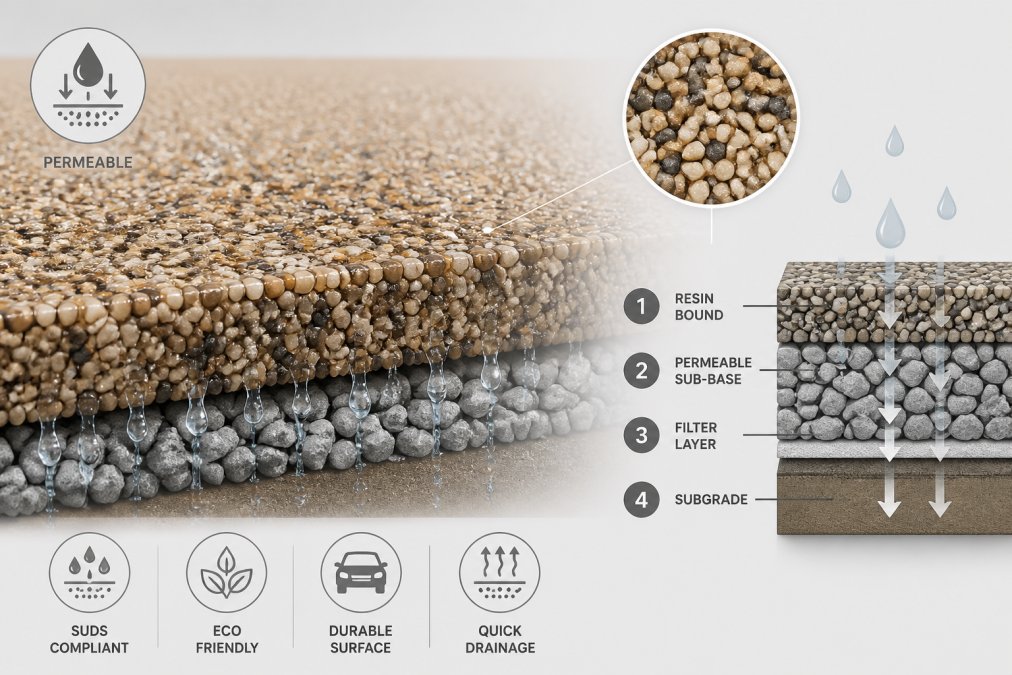
Installation demands precision. A properly prepared sub-base, typically 150mm of permeable stone, is essential. Without it, resin-bound surfaces fail prematurely. The 10-year product guarantee we offer is only possible because we invest in the foundation.
Permeable block paving, such as Marshalls Priora systems, offers an alternative within this category. These interlocking concrete blocks feature a patented nib design that creates voids for water passage. They’re less expensive than resin-bound but require more maintenance, as moss and algae colonise the gaps over time. Both systems comply with SuDS regulations and eliminate standing water entirely.
Recycled Materials for Driveways UK: Gravel, Aggregates and Grids
Recycled aggregates, crushed brick, concrete, and asphalt, offer the most affordable eco-friendly alternatives to concrete driveways. These materials are diverted from landfill and provide excellent drainage naturally.
The challenge is that loose gravel migrates and creates ruts. Stabilisation grids solve this problem. Products like EcoGrid and Ecodeck use 100% recycled plastic to create honeycomb structures that hold aggregate firmly in place whilst maintaining full permeability. A geotextile membrane is laid on prepared ground, the plastic grid is positioned and interlocked, and gravel is raked into the grid cells. The result is a stable, permeable surface that prevents rutting and reduces maintenance dramatically.
Nidagravel’s large-format honeycomb design suits wheelchair access and steep slopes particularly well. The trade-off is aesthetic: recycled aggregate driveways don’t offer the refined finish of resin-bound surfaces, but they deliver excellent value for practical homeowners prioritising function and sustainability.
| Solution | Material | Permeability | Maintenance | Best For |
|---|---|---|---|---|
| Resin-Bound | Natural stone + binder | Excellent | Minimal | Premium aesthetics, low maintenance |
| Block Paving | Permeable concrete | Good | Moderate | Traditional look, durability |
| Recycled Aggregate + Grid | Crushed materials + plastic | Excellent | Low | Budget-conscious, sustainability focus |
| Stabilised Gravel | Gravel + honeycomb grid | Excellent | Low | Wheelchair access, slopes |
| Porous Asphalt | Permeable bitumen | Excellent | Minimal | Fast drainage, durable |
Eco-Friendly Driveway Drainage UK: Managing Water Sustainably
The environmental case for permeable driveways centres on drainage management. Standard concrete forces all rainfall into surface runoff, overwhelming local drainage systems and increasing flood risk. Permeable alternatives reverse this: water passes through the surface layer into the sub-base, where it infiltrates into the soil or drains to a designated soakaway.
Environment Agency guidance on sustainable drainage systems confirms that properly designed permeable surfaces reduce surface water runoff by 95% compared to concrete. For Norfolk properties, where clay soils sometimes limit natural infiltration, a French drain or soakaway system can be incorporated into the design.
The critical factor is sub-base design: without adequate stone depth and proper compaction, even the most permeable surface will fail to drain effectively. A properly engineered 150-200mm base with correct grading ensures long-term performance. Professional installation is non-negotiable, as generic advice fails to account for individual site drainage characteristics.
Making the Right Choice for Your Norfolk Property
Selecting between eco-friendly alternatives depends on four variables: budget, aesthetic preference, maintenance tolerance, and site drainage characteristics.
For properties where appearance is paramount, resin-bound surfaces deliver unmatched results with minimal maintenance. For budget-conscious homeowners, recycled aggregate plus stabilisation grid offers genuine value and environmental benefit. For properties with steep slopes or accessibility requirements, stabilised gravel systems excel. For those prioritising rapid drainage and durability, porous asphalt provides excellent performance.
All these options outperform concrete on environmental metrics, drainage capacity, and long-term durability when properly installed. Professional installation matters profoundly. British Standards for permeable paving installation define rigorous requirements for sub-base preparation, compaction, and drainage design. Working with accredited installers who guarantee their work protects your investment.
Choosing eco-friendly alternatives to concrete driveways transforms how your property manages water whilst enhancing curb appeal. KT Lake Paving and Landscaping offers free, no-obligation consultations to assess your specific site and recommend the best approach. With over 30 years of industry experience, Brett Approved Premier Installer status, and a 10-year product guarantee, we ensure your driveway meets rigorous British Standards and delivers lasting performance. Contact us today for a professional assessment and transparent quote.
Frequently Asked Questions
What are the most environmentally friendly driveway options available in the UK?
The most eco-friendly alternatives to concrete driveways include permeable resin-bound surfaces, recycled aggregate driveways, permeable block paving, and gravel stabilisation systems using recycled plastic grids. Each option allows water to drain naturally, reducing surface runoff and supporting sustainable drainage (SuDS) compliance. Resin-bound driveways offer durability and aesthetic appeal, whilst recycled materials provide cost-effective, permeable solutions that divert construction waste from landfill.
How do permeable driveway solutions help with drainage and flood prevention?
Permeable driveway solutions work by allowing rainwater to pass through the surface layer into the ground below, rather than creating surface runoff that contributes to flooding. The porous structure of materials like resin-bound paving, permeable block systems, and stabilised gravel means water infiltrates naturally, recharging groundwater and reducing strain on local drainage infrastructure. This approach meets UK SuDS requirements and significantly reduces flood risk on residential properties.
What maintenance do eco-friendly driveways require compared to concrete?
Maintenance requirements vary by material. Resin-bound driveways are low-maintenance, requiring occasional pressure washing and minor repairs if damage occurs. Recycled gravel driveways need regular topping up to prevent rutting, though gravel stabilisation grids reduce this frequency significantly. Permeable block paving requires periodic cleaning to maintain permeability. Overall, most eco-friendly alternatives require less intensive maintenance than traditional concrete, though gravel options need more attention than sealed surfaces.
Are there planning permissions or regulations for installing eco-friendly driveways in Norfolk?
In Norfolk, planning regulations for driveways are generally lenient for residential properties under permitted development rights, though permeable surfacing is often encouraged under local planning policy. However, properties with specific conservation designations or listed building status may face restrictions. It's advisable to check with your local planning authority before installation. Many councils in Norfolk actively support SuDS-compliant driveways as part of sustainable drainage strategies, and some may even offer guidance on approved materials and installers.
How do recycled materials for driveways compare to virgin materials in terms of environmental impact?
Recycled materials for driveways significantly reduce environmental impact by diverting construction waste from landfill and eliminating the energy costs of extracting and manufacturing virgin aggregates. Recycled plastic grids, recycled asphalt, and reclaimed stone all lower the carbon footprint of driveway installation. Whilst virgin materials may offer marginal performance advantages in specific applications, recycled alternatives typically match or exceed durability standards whilst offering superior environmental credentials and supporting circular economy principles.


