

Table of Contents
- Resin Bound Driveways Norfolk: Why They Suit Coastal and Rural Properties
- Driveway Planning Permission UK: When You Need Approval in Norfolk
- Driveway Maintenance Tips for Norfolk Homes
- Frequently Asked Questions
Last Updated: September 26, 2026
Resin Bound Driveways Norfolk: Why They Suit Coastal and Rural Properties
Resin bound driveways Norfolk homeowners choose mix natural aggregate with a clear resin binder, trowelled onto a prepared base. The finish is smooth, permeable and seamless, with no loose stones to migrate onto the road.
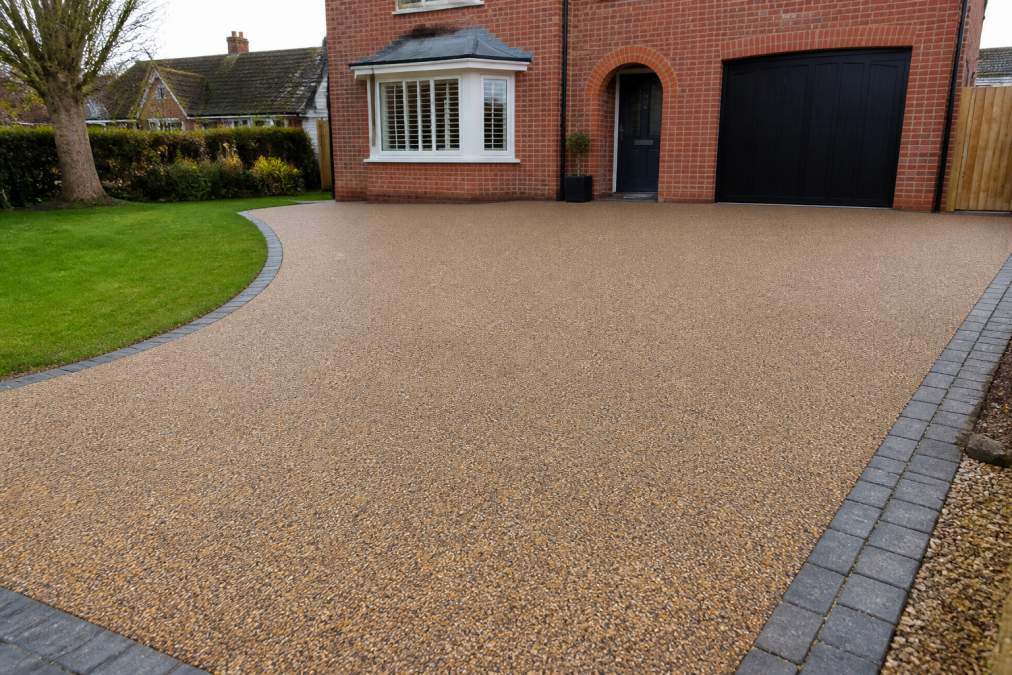
Norfolk’s coastal belt takes wind-driven salt and sand, while inland stretches sit on heavy clay that drains slowly. A permeable surface lets water pass through rather than pooling, and a bound finish resists debris that loose gravel cannot.
Resin bound surfacing is a decorative, permeable paving system where aggregate and resin are combined off-site and laid by hand to a uniform depth. The sub-base does the structural work; the resin layer only performs if properly built and drained.
Where resin bound suits Norfolk properties best:
- Coastal homes exposed to salt spray and wind-blown sand
- Rural plots with long, uneven or sloping driveways
- Households with young children or pets wanting a smooth, joint-free surface
- Driveways where standing water recurs
The drawbacks are worth stating plainly. Resin bound costs more than tarmac or basic concrete, needs a sound, well-compacted sub-base, and installation is weather-dependent.
Ask any installer how they handle the sub-base and drainage before you discuss colour. On clay-heavy ground, a poorly prepared base is the single most common reason a resin surface fails within a few years.
::: Proper foundation work remains the primary defense against structural shifting, though long-term surface integrity often depends on professional paver sealing services to protect against moisture penetration.
If the existing driveway is breaking up, patching it is usually a false economy; installers generally strip back to a solid foundation rather than surfacing over a failing one.
Driveway Planning Permission UK: When You Need Approval in Norfolk
Driveway planning permission UK rules mean most homeowners do not need to apply, provided the surface is permeable or drainage is directed to a soakaway rather than the public highway (Guidance on the permeable surfacing of front gardens). The permitted development conditions are set out in the government’s guidance on permeable paving and planning permission.
The position changes if the surface is impermeable and water would run onto the road, or if the property is listed, sits in a conservation area, or is a flat or maisonette with shared frontage. Norfolk has a large stock of listed and period properties, so check a building’s status before ordering materials.
Where a project needs consent, the local planning authority handles the application: Norwich City Council in and around Norwich, and Norfolk County Council with the district councils elsewhere.
| Situation | Permission Usually Needed? | What to Check |
|---|---|---|
| Permeable surface, water drains on-site | No | Surface meets permeability conditions |
| Impermeable surface draining to highway | Yes | Runoff and drainage plan |
| Listed building | Yes | Listed building consent |
Surfacing over an existing drive without checking drainage is the most common planning mistake. If rainwater runs onto the highway, the council can require the work to be undone at the homeowner’s expense.
Driveway Maintenance Tips for Norfolk Homes
Driveway maintenance tips for Norfolk homes come down to a short routine: sweep, wash, and clear the edges before debris works its way in. A resin bound surface needs far less attention than gravel, but it is not maintenance-free.
- Sweep every few weeks to lift sand, leaves and grit
- Wash occasionally with a hose or low-setting pressure washer
- Clear moss and weeds from borders and drainage channels
- Treat oil and fuel spills quickly with an absorbent material
- Avoid metal snow shovels, which can scratch the finish
Coastal properties collect more wind-blown sand, so those drives need more frequent sweeping; inland, the main issue is organic debris and moss along shaded edges. A low-pressure wash is enough for most marks, as a high-pressure jet held close can disturb the aggregate.
For homeowners weighing up a full overhaul against a smaller improvement, the RHS guide to permeable and sustainable garden surfaces is a useful reference on drainage-friendly options. Smaller landscaping work is often a sensible first step before committing to a whole driveway.
Choosing the right surface, confirming whether permission is needed, and keeping on top of a simple maintenance routine separate a driveway that lasts from one that needs replacing in a few years. KT Lake Paving and Landscaping, a Brett Approved Premier Installer with over 30 years of experience, provides free, no-obligation estimates and backs its resin bound work with a 10-year product guarantee from Brett, meeting or exceeding approved British Standards. Get started with KT Lake Paving and Landscaping and give your Norfolk property a driveway built to last.
Frequently Asked Questions
Do I need planning permission for a new driveway in Norfolk?
Often no. Permitted development usually covers a driveway finished with a permeable surface such as resin bound, or one where run-off drains to a lawn or border rather than the road. If your driveway slopes towards the street and water cannot drain on your land, you may need to apply to your local council. Check with your local planning authority before work starts.
What is the most durable driveway material for the Norfolk climate?
Resin bound surfacing handles the mix of coastal salt, damp winters and summer sun well, and its permeable finish lets rainwater drain through rather than pooling. The sub-base matters as much as the surface, so ask any contractor how they prepare and compact the ground underneath.
How do I maintain a driveway in Norfolk to prevent weed growth?
Sweep the surface every few weeks to clear soil and leaf litter, which is what weeds root into. Pull any seedlings early, before they establish. A quick rinse with a hose shifts bird droppings and coastal grit. Keep the edges and drainage channels clear so water moves away freely.


