

Table of Contents
- Driveway Surfacing Options for Families: Quick Comparison
- Resin Bound Driveways UK: Durability Meets Low Maintenance
- Permeable Driveway Regulations Norfolk: What Families Need to Know
- Driveway Maintenance Tips for Families: Keeping Your Surface Safe
Last Updated: August 17, 2026
Driveway Surfacing Options for Families: Quick Comparison
Choosing the right driveway surfacing for families involves balancing durability, safety, maintenance demands, and long-term value. The best option depends on your priorities: slip resistance for young children, easy cleaning for pet owners, or minimal upkeep for busy households. This guide covers the most practical options available in Norfolk, helping families make informed decisions based on real-world performance.
| Surface Type | Slip Resistance | Maintenance | Durability | Best For |
|---|---|---|---|---|
| Resin Bound | Excellent | Low | 10+ years | Modern homes, families prioritising aesthetics |
| Tarmac | Good | Moderate | 15-20 years | Budget-conscious families, high-traffic areas |
| Block Paving | Good | Moderate | 20+ years | Design-conscious families, easy repairs |
| Permeable Paving | Excellent | Moderate | 15-20 years | Eco-conscious families, flood-prone areas |
| Hot Tar and Chip | Good | Low | 7-10 years | Rural properties, traditional aesthetics |
| Gravel | Poor | High | 3-5 years | Budget properties, temporary solutions |
| Concrete | Fair | Low | 30+ years | Durability-focused families, large driveways |
Families with young children and pets favour surfaces that won’t stain easily, offer excellent grip when wet, and require minimal maintenance. Properties with drainage concerns benefit from permeable options. Households seeking longevity without fuss gravitate toward tarmac or concrete.
Resin Bound Driveways UK: Durability Meets Low Maintenance
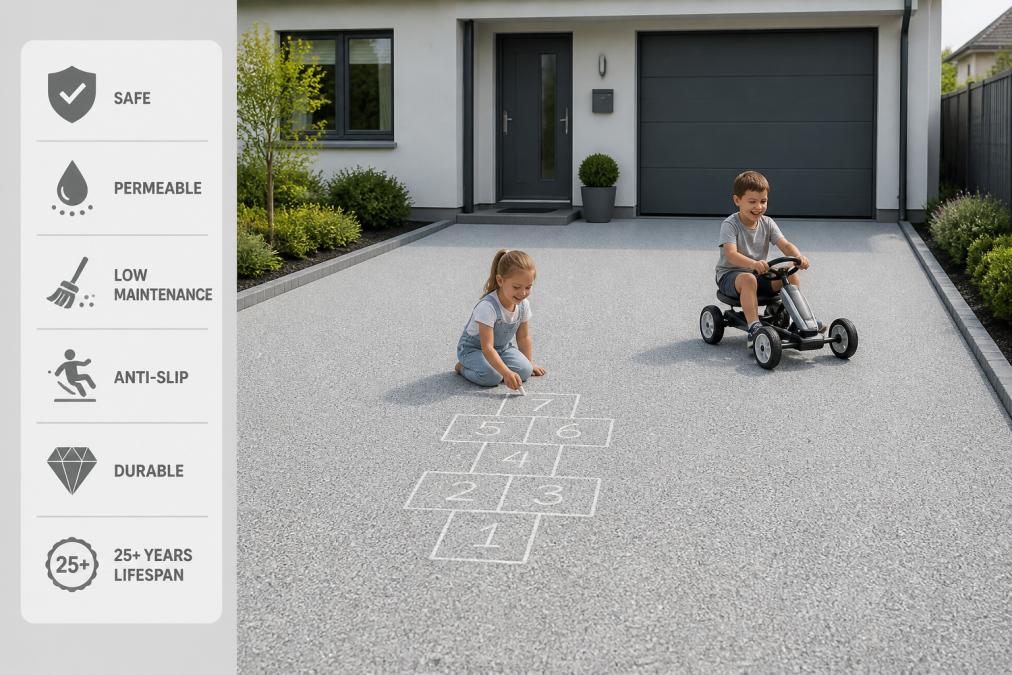
Resin bound driveways have become increasingly popular with families across Norfolk because they deliver low maintenance without sacrificing appearance. The surface bonds aggregate stones to a resin base, creating a smooth, permeable finish that resists weeds, puddles, and staining.
For families, the key advantage is safety. The textured finish provides excellent slip resistance, even when wet or icy, critical if your driveway doubles as a play area or pet run. The surface is also forgiving: minor cracks or damage can often be repaired without replacing entire sections.
The permeable nature means water drains through rather than pooling on top, reducing puddles and preventing ice formation in winter. For Norfolk properties, this matters considerably. As a Brett Approved Premier Installer, KT Lake Paving and Landscaping applies resin bound surfaces that meet rigorous British Standards, backed by a 10-year product guarantee covering both materials and workmanship.
Maintenance is genuinely minimal. A light sweep and occasional rinse with a hose keeps it clean. Unlike tarmac, it won’t bleed tar in summer heat. Unlike block paving, weeds won’t grow between gaps. Most families spend less than an hour per year on upkeep.
Request a site visit before committing. A solid sub-base is essential; if your existing driveway has poor drainage or an unstable foundation, the resin won’t perform well. Reputable installers will assess this honestly and explain what preparation work is needed.
Permeable Driveway Regulations Norfolk: What Families Need to Know
Permeable driveways aren’t just practical; in many areas of Norfolk, they’re increasingly required by planning regulations. Understanding these rules prevents costly mistakes and ensures your investment is compliant.
Building Regulations and Sustainable Drainage (SuDS) guidance now emphasise permeable surfaces in new construction and major renovations. The Environment Agency and local planning authorities encourage properties to manage surface water on-site rather than directing it into overtaxed drainage systems. For families building new homes or undertaking significant driveway work, permeable options are often preferred or mandated.
In flood-prone areas of Norfolk, planning officers may specifically require permeable surfacing to reduce runoff and help with groundwater recharge. Families in these areas benefit: a permeable driveway reduces your property’s contribution to surface water problems and can lower flood insurance premiums.
Check with your local planning authority before starting work. Reputable contractors like KT Lake Paving and Landscaping stay current with regulations and will advise whether your project requires permeable surfacing.
Don’t assume your old driveway replacement is exempt from SuDS requirements. Many local authorities now apply these rules to like-for-like replacements of substantial areas. Installing a non-permeable surface when a permeable alternative is required can result in enforcement action and costly remediation.
Driveway Maintenance Tips for Families: Keeping Your Surface Safe
The best driveway surfacing for families is only as good as the maintenance it receives. Even low-maintenance options require basic care to stay safe, attractive, and functional.
Regular Cleaning
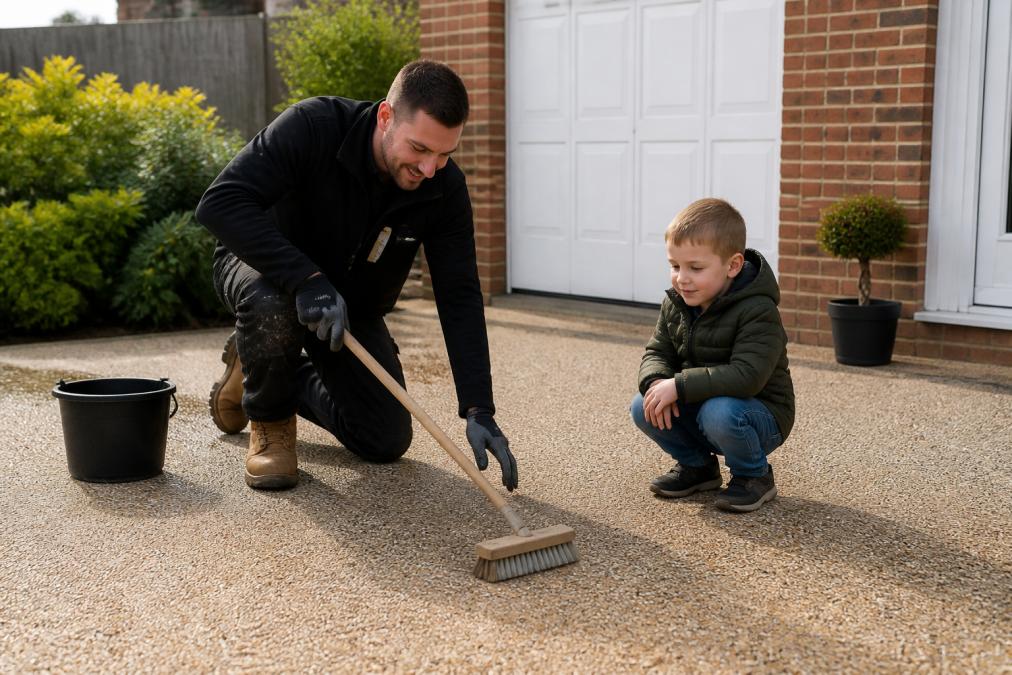
Sweep or brush your driveway weekly to remove leaves, dirt, and debris. This prevents staining and keeps the surface visible, critical for safety. For resin bound or permeable paving, use a soft brush; avoid pressure washers on resin, as high pressure can damage the surface.
Spot Treatment
Address stains promptly. Oil spills, tyre marks, and organic matter are easier to remove fresh. For resin surfaces, mild detergent and a soft cloth work well. Avoid aggressive chemicals that degrade sealers.
Winter Preparation
Before winter, ensure drainage is clear. Blocked drains create ice hazards. If you use salt or grit for de-icing, use sparingly; excessive salt damages most surfaces. Calcium chloride is gentler than sodium chloride.
Inspection and Repair
Walk your driveway monthly, especially after heavy rain or frost. Look for cracks, settling, or drainage issues. Early intervention prevents small problems becoming expensive repairs.
Pet and Child Safety
Rinse urine from the surface regularly, as it can stain and degrade some materials. Ensure the surface is free of loose gravel, sharp edges, or trip hazards. Permeable paving and resin bound are safer than loose gravel for young children.
Professional Maintenance
Most families benefit from professional inspection every 2-3 years. Contractors can identify sub-surface issues before they become visible. For resin bound driveways installed by Brett Approved Premier Installers like KT Lake Paving and Landscaping, the 10-year guarantee covers material defects.
Selecting the best driveway surfacing for families requires balancing safety, durability, maintenance, and budget. Resin bound driveways stand out for families prioritising low maintenance and excellent slip resistance, particularly in Norfolk’s climate. For a free, no-obligation consultation and expert advice tailored to your property, contact KT Lake Paving and Landscaping. As a Brett Approved Premier Installer with over 30 years of experience, the team will assess your site, explain your options, and provide a clear estimate, with a 10-year product guarantee on all work.
Frequently Asked Questions
What is the safest driveway surface for children playing?
Resin bound driveways offer excellent safety for children due to their smooth, even surface with minimal trip hazards and good slip resistance when properly installed. Rubber crumb driveways provide shock-absorbing properties, making them ideal for families with young children. Block paving is also safe but requires careful base preparation to prevent shifting. Avoid loose gravel if young children play nearby, as it can scatter and create uneven patches. The best choice depends on your family's specific needs and how the driveway will be used.
Is resin bound driveway surfacing permeable?
Yes, resin bound driveways are permeable surfaces that allow rainwater to drain through to the ground below. This reduces puddles, improves drainage, and helps prevent flooding, particularly valuable in areas prone to heavy rainfall. The permeability also means water recharges groundwater naturally. This feature makes resin bound driveways environmentally friendly and compliant with sustainable drainage principles, which is why they're increasingly popular with environmentally conscious families.
How long do different driveway surfaces last in the UK climate?
Concrete driveways typically last 30-40 years with proper care. Resin bound driveways offer 10-15 years or more with a 10-year product guarantee when installed by approved contractors. Tarmac usually lasts 15-20 years before requiring resurfacing. Block paving can last 20-25 years if the base remains stable. Hot tar and chip typically lasts 7-10 years. Gravel requires regular maintenance and may need topping up every 2-3 years. The UK's freeze-thaw cycles and wet climate mean proper drainage and base preparation are essential for longevity.
Do I need planning permission for a new driveway in Norfolk?
Most driveway installations don't require planning permission in Norfolk. However, if your property is listed or in a conservation area, you may need consent. Permeable surfaces like resin bound or porous paving are often encouraged by local planning authorities due to flood prevention benefits. Building Regulations approval may be required for certain installations. It's best to check with your local planning authority before starting work, or discuss this with an experienced contractor who can advise on your specific property.
How does hot tar and chip compare to resin bound for family homes?
Hot tar and chip offers a cost-effective, traditional appearance with good traction and durability. It requires a solid base and is quick to install. Resin bound is more modern, offers superior aesthetics with colour choices, provides better drainage, and requires less maintenance. Resin bound typically lasts longer and comes with extended guarantees. Hot tar and chip may suit larger rural properties or families on a tighter budget, whilst resin bound appeals to families wanting a contemporary look with minimal upkeep and environmental benefits.


