

Table of Contents
- The Key Benefits of Resin Bound Driveways Explained
- Resin Bound vs Resin Bonded: Which Is Right for You?
- How Long Do Resin Driveways Last, And What Affects Longevity?
- Resin Bound Driveway Maintenance, Cost, and Long-Term Value
Last Updated: June 18, 2026
Resin bound driveways have become one of the most popular surfacing choices for UK homeowners, and the benefits go well beyond aesthetics. At KT Lake Paving and Landscaping, we’ve installed resin bound surfaces across Norfolk for over 30 years. The questions we hear most often are: how long will it last, what does it cost to maintain, and is it worth it compared to block paving or tarmac? Below, we answer all of that directly, including technical details most guides skip.
The Key Benefits of Resin Bound Driveways Explained
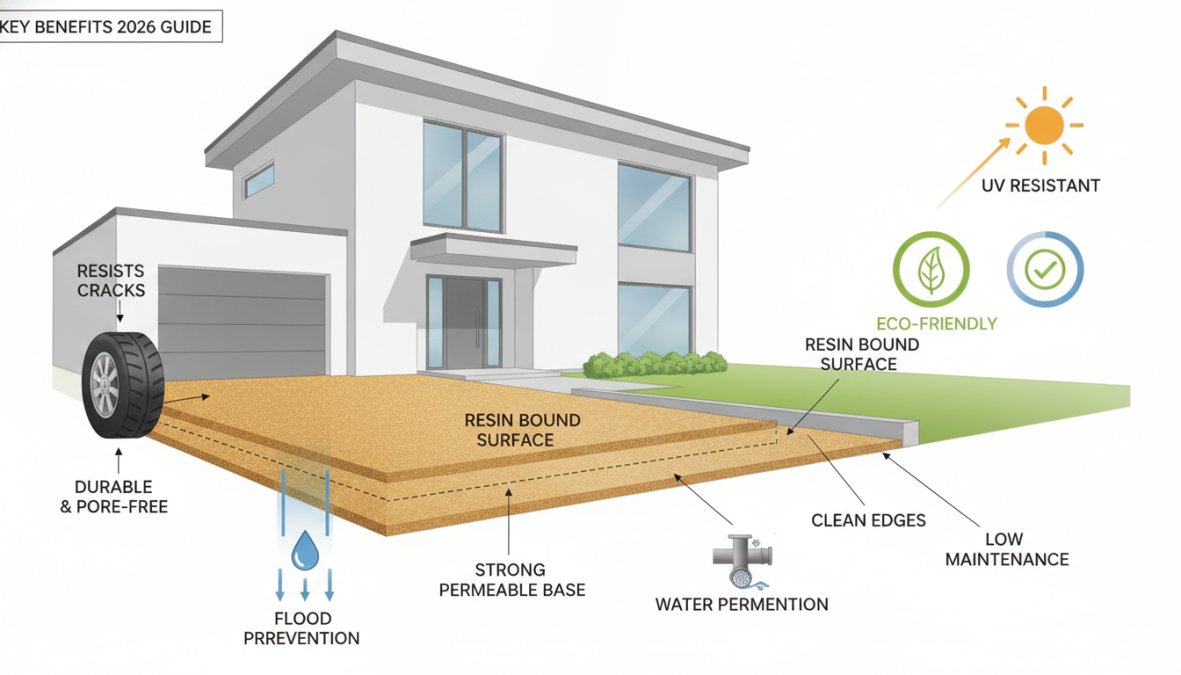
Resin bound paving is created by mixing natural aggregate with a UV stable polyurethane resin, then trowel-applying it over a prepared sub-base. The result is a smooth, porous, durable finish that allows surface water to drain through rather than run off. That single characteristic drives most of the practical advantages.
(/resin-bound-driveways-gallery/) Explained]
-
SUDs compliance and permeability. Resin bound surfaces are fully permeable and meet Sustainable Drainage System (SUDs) requirements. According to UK Government planning guidance on permeable surfacing, driveways over five square metres using permeable materials do not require planning permission, a significant legal advantage over solid tarmac or standard block paving.
-
Kerb appeal and colour blending. Aggregate comes in dozens of colours and textures, allowing bespoke finishes that complement the property.
-
Slip resistance. The textured aggregate surface provides reliable grip in wet conditions, important in Norfolk’s climate.
-
Weed resistance. The resin binds aggregate into a solid matrix, preventing weeds from pushing through as they do with loose gravel or poorly jointed block paving.
-
No planning permission required (in most cases). The permeable nature of resin bound surfaces typically exempts them from requirements that apply to impermeable driveways.
-
Flexible and crack-resistant. Unlike rigid concrete, a properly installed resin bound surface handles ground movement without cracking.
Resin bound and resin bonded are not the same product. Resin bound mixes aggregate and resin together before laying, it is fully permeable. Resin bonded scatters loose aggregate onto a resin-coated surface, it is not. Always confirm which system your installer is quoting for.
As the Environment Agency’s guidance on sustainable drainage explains, managing surface water at source is a priority in flood risk management across England, including low-lying parts of Norfolk.
Resin Bound vs Resin Bonded: Which Is Right for You?
Most people searching for resin driveways don’t realise there are two distinct products, and the difference is not cosmetic.
Resin bound is the premium system. Aggregate and polyurethane resin are mixed in a forced action mixer, then trowel-applied. The aggregate is fully encapsulated, creating a smooth, permeable, structurally sound finish with no loose stone risk.
Resin bonded works differently. Resin adhesive is applied first, then aggregate is broadcast over the top. The surface is not permeable, and loose aggregate can detach over time under heavy vehicle traffic.
| Feature | Resin Bound | Resin Bonded |
|---|---|---|
| Permeability | Fully permeable (SUDs compliant) | Not permeable |
| Planning permission | Usually not required | May be required |
| Loose stone risk | None | Present over time |
| Durability | High (15-25 years) | Moderate |
| Aggregate finish | Smooth, even | Textured, slightly raised |
| Best for | Driveways, paths, patios | Decorative footpaths |
For driveways, resin bound is the right choice in almost every case. Resin bonded has uses in pedestrian areas where drainage is less critical, but for a driveway handling daily vehicle loads and drainage regulations, the structural integrity of resin bound is what you need.
Do not accept a quote that does not specify which system is being installed. Some installers use the terms interchangeably, then install the cheaper resin bonded product. Ask for written confirmation that the system is fully permeable resin bound.
How Long Do Resin Driveways Last, And What Affects Longevity?
A well-installed resin bound driveway typically lasts between 15 and 25 years. That lifespan depends on three things: sub-base preparation, resin quality, and maintenance.
Sub-base requirements are where most failures originate. The standard approach is a compacted MOT Type 1 sub-base at 150mm minimum, topped with a 40mm layer of permeable tarmac or concrete. Skipping the sub-base is the single most common cause of premature failure.
UV stable polyurethane resin matters for colour retention. Lower-grade resins yellow or fade within a few years. A UV stable resin maintains the aggregate’s natural colour for the life of the surface, fading is not reversible without resurfacing.
Resin bound handles Norfolk’s freeze-thaw cycles well because the flexible binder accommodates minor movement without cracking, and the permeable structure prevents water from pooling and freezing on the surface. As the British Standards Institution guidance on resin bound surfacing outlines, installations meeting BS 7533 provide the structural performance required for residential driveway use.
Resin Bound Driveway Maintenance, Cost, and Long-Term Value
Resin bound maintenance is genuinely low compared to alternatives. The porous surface drains water through rather than pooling it, aggregate is fully bound with no loose stones or joints to re-sand, and UV stable resins prevent colour degradation.
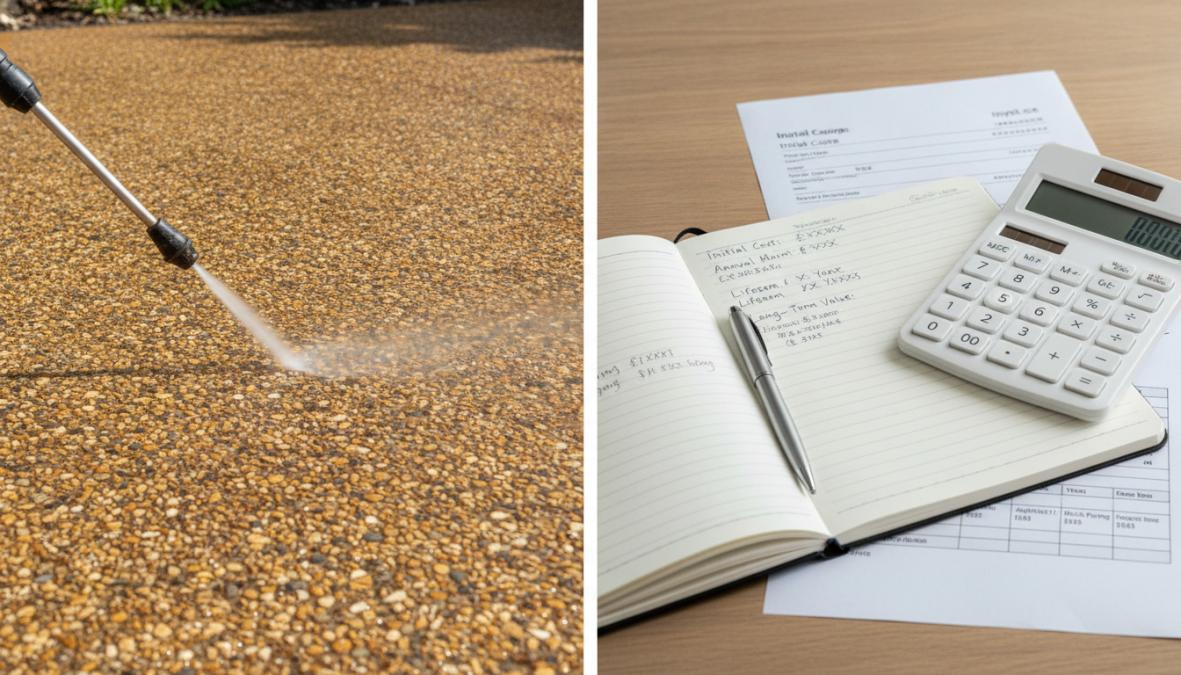
Routine maintenance consists of:
- Occasional pressure washing to remove moss, algae, and leaf staining
- Leaf clearance in autumn, since decomposing organic material is the primary source of staining
- Checking drainage channels or edging annually for movement
What you don’t need: re-sand joints, re-seal the surface, treat for weeds routinely, or patch loose stone. Compare that to block paving, which requires regular joint sanding and weed treatment, or tarmac, which softens in heat and requires periodic sealing.
Resin bound driveway cost varies by region, surface area, sub-base condition, and aggregate choice. In Norfolk, resin bound typically sits above tarmac in upfront cost but is comparable to quality block paving when fully priced. The most important thing most cost comparisons miss is the sub-base: a low quote often excludes proper preparation, and a full installation with correct sub-base lasts two to three times as long as a cheap overlay.
The real cost of a resin bound driveway is not the upfront price, it is the cost per year of functional life, including maintenance. Properly installed resin bound surfaces consistently outperform cheaper alternatives on this measure over a 10-20 year horizon.
Because resin bound surfaces are permeable, most residential installations in England do not require planning permission under permitted development rights. Confirm the current position with your local planning authority if your property is in a conservation area.
For homeowners in Norfolk looking for a driveway installation that meets British Standards and is backed by decades of regional experience, KT Lake Paving and Landscaping offers free, no-obligation estimates with no deposit required. As a Brett Approved Premier Installer, every resin bound installation comes with a 10-year product guarantee from Brett, giving homeowners long-term confidence in the surface’s performance.
Frequently Asked Questions
Are resin bound driveways permeable?
Yes, resin bound driveways are fully porous, meaning water drains through the surface rather than running off. This makes them SUDs compliant, which is a key requirement under UK planning rules for driveways over five square metres. The permeable nature also helps with flood risk management and reduces pressure on local drainage systems, making them an environmentally responsible choice compared to solid surfaces like tarmac or block paving.
How long do resin bound driveways last?
A professionally installed resin bound driveway can last 15 to 25 years or more when laid on a correctly prepared sub-base and using UV stable polyurethane resin. Longevity depends on the quality of materials, the installer's workmanship, and basic maintenance. KT Lake Paving and Landscaping backs installations with a 10-year product guarantee from Brett, reflecting the long-lasting nature of a well-installed resin bound surface.
What are the disadvantages of resin bound driveways?
The main disadvantages of resin bound driveways include a higher upfront cost compared to gravel or basic tarmac, and the need for a solid, well-prepared sub-base to prevent cracking or movement over time. They must be installed by experienced professionals to ensure a consistent, trowel-applied finish and proper drainage. However, low maintenance requirements and strong durability mean the long-term driveway investment often outweighs the initial cost.
Do resin bound driveways require planning permission?
In most cases, resin bound driveways do not require planning permission because their permeable, porous surface allows rainwater to drain naturally, satisfying permitted development rules introduced in 2008. However, if you live in a listed building or conservation area in Norfolk, additional restrictions may apply. It is always worth checking with your local planning authority before installation to confirm your specific property's requirements.
What is the difference between resin bound and resin bonded driveways?
Resin bound driveways mix aggregate and polyurethane resin together before laying, creating a smooth, porous, and durable surface. Resin bonded driveways apply resin to the surface first, then scatter aggregate on top, the result is not permeable and the stones can loosen over time. For SUDs compliance, long-term durability, and a superior aesthetic finish, resin bound is widely considered the better choice for residential driveways.
Choosing a driveway surface is a long-term decision, and the wrong installation can mean costly remediation within five years. KT Lake Paving and Landscaping brings over 30 years of experience installing resin bound driveways across Norfolk, working to approved British Standards with a 10-year product guarantee from Brett and no deposit required to get started. Get a free estimate from KT Lake Paving and Landscaping and invest in a surface that will perform for decades.


