

Table of Contents
- How to Choose Reliable Paving Contractors: The Key Criteria
- Paving Contractor Red Flags You Should Never Ignore
- How to Compare Paving Quotes and Understand Your Contract
- Questions to Ask Paving Contractors Before You Commit
Last Updated: June 17, 2026
Choosing the wrong paving contractor is one of the most costly mistakes a homeowner or commercial property manager can make. This guide from KT Lake Paving and Landscaping covers every stage of the vetting process, from checking licensing to spotting contract red flags, so you can commission work in Norfolk with genuine confidence.
A reliable paving contractor holds current licensing and insurance, carries verifiable references, provides a written contract with a defined scope of work, and uses materials appropriate to your project, whether asphalt, concrete, resin bound surfacing, or tar and chip.
How to Choose Reliable Paving Contractors: The Key Criteria
The foundation of any successful paving project is the sub-base, a contractor who skips a thorough site assessment before quoting is already telling you something important about how they work.
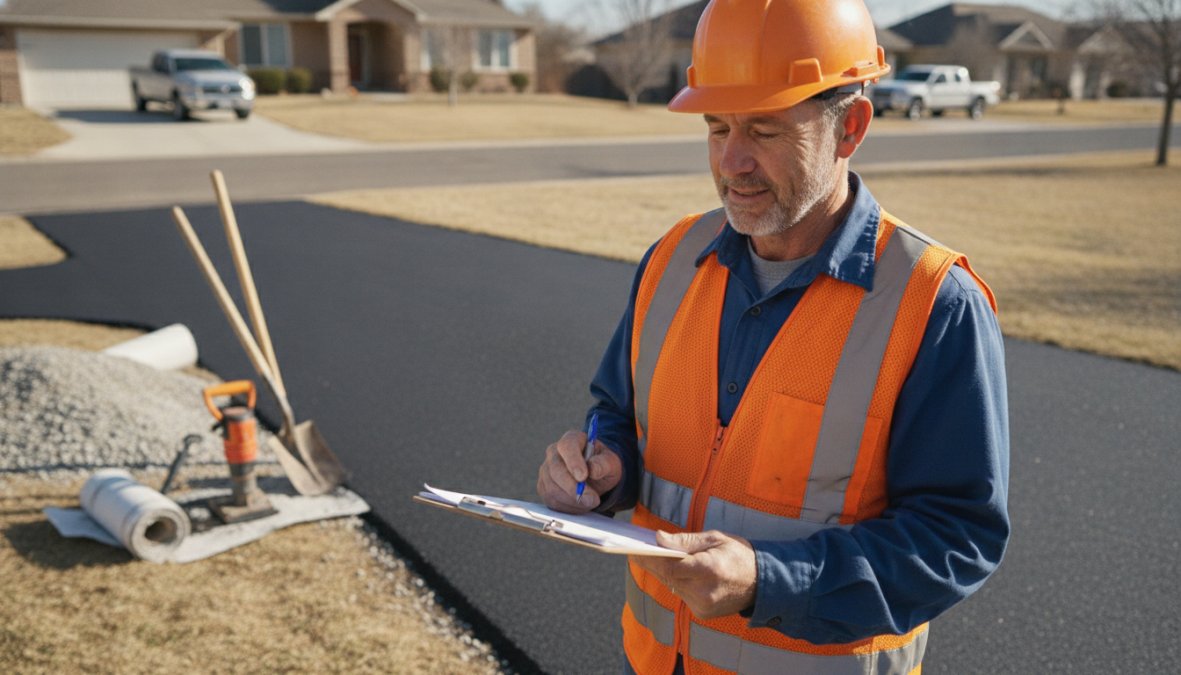
Verify these criteria before committing to any paving contractor in Norfolk:
- Licensing and registration: Confirm the contractor is registered with the relevant trade body. According to the UK Government’s guidance on hiring tradespeople, this basic step is often overlooked.
- Insurance: Ask for proof of public liability insurance and worker’s compensation cover. Without it, liability for on-site injuries can fall on you.
- Brett Approved or equivalent certification: Accreditations such as Brett Approved Premier Installer status signal workmanship meets approved British Standards.
- Experience with your surface type: Ask specifically about projects matching your scope, residential driveway expertise doesn’t automatically transfer to commercial parking lots.
- Local knowledge: Norfolk-based contractors understand local drainage requirements, soil conditions, and planning considerations that out-of-area operators may miss.
Ask any contractor to show you a [recently completed project in person](/gallery/), not just photos. Seeing the finished surface, edging detail, and drainage handling tells you far more than a portfolio image.
The quality of the consultation reveals as much as the quote itself. A contractor who asks detailed questions about your drainage, existing sub-base condition, and intended use is one who actually understands the work.
Paving Contractor Red Flags You Should Never Ignore
Getting three quotes is necessary but not sufficient. What matters more is knowing which signals should stop you from hiring someone entirely, regardless of price.
Paving contractor red flags are warning signs during the quoting or contracting process that indicate higher risk of poor workmanship, disputes, or financial loss.
Watch for these patterns:
- Demanding a large upfront deposit: Reputable contractors rarely require a substantial deposit before materials are ordered.
- No written contract or vague project scope: Verbal agreements have no legal weight. If a contractor resists putting scope, materials, timeline, and payment terms in writing, walk away.
- Unusually low quotes: A quote significantly below competitors almost always means corners are being cut on materials, sub-base preparation, or drainage grading.
- No verifiable references or reviews: Any contractor who cannot point you to recent feedback or completed local projects warrants immediate concern.
- Pressure tactics: "This price is only good today" is a sales tactic, not a reflection of actual material costs.
- Subcontractors without disclosure: Ask directly whether the work will be carried out by the contractor’s own team. Undisclosed subcontracting removes your ability to vet the people actually doing the work.
Never pay cash-in-hand for paving work without a receipt and written contract. If a dispute arises, you will have no documentary evidence of what was agreed, and recovering costs becomes extremely difficult.
According to Citizens Advice guidance on rogue traders and cowboy builders, pressure selling and large cash payment requests are among the most common tactics used by unreliable tradespeople in the UK.
How to Compare Paving Quotes and Understand Your Contract
Most homeowners compare quotes by looking at the bottom-line number. That’s the wrong place to start. Two quotes for a Norfolk driveway can differ substantially in price while describing entirely different scopes, sub-base depth, surface material grade, drainage inclusion, and warranty coverage all vary.
Use this structured approach:
- Confirm each quote specifies the same surface area and materials.
- Check whether sub-base preparation and grading are itemised or bundled.
- Verify that drainage solutions are addressed, not assumed.
- Confirm the warranty period and what it covers: materials, workmanship, or both.
- Check payment terms, a reputable contractor will not require full payment before completion.
- Ask whether the price includes site clearance and waste removal.
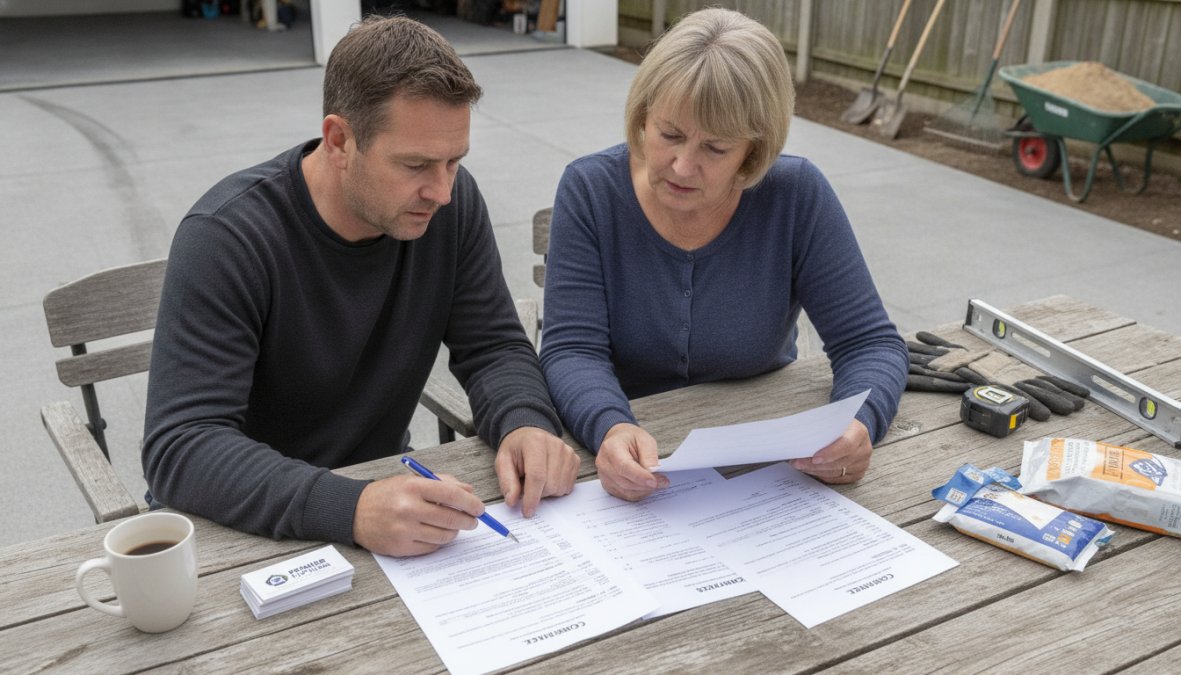
A professional paving contract should include at minimum:
| Contract Element | What to Look For |
|---|---|
| Scope of work | Specific surface area, materials, depth |
| Start and completion dates | Firm dates, not vague estimates |
| Payment schedule | Staged payments tied to milestones |
| Materials specification | Grade, brand, thickness |
| Warranty terms | Duration, what is covered |
| Dispute resolution | Process for raising concerns |
| Insurance confirmation | Policy number or certificate |
A contract that lacks a defined scope of work and a clear warranty clause is not a contract worth signing. These two elements are your primary protection if the finished surface does not meet the agreed standard.
As noted by the Federation of Master Builders’ guidance on building contracts, a detailed written contract is the most effective way to prevent disputes on any paving project.
Questions to Ask Paving Contractors Before You Commit
Direct questions separate reliable contractors from unreliable ones fast. Most contractors expect to be asked about price; fewer expect detailed questions about process.
On experience and credentials:
- How long have you been operating as a paving contractor in Norfolk?
- Are you registered with a recognised trade body or accreditation scheme?
- Can you provide references from projects similar to mine?
On the project itself:
- What sub-base depth do you recommend for this surface type and use?
- How will drainage be handled?
- What materials will you use, and why are they appropriate?
On commercial terms:
- What does your warranty cover, and for how long?
- Will your own team carry out all the work, or will subcontractors be involved?
- What is your payment schedule?
On supervision and aftercare:
- Who will supervise the project on site?
- What maintenance does the finished surface require, and when should sealcoating be applied?
- What is the expected maintenance lifecycle for the surface you’re recommending?
The maintenance lifecycle question catches many contractors off guard, asphalt typically requires sealcoating every three to five years to maintain integrity. A contractor who cannot answer clearly may not be thinking beyond installation day. For homeowners and commercial property managers in Norfolk, KT Lake Paving and Landscaping brings over 30 years of experience, Brett Approved Premier Installer accreditation, and a 10-year product guarantee. For further context on professional paving standards, see Interpave guidance on concrete block and paving standards.
Selecting the right contractor requires more than comparing headline prices. KT Lake Paving and Landscaping offers free estimates, no deposit required, and workmanship backed by Brett Approved Premier Installer status and a 10-year product guarantee, making it straightforward to verify the credentials this guide recommends you look for. Get started with KT Lake Paving and Landscaping and commission a surface that meets rigorous British Standards from day one.
Frequently Asked Questions
What questions should I ask a paving contractor before hiring?
When learning how to choose reliable paving contractors, always ask about their licensing, liability insurance, and worker's compensation coverage. Request details on the materials they use, whether asphalt, concrete, or resin bound, and ask about sub-base preparation, drainage, and grading. Confirm whether they use subcontractors, ask for a written estimate, and check what warranty or guarantee covers both materials and workmanship. Asking for references from recent residential or commercial property projects is also essential before signing anything.
How do I know if a paving contractor is reputable?
A reputable paving contractor will be fully licensed, bonded, and insured, and should be able to provide proof on request. Look for industry certifications, such as being an approved installer for a recognised manufacturer, along with verifiable customer reviews and references. Established contractors will also offer a detailed written estimate, a clear project scope, and a workmanship warranty. Longevity in the trade and membership of professional bodies are further indicators of reliability and craftsmanship.
Should I get multiple quotes for paving work?
Yes, getting at least three quotes is strongly recommended when comparing paving contractors. Multiple estimates allow you to understand the fair market rate for your driveway, parking lot, or commercial property project. When you compare paving quotes, look beyond the headline price: check what materials are specified, whether drainage and sub-base work are included, and what the payment terms are. The lowest quote is not always the best value if it skips essential preparation steps or uses inferior materials.
What are the signs of a bad paving job?
Common signs of poor workmanship include cracking or crumbling shortly after installation, poor drainage causing water pooling, uneven surfaces, and edges that are not properly finished. These issues often stem from inadequate sub-base preparation, incorrect grading, or low-quality materials. A contractor who pressures you for upfront deposits, refuses to provide a written contract, or cannot show proof of insurance should be treated as a serious red flag before any work begins.
Do paving contractors need to be licensed and insured?
Licensing requirements vary by location, but any contractor working on residential or commercial property should carry liability insurance and worker's compensation at a minimum. These protect you as the property owner if damage occurs or a worker is injured on site. Always ask to see certificates of insurance before work starts. Contractors who are also bonded provide an additional layer of financial protection. Choosing a properly insured contractor is a non-negotiable step when deciding how to choose reliable paving contractors.


