

Table of Contents
- How to Clear the Site for Driveway Paving
- Planning Permission for Driveways and What You Need to Know
- Permeable Driveway Regulations and Your Responsibilities
- Frequently Asked Questions
Last Updated: September 28, 2026
How to prepare your property for driveway paving determines whether your new driveway lasts for years or fails within months. Proper preparation is key to avoiding costly problems later.
How to Clear the Site for Driveway Paving
Understanding how to prepare your property for driveway paving means clearing your site properly before the paving team arrives, remove all obstacles, debris, and existing materials.
Remove surface debris including gravel, loose stones, old asphalt, vegetation, garden furniture, bins, and parked vehicles to ensure the area is completely accessible.
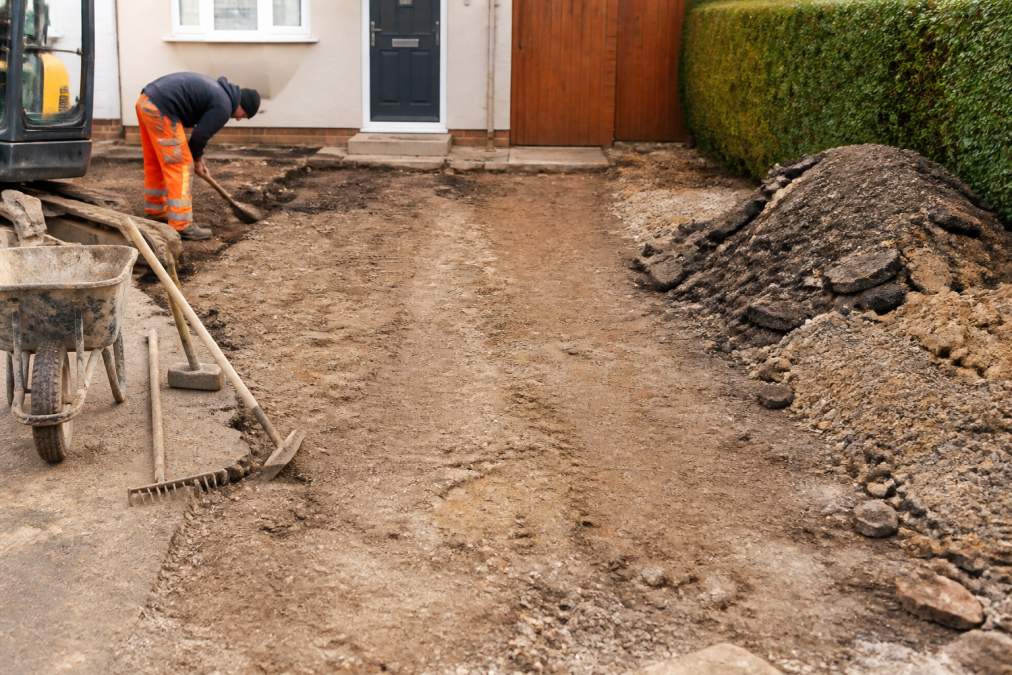
Check the ground beneath for deep cracks or soft spots; dig these out and replace with compacted hardcore material to create a stable base.
Remove any tree roots pushing through the ground, as they will eventually cause cracking or sinking.
Ensure the site is level; fill large dips or bumps so your paving sits evenly and lasts longer.
Planning Permission for Driveways and What You Need to Know
Planning permission for driveways Norfolk is often unnecessary when replacing an existing driveway with the same surface type, but you’ll need it for new driveways or material changes.
Check with your local planning authority before starting work, as many Norfolk councils have specific requirements for materials, size, and positioning, especially in conservation zones or on listed properties.
Conservation areas and listed buildings have stricter rules; contact your council first to confirm requirements.
Keep copies of planning permission letters or confirmation that permission isn’t required to protect yourself later.
Permeable Driveway Regulations and Your Responsibilities
Permeable driveway regulations UK have become stricter; many homeowners must now use permeable surfaces for new driveways (Permeable surfacing of front gardens: guidance).
Permeable surfaces allow water to drain through rather than running off into storm drains, reducing flooding risk and managing rainwater naturally. Resin bound driveways are one popular option that meets these requirements.
Check with your local authority whether Building Regulations or environmental standards require permeable surfaces for your property.
If regulations require a permeable surface, resin bound paving, permeable concrete, and porous asphalt all meet the standards; consider maintenance needs and suitability for your situation.
Ensure water drains properly to prevent puddles, algae growth, and surface damage.
Proper preparation prevents costly problems later. KT Lake Paving and Landscaping offers free, no-obligation consultations to assess your property and explain what preparation is needed. Contact us for expert advice tailored to your situation.
Frequently Asked Questions
Do I need planning permission for a new driveway in the UK?
Most residential driveways don’t require planning permission if they’re under 5 square metres or use permeable surfacing. However, if your property is listed, in a conservation area, or the driveway exceeds 5 square metres, you’ll need to check with your local planning authority. Building regulations may also apply, especially if your driveway involves structural work. Contact your local council to confirm requirements before work begins.
What are the UK regulations for permeable driveway surfacing?
Permeable driveways must allow water to drain through the surface and into the ground or a drainage system, meeting Building Regulations Part H. This prevents surface water flooding and reduces strain on local drainage. Resin bound driveways are a popular permeable option that meets these standards. Your contractor should confirm the surface meets current regulations and provide documentation of compliance.
How long does site preparation take before paving contractors arrive?
Site clearance typically takes 1-3 days depending on the driveway size and how much debris needs removing. The timeline includes clearing vehicles, removing old surfacing, relocating obstacles, and ensuring the ground is level and compacted. Your paving contractor will advise on the specific preparation schedule during your consultation, helping you plan around your household routine.


