

Table of Contents
- Why You Need a Professional Drainage Contractor
- Garden Drainage Solutions Norfolk
- Resin Bound Driveway Drainage Requirements
- Soakaway Installation Norfolk
- Frequently Asked Questions
Last Updated: September 3, 2026
Why You Need a Professional Drainage Contractor
Drainage problems reveal themselves through waterlogged gardens, cracked foundations, or flooded basements. When water accumulates where it shouldn’t, structural damage, plant death, and costly remediation follow quickly.
Professional drainage contractors assess your property’s unique water movement patterns, identify pooling or incorrect runoff, and design solutions tailored to your soil type and landscape. At KT Lake Paving and Landscaping, the team understands that drainage isn’t one-size-fits-all. Each Norfolk property has different ground conditions, slope angles, and water sources. The right contractor evaluates these factors before recommending a solution, whether that’s a soakaway system, surface channels, or integrated landscaping redesign.
Garden Drainage Solutions Norfolk
Garden drainage problems stem from heavy rainfall, poor soil structure, or landscape design that funnels water toward the house. Effective solutions combine surface management with subsurface systems.
Surface drainage includes grading the garden so water slopes away from structures, installing French drains (shallow trenches with gravel and perforated pipe), or creating swales that guide water safely. Subsurface systems intercept water below ground before it reaches foundations or creates soggy patches.
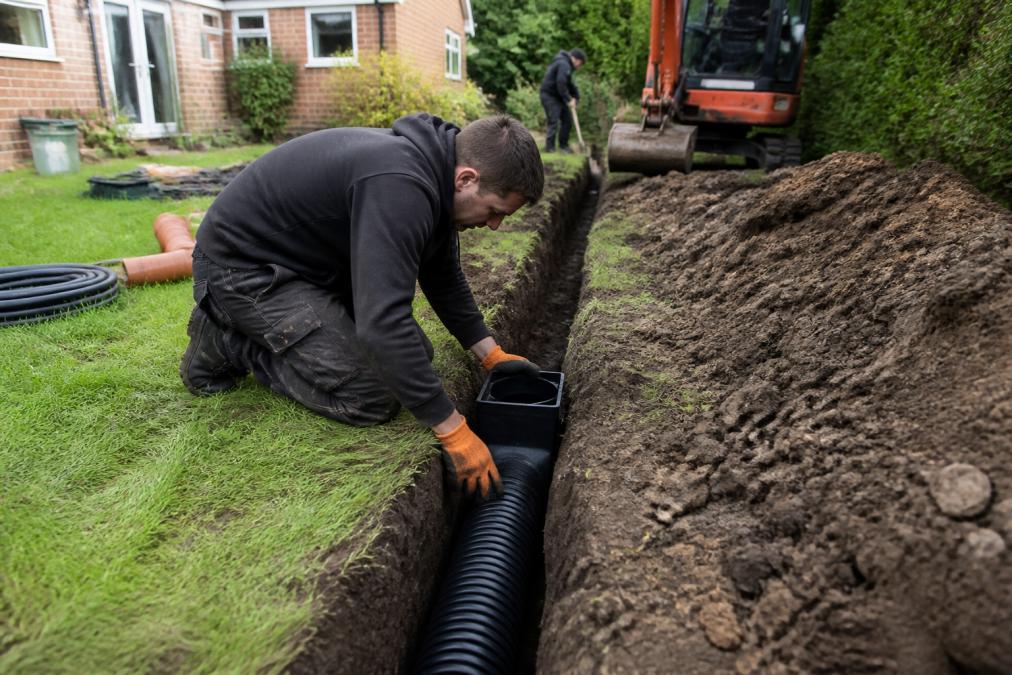
Smart property owners plan drainage during landscaping or driveway projects, integrating it into the overall design. When a new patio or resin bound driveway is being installed, that’s the ideal time to assess and improve garden drainage.
The choice between surface and subsurface systems depends on your garden’s slope, soil permeability, and water volume. Clay soils drain poorly and need aggressive intervention. Sandy soils drain quickly but may need surface channels to direct flow. A professional contractor evaluates soil composition, rainfall patterns, and existing water movement to recommend the most effective approach.
Resin Bound Driveway Drainage Requirements
Resin bound driveways are permeable surfaces that allow water to drain through, reducing surface flooding and supporting sustainable drainage. However, this permeability only works if the underlying structure is designed correctly. Poor drainage beneath a resin bound driveway weakens the base layer and eventually causes the resin to crack or sink.
Building regulations in the UK require that driveways and hard surfaces allow water to drain appropriately, either through the surface itself or via integrated drainage systems (gov.uk). Resin bound driveways meet this requirement because water passes through the resin layer into the permeable base below. But the base must be constructed properly: a solid, well-compacted sub-base with adequate depth and slope ensures water moves away from the property.
Many homeowners assume “permeable” means “no drainage planning needed.” In reality, resin bound driveway drainage requirements demand careful attention to base preparation. If the sub-base is too shallow, compacted incorrectly, or installed on a slope that doesn’t drain, water accumulates and causes failure. Professional installation ensures the surface gradient supports drainage whilst maintaining usability and directs water away from the house.
Soakaway Installation Norfolk
A soakaway is an underground pit filled with permeable material (gravel, rubble, or engineered media) that allows water to disperse gradually into the surrounding soil (ciria.org). Soakaway installation Norfolk properties often require happens when surface drainage alone isn’t sufficient or when managing water from roof gutters, driveways, or garden areas.
Soakaways work by collecting water from drains or surface channels and allowing it to percolate slowly into the ground. This reduces flooding, prevents water pooling, and supports natural water infiltration. The system requires proper siting: positioned away from building foundations (typically at least 5 metres), avoiding contamination sources, and placed in soil that actually drains (gov.uk).
Installation involves excavating a pit to the appropriate depth and width, usually 1 to 3 metres deep depending on soil conditions and water volume. The pit is filled with permeable material and covered with a geotextile membrane and soil. A perforated pipe connects the soakaway to gutters, drains, or surface channels.
Sizing a soakaway correctly is essential. Too small, and it can’t handle peak rainfall. Professional drainage contractors calculate the required volume based on roof area, impermeable surface area, and local rainfall data. For properties with large driveways or extensive hard landscaping, a properly sized soakaway prevents water from overwhelming your garden’s natural drainage capacity.
Finding the right drainage contractors near me starts with understanding your property’s specific needs. Whether managing garden water, installing a new resin bound driveway, or planning a soakaway system, professional assessment saves time and prevents costly mistakes. KT Lake Paving and Landscaping offers free, no-obligation consultations to evaluate your drainage requirements and recommend solutions tailored to your Norfolk property. With over 30 years of experience and Brett Approved Premier Installer status, the team ensures every drainage project meets British Standards and delivers long-term results.
Frequently Asked Questions
How do I know if I need a professional drainage contractor?
Signs you need drainage help include standing water in your garden after rain, damp patches on your driveway, or water pooling near your property’s foundation. If your resin bound driveway shows signs of water damage or your garden stays waterlogged for days, a professional assessment is worthwhile. Many contractors, including those specialising in resin bound driveway drainage requirements, offer free consultations to identify problems.
What’s the difference between surface water and foul water drainage?
Surface water drainage handles rainwater from roofs, driveways and gardens, directing it safely away from your property. Foul water drainage manages waste from toilets, sinks and showers. Both systems are essential for a healthy property. A qualified drainage contractor understands both systems and can advise which applies to your situation, whether you’re installing garden drainage solutions or protecting a new resin surface.
Do I need planning permission for drainage work?
Most residential drainage work doesn’t require planning permission in the UK, but building regulations approval is often necessary. The rules vary depending on the scope of work and your location. A professional drainage contractor will know the local requirements and can guide you through the process, ensuring your soakaway installation or garden drainage solutions meet all necessary regulations.


