

Table of Contents
- How to Clean Resin Driveways Properly
- Resin Driveway Pressure Washing Guide
- Removing Oil Stains from Resin
- Year-Round Resin Bound Driveway Care
Resin Bound Driveway Maintenance Tips
Resin bound driveways offer a sophisticated, durable surface that enhances any property’s curb appeal. Maintaining them properly ensures they remain attractive and functional for years to come. This guide covers the essential maintenance strategies that protect your investment.
How to Clean Resin Driveways Properly
Regular cleaning is the foundation of effective resin bound driveway maintenance. The key is using gentle methods that remove debris without damaging the surface’s protective sealant.
Start with basic debris removal at least once weekly using a leaf blower or soft-bristled broom to clear leaves, twigs, and loose dirt. This prevents organic matter from sitting on the resin, which can stain the aggregate and promote algae growth over time.
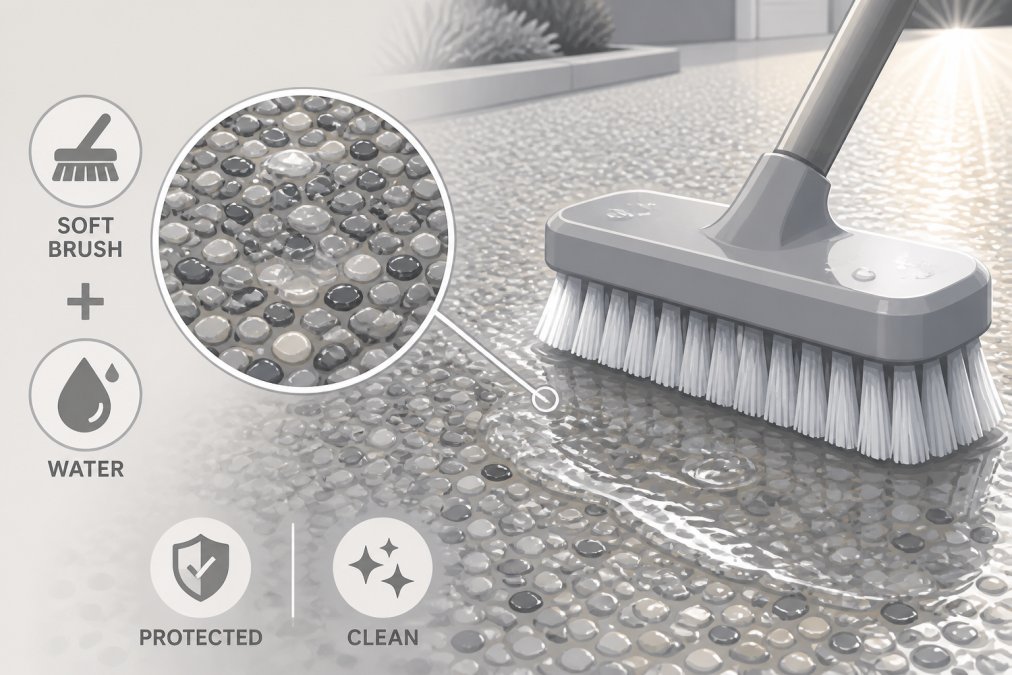
Mix a small amount of mild detergent with warm water and use a soft-bristled brush to gently scrub the surface. Avoid harsh chemical cleaners, as these can damage the resin’s protective layer. Rinse thoroughly with clean water and allow the surface to dry naturally. For stubborn marks, increase the detergent concentration slightly and allow the solution to sit for 10-15 minutes before scrubbing.
Schedule your cleaning routine for early morning or late afternoon when the sun isn’t at its strongest. This prevents the detergent from drying too quickly and leaving streaks on the surface.
Resin Driveway Pressure Washing Guide
Pressure washing can be effective for resin driveways when done correctly, but it requires careful technique and appropriate settings.
Set your pressure washer to no more than 80 bar (1160 psi) and maintain a distance of at least 30 centimetres from the surface. A 25-40 degree fan nozzle is ideal for resin bound surfaces, as it distributes water pressure evenly without concentrating force on any single point.
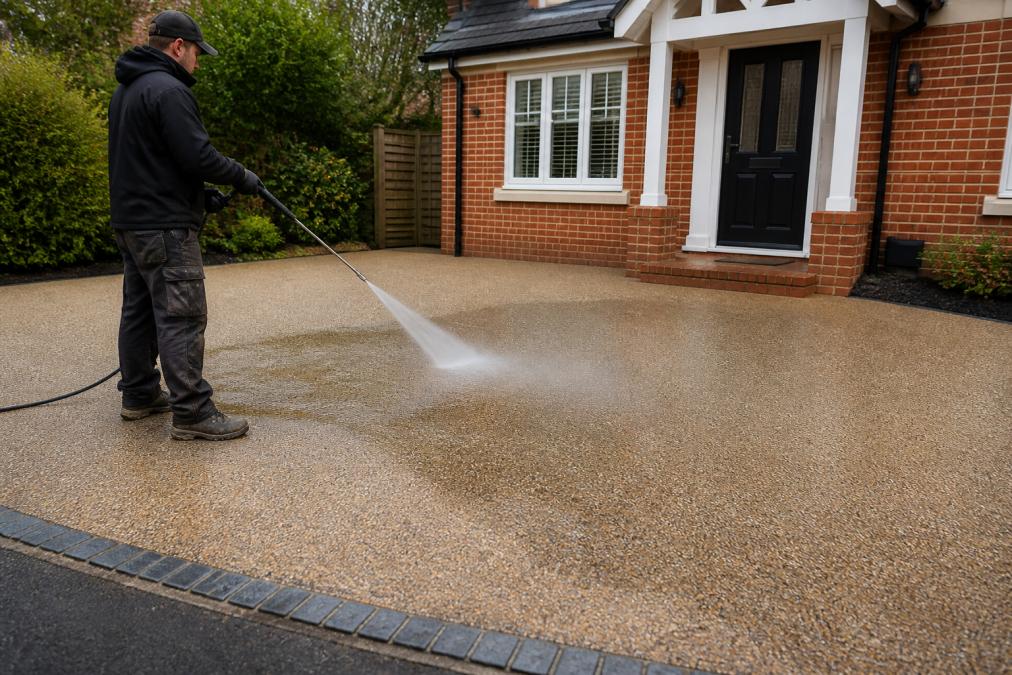
Work systematically across the driveway in overlapping passes, always moving the nozzle rather than holding it stationary. Avoid pointing the jet directly downward, as this concentrates pressure on the resin and can cause surface erosion. Never use a rotary nozzle or zero-degree jet on resin bound surfaces, as these can penetrate the resin and damage the sub-base beneath.
Avoid pressure washing during or immediately after heavy rain, when the ground is saturated and water pressure can push water into the sub-base layer.
Never pressure wash a newly installed resin driveway during its curing period, typically the first 48-72 hours after installation. Premature pressure washing can damage the resin before it has fully hardened.
Removing Oil Stains from Resin
Oil and fuel spills are among the most common maintenance challenges for driveways. The key to successful stain removal is acting quickly, before the oil penetrates deeply into the resin.
For fresh spills, blot up excess oil immediately with absorbent materials such as paper towels or old rags. Sprinkle an absorbent powder like baking soda or commercial absorbent granules over the stain and leave in place for 12-24 hours to draw out remaining oil. Vacuum or sweep away the material, then clean the area with a mild detergent solution. For stubborn or older stains, a specialist resin cleaner designed for oil removal may be necessary.
Prevent future stains by addressing vehicle leaks promptly. Regular vehicle maintenance prevents small leaks from becoming major staining problems.
The difference between a permanent stain and a temporary mark is speed. Treating oil spills within the first hour dramatically improves your chances of complete removal.
Year-Round Resin Bound Driveway Care
Seasonal changes require different maintenance approaches throughout the year.
Spring maintenance focuses on clearing winter debris and checking for any damage caused by frost or freeze-thaw cycles. Remove accumulated leaves, moss, or algae growth and inspect the surface for cracks or loose stones. This is an ideal time to apply a protective sealant if your driveway hasn’t been sealed recently.
Summer care emphasises regular cleaning to prevent dust accumulation and maintaining surface protection. Ensure drainage systems are clear so that heavy summer storms don’t pool water on the surface. Check around the edges for weed growth and remove any plants before they establish deep roots.
Autumn requires frequent debris removal as falling leaves accumulate rapidly. Leaves trap moisture and promote algae and moss growth. Pressure wash the driveway once before winter arrives to remove stubborn stains and biological growth.
Winter maintenance means managing ice and salt carefully. Avoid using rock salt directly on resin surfaces, as salt can damage the resin. Instead, use sand or grit for traction on icy patches. If you must use salt-based products, rinse the surface thoroughly once temperatures rise. Consider applying a protective sealant before winter if you live in an area prone to heavy frost.
A consistent maintenance schedule prevents small issues from becoming expensive problems.
Keeping a resin bound driveway in excellent condition doesn’t require specialist skills or expensive treatments. Regular cleaning, proper pressure washing technique, and seasonal care form the foundation of effective maintenance. For homeowners in Norfolk seeking professional guidance or installation of new resin bound surfaces, KT Lake Paving and Landscaping offers free, no-obligation consultations backed by over 30 years of industry experience. As a Brett Approved Premier Installer, the team ensures every project meets rigorous British Standards with a 10-year product guarantee. Contact KT Lake Paving and Landscaping for expert advice on maintaining your driveway or exploring how resin bound solutions can enhance your property’s value and appearance.
Frequently Asked Questions
How often should a resin driveway be cleaned?
Most resin bound driveways benefit from light sweeping weekly to remove debris and leaves. A deeper clean with mild detergent and water every 6-8 weeks keeps the surface fresh. In winter or high-traffic areas, you may need more frequent attention. The frequency depends on local weather, tree coverage, and usage patterns. Regular maintenance prevents dirt accumulation and protects the surface integrity of your resin bound driveway.
Can I use a pressure washer on my resin driveway?
Yes, but with caution. Use a pressure washer at low to medium settings (below 100 bar) with a wide fan spray to avoid damaging the resin surface. Keep the nozzle at least 30 centimetres away and never use high-pressure jet streams directly on the aggregate. Pressure washing is effective for removing moss, algae, and stubborn stains. Always test on a small, inconspicuous area first to ensure the water temperature and pressure won't harm your specific resin installation.
What is the best way to prevent moss on a resin driveway?
Moss thrives in damp, shaded areas. Improve drainage by ensuring water runs off quickly and doesn't pool. Remove fallen leaves promptly, as they retain moisture. Keep the surface clean and dry. If moss appears, use a soft brush or low-pressure wash to remove it. For prevention, consider applying a protective sealant designed for resin surfaces, this reduces porosity and makes it harder for moss and algae to establish. Regular maintenance is your best defence against moss growth.
How do I remove oil stains from a resin bound surface?
Act quickly: blot fresh oil spills with absorbent material rather than wiping. For set-in stains, use a mild detergent solution and a soft brush to gently scrub the affected area. Eco-friendly cleaning agents work well and are safer for drainage. Avoid harsh chemicals that can damage the resin or harm the environment. Stubborn stains may require specialist treatment. Prevention is easier than removal, park carefully and use drip trays under vehicles. A protective sealant applied during or after installation can reduce stain absorption.


