

Table of Contents
- Is Resin Driveway Worth It? The Core Value Proposition
- Resin Bound vs Resin Bonded Driveways: Which Offers Better Value
- Resin Driveway Cost Per Square Meter: Investment Breakdown
- How Long Does a Resin Driveway Last? Durability and Lifespan Reality
Last Updated: June 20, 2026
Choosing a new driveway surface is a significant investment. At KT Lake Paving and Landscaping, we’ve worked on hundreds of driveways across Norfolk over more than 30 years. For most properties, a resin driveway is worth it, but only when you understand what you’re paying for and what to expect long-term.
Most guides treat resin driveways as a single product. They’re not. The distinction between resin bound and resin bonded surfaces changes everything about performance, longevity, and value.
Is Resin Driveway Worth It? The Core Value Proposition
A resin driveway is worth it for homeowners who prioritise long-term kerb appeal, low maintenance, and SUDS-compliant drainage. A properly installed resin bound driveway is fully porous, meaning rainwater drains through the surface rather than running off into gutters or neighbouring properties. According to UK Government guidance on permeable paving and planning, impermeable front garden surfaces over 5 square metres require planning permission, while permeable alternatives like resin bound do not.
The aesthetic case is also strong. The trowel finish produces a smooth, consistent surface that holds colour well and resists oil stains better than concrete.
A resin driveway delivers genuine value over a 15-25 year lifespan, particularly for homeowners who want a permeable, low-maintenance surface that won’t require regular weeding or joint re-sanding.
Resin Bound vs Resin Bonded Driveways: Which Offers Better Value
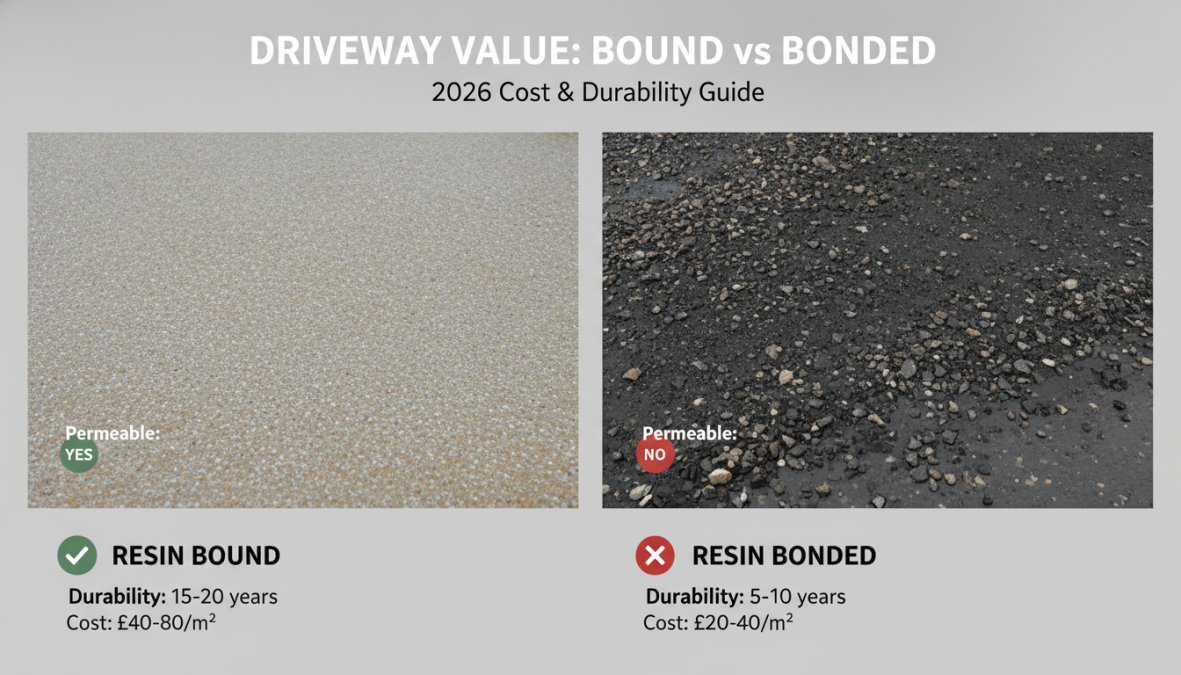
Resin bound is a fully permeable system where aggregate and polyurethane resin are mixed together before being trowel-applied onto a prepared sub-base. Water passes through freely, the surface is SUDS compliant, and the finish is consistent and long-lasting.
Resin bonded works differently. Resin is applied first, then aggregate is scattered on top. The stones sit on the surface rather than within it, creating a rougher texture. Resin bonded surfaces are not permeable and are more prone to surface degradation in freeze-thaw conditions.
| Feature | Resin Bound | Resin Bonded |
|---|---|---|
| Permeability | Fully porous | Not permeable |
| SUDS Compliant | Yes | No |
| Surface texture | Smooth trowel finish | Rough, scattered stone |
| Freeze-thaw resistance | High | Lower |
| Lifespan | 15-25 years | 8-15 years |
| Planning permission needed | No (front gardens) | Yes (front gardens) |
For most residential driveways in Norfolk, resin bound is the better long-term investment. The smoother finish is slip-resistant when correctly installed, more aesthetically refined, and the permeability advantage removes planning complications entirely.
Choosing resin bonded to save money upfront often leads to earlier resurfacing costs and potential planning issues on front driveways. Verify which system you’re being quoted for before signing any contract.
Resin Driveway Cost Per Square Meter: Investment Breakdown
Resin driveway cost per square meter varies based on existing surface condition, sub-base specification, aggregate choice, edging requirements, driveway size, and site access. A proper MOT Type 1 sub-base is essential for long-lasting results.
As a general guide, resin bound installations in Norfolk typically fall into a mid-to-premium price bracket compared to tarmac but are broadly comparable with quality block paving when you factor in lower long-term maintenance costs. According to Homebuilding and Renovating’s driveway cost guide, resin bound driveways represent one of the higher-value long-term surfacing options when whole-life costs are considered.
Always ask installers to specify what’s included in their cost breakdown, particularly sub-base preparation.
How Long Does a Resin Driveway Last? Durability and Lifespan Reality
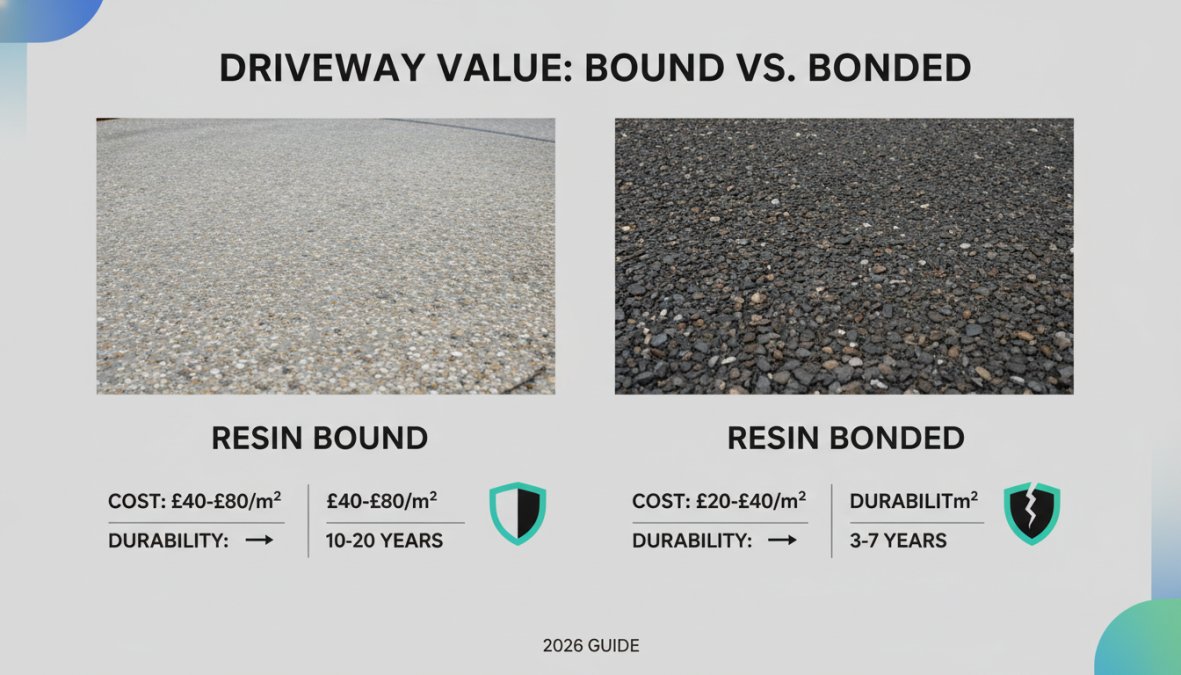
A well-installed resin bound driveway lasts between 15 and 25 years. Resin bonded surfaces typically see a shorter lifespan of 8-15 years before significant surface degradation requires attention.
Sub-base quality is the single biggest factor. Resin bound applied over a failing or poorly compacted sub-base will crack regardless of surface material quality. A properly installed concrete or tarmac sub-base, or well-compacted MOT Type 1 base, gives the surface its structural integrity.
UV stability matters. Quality polyurethane resin systems are UV stable, meaning colour retention remains consistent. As a Brett Approved Premier Installer, KT Lake Paving and Landscaping uses systems backed by a 10-year product guarantee from Brett.
Freeze-thaw performance is a genuine concern in Norfolk winters. A quality resin bound system installed over a sound sub-base handles freeze-thaw cycles well because water drains through rather than sitting on the surface and expanding as it freezes.
Ask your installer which specific resin system they use and whether it carries an independent product guarantee. A 10-year product guarantee from the manufacturer is a strong indicator of material quality.
Resin Driveway Maintenance Tips: Long-Term Care and Costs
Resin driveways are genuinely low maintenance compared to block paving or gravel, but "low maintenance" doesn’t mean "no maintenance."
Routine cleaning is the most important ongoing task. A gentle pressure wash one to two times per year removes dirt, moss, and algae before they become established. Oil stains are the most common concern; fresh spills should be absorbed with sand or cat litter and removed promptly. Weed resistance is one of resin bound’s genuine strengths, because the surface is fully sealed, weeds cannot establish through it. For Norfolk’s relatively mild but damp winters, an annual moss treatment applied in autumn combined with twice-yearly pressure washing keeps most resin driveways in excellent condition.
Resin Driveway vs Block Paving and Concrete: Honest Comparison
Block paving offers flexibility and wide style options, but requires regular joint re-sanding and is not permeable unless specifically designed. Over a 20-year period, cumulative maintenance costs often approach the initial cost premium of resin bound.
Concrete is durable and relatively low maintenance but lacks permeability, creating planning permission requirements for front driveways. Concrete also cracks under ground movement and is difficult to repair invisibly.
Resin bound sits at the premium end of the residential driveway market. The combination of SUDS compliance, kerb appeal, weed resistance, and genuine durability makes it the strongest all-round performer for most Norfolk homeowners.
| Surface | Permeability | Maintenance Level | Typical Lifespan | Planning (Front Garden) |
|---|---|---|---|---|
| Resin Bound | Fully permeable | Low | 15-25 years | Not required |
| Block Paving | Varies | Medium-High | 20-30 years | Required if impermeable |
| Concrete | Not permeable | Low-Medium | 20-30 years | Required |
Resin bound is the only mainstream driveway surface that is simultaneously attractive, permeable, and genuinely low maintenance. That combination is why it commands a price premium, and for most homeowners, that premium is justified.
Deciding whether a resin driveway is right for your Norfolk property requires an honest assessment of your budget, long-term plans, and site conditions. KT Lake Paving and Landscaping offers free, no-obligation estimates drawing on over 30 years of experience installing resin bound surfaces to British Standards. As a Brett Approved Premier Installer with a 10-year product guarantee, we can assess your driveway, recommend the right specification, and give you a clear picture of the investment involved.
Frequently Asked Questions
Does a resin driveway add value to your home?
Yes, resin driveways enhance kerb appeal and property aesthetics, which can increase perceived home value. However, the actual resale value uplift depends on local market conditions, property type, and whether buyers view it as an upgrade or maintenance cost. Most homeowners see resin driveways as a desirable feature that improves curb appeal, but it's not a guaranteed return on investment. The 10-year lifespan means potential buyers may view it as requiring replacement sooner than traditional surfaces.
What are the main disadvantages of a resin driveway?
Key disadvantages include: susceptibility to cracking under freeze-thaw cycles in cold climates, potential UV degradation if not UV stable formulations are used, vulnerability to oil stains that require prompt cleaning, higher upfront installation costs than some alternatives, and the need for regular maintenance to prevent surface degradation. Heavy vehicle traffic can also cause wear faster than lighter use. Additionally, poor sub-base preparation during installation can lead to premature failure, making contractor choice critical.
How do you clean and maintain a resin driveway?
Routine maintenance includes regular sweeping to remove debris, prompt cleaning of oil stains and spills, and periodic pressure washing with appropriate settings to avoid surface damage. Avoid harsh chemicals that degrade the resin. For slip-resistant surfaces, ensure aggregate particles remain intact. Inspect for cracks or weed growth and address immediately. Annual professional cleaning extends lifespan. Most maintenance involves simple cleaning rather than structural repairs, making resin driveways relatively low-maintenance compared to block paving, though not maintenance-free.
Is a resin driveway cheaper than block paving?
Initial installation costs are typically comparable, though resin bound driveways may cost slightly more per square meter due to labour and material precision. However, resin offers lower long-term maintenance costs because it resists weeds and requires less intensive cleaning. Block paving requires periodic re-sanding and is more prone to weed growth, increasing lifetime costs. For heavy vehicle traffic, resin bonded surfaces may be more economical than block paving, which can shift and crack. Total cost-of-ownership favours resin for most residential applications over 10+ years.


