

Table of Contents
- How to Improve Garden Drainage for Landscaping
- How to Drain a Waterlogged Garden
- Improve Drainage in Clay Soil
- Frequently Asked Questions
Last Updated: October 12, 2026
How to Improve Garden Drainage for Landscaping
Poor drainage damages plant roots, encourages pests, and undermines hardscaping, so whether you’re installing a new patio, resin bound driveway, or garden beds in Norfolk, address drainage first. Improving garden drainage means understanding your soil type, assessing water flow, and choosing the right intervention.
How to Drain a Waterlogged Garden
Walk the garden after heavy rain and note which areas stay wet longest, revealing whether the problem is surface water, poor soil structure, or deeper groundwater.
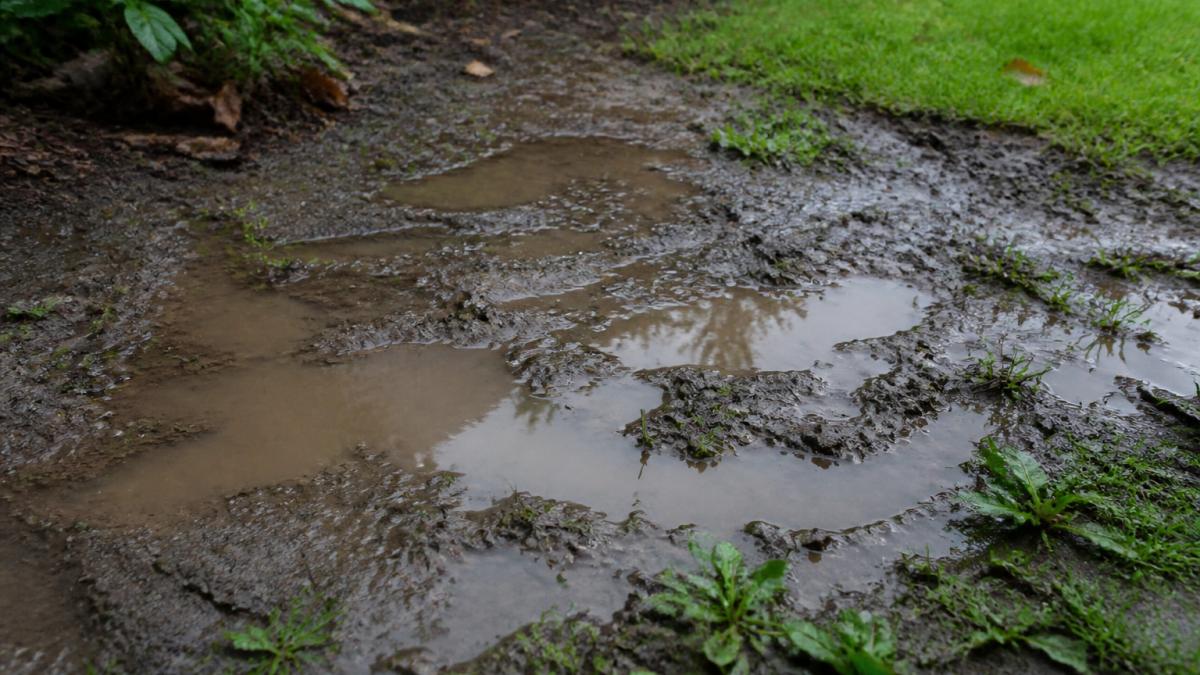
A slope of just 1 in 40 (roughly 2.5 centimetres per metre) redirects runoff away from structures and planted areas; on flat gardens, build up planting beds or create shallow swales. For persistent waterlogging, install a soakaway, a pit roughly 1 to 2 metres deep and wide, filled with coarse gravel and rubble, then covered with soil and turf, where the water table isn’t already high. French drains also help: a gravel-filled trench with a perforated pipe collects water and channels it toward a soakaway or outlet.
Improve Drainage in Clay Soil
Clay soil holds water rather than allowing it to drain through, as its fine particles compact easily and block water movement. Adding organic matter alone won’t solve deep waterlogging; you must address the soil structure itself.
The most effective approach for clay is to improve garden drainage through layering. When installing new beds or preparing areas for landscaping in Norfolk, add coarse sand or gravel beneath topsoil to create a permeable layer; for existing beds, work grit and organic matter into the top 15 to 20 centimetres, though results are gradual.
For severe clay drainage problems, a proper drainage system is necessary. A French drain works well because the perforated pipe bypasses the clay entirely, while land drains laid in a herringbone or grid pattern remove water from the whole area. Raised beds offer a practical workaround: build them 30 to 45 centimetres high and fill with a quality soil mix (How to Make a Raised Bed).
Poor drainage undermines even the best landscaping designs. Whether you’re dealing with clay soil, a naturally wet site, or surface water issues, solutions exist, from simple slope adjustments to engineered drainage systems. KT Lake Paving and Landscaping understands how critical proper drainage is to any outdoor project. Our team can assess your site’s conditions and recommend the right approach, ensuring new patios, driveways, and garden features perform well for years. Get in touch for a free, no-obligation consultation to discuss how to improve garden drainage for your landscaping project.
Frequently Asked Questions
How can I improve drainage in my garden before landscaping?
Start by assessing where water pools and why. Test soil drainage by digging a hole, filling it with water, and timing how long it takes to drain. For clay soil, add organic matter like compost to improve structure. Consider installing a soakaway or French drain if water consistently pools. These solutions redirect excess water away from problem areas, preventing future waterlogging during landscaping work.
What is the best way to drain a waterlogged garden?
The best method depends on your soil type and water source. For minor waterlogging, improve drainage in clay soil by adding grit and organic matter. For persistent wetness, install a soakaway to collect and disperse water underground, or use a French drain to channel water away from the affected area. Professional assessment ensures you choose the right solution for your specific conditions.
Do I need a soakaway for garden drainage?
A soakaway works well if water drains naturally into the ground and you have adequate space. Dig a pit, fill it with rubble and gravel, and cover with soil. Water percolates down and disperses. However, if your soil is heavy clay or water sources are large, a French drain may be more effective. Professional landscapers can assess whether a soakaway suits your garden or if alternative drainage methods are better.


