

Table of Contents
- Asphalt vs Concrete Driveway Cost: What You Need to Know
- Tarmac vs Asphalt Driveway Cost: Understanding the Difference
- How Long Does a Driveway Last and What Affects Longevity
- Frequently Asked Questions
Last Updated: September 23, 2026
Asphalt vs Concrete Driveway Cost: What You Need to Know
The cost difference between asphalt and concrete driveways matters because one costs less upfront but requires regular maintenance, whilst the other demands a larger initial investment but often outlasts its cheaper alternative by years. Understanding these trade-offs helps Norfolk property owners make decisions that fit their budget and long-term plans.
Asphalt driveways cost less initially, whilst concrete demands a larger upfront investment but may prove more economical over time depending on climate and maintenance commitment.
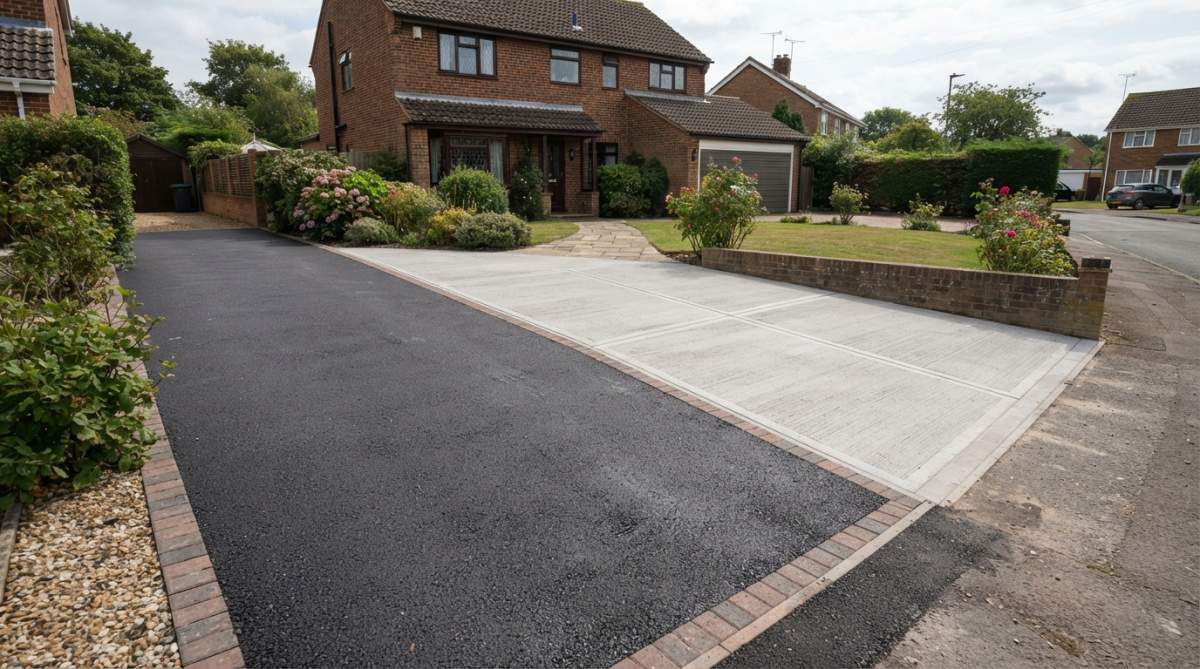
According to Brett Landscaping’s guide to driveway materials, concrete offers superior durability in wet climates, whilst asphalt requires more frequent resurfacing. For homeowners weighing these options, the decision ultimately depends on how long they plan to stay in their property and how much maintenance they’re willing to undertake.
KT Lake Paving and Landscaping has helped Norfolk residents navigate this choice for over 30 years, offering professional consultations and free estimates that break down initial costs and projected maintenance expenses.
Tarmac vs Asphalt Driveway Cost: Understanding the Difference
Tarmac and asphalt are often used interchangeably in the UK, but tarmac combines bitumen with tar whilst asphalt uses bitumen with stone aggregate. For the asphalt vs concrete driveway cost comparison, both tarmac and asphalt sit in the lower-cost category compared to concrete.
Tarmac typically lasts 15-20 years in UK conditions, asphalt 15-25 years with proper maintenance, and concrete can exceed 30 years when installed correctly, directly influencing lifetime cost.
Asphalt and tarmac require resealing every 3-5 years to prevent water penetration, whilst concrete requires less frequent intervention but may need repair if cracks develop. Homeowners should factor in these recurring costs, not just initial installation price.
Research from Marshalls Register of Accredited Landscape Contractors emphasises that proper sub-base preparation is critical for any driveway material. A poorly constructed foundation causes premature failure regardless of whether the surface is asphalt or concrete, making contractor quality as important as material choice.
How Long Does a Driveway Last and What Affects Longevity
Driveway lifespan depends on material quality, installation standard, and climate exposure. In Norfolk’s damp maritime climate, water management is critical; concrete driveways with proper drainage can last 30-40 years, whilst asphalt typically lasts 15-25 years before requiring complete resurfacing.
Freeze-thaw cycles cause micro-cracks in asphalt, whilst concrete handles temperature swings better but can suffer from salt damage if de-icing chemicals are applied heavily. Proper drainage prevents water pooling, which accelerates deterioration in both materials.
Installation quality determines whether a driveway reaches its theoretical lifespan or fails prematurely; weak sub-bases, inadequate compaction, and poor drainage affect both materials equally, making accredited installers as important as material choice.
Checkatrade’s guidance on driveway installation notes that homeowners should verify contractor credentials and ask about guarantees before committing. A 10-year product guarantee provides meaningful protection and indicates a contractor confident in their workmanship standards.
Frequently Asked Questions
Is asphalt or concrete cheaper for a driveway in the UK?
Asphalt typically costs less upfront than concrete, though pricing depends on your specific location, driveway size, and ground conditions. Concrete may offer better long-term value despite higher initial costs because it lasts longer with minimal maintenance. For an accurate quote tailored to your property, contact KT Lake Paving and Landscaping for a free, no-obligation estimate.
Which driveway material is better suited for the Norfolk climate?
Both materials work in Norfolk, but concrete performs better in the region’s wet climate because it resists water damage and doesn’t soften in heavy rain like asphalt can. Concrete also withstands freeze-thaw cycles better. However, proper installation and drainage are critical for either material. KT Lake’s Brett Approved installation ensures your driveway meets British Standards for local weather resilience.
How long does a concrete driveway last compared to asphalt?
Concrete driveways typically last 25-40 years with minimal maintenance, while asphalt usually lasts 15-20 years and requires regular resealing and repairs. Concrete’s longer lifespan makes it a better investment over time, despite its higher upfront cost. KT Lake backs its work with a 10-year product guarantee, ensuring your driveway investment is protected.
Choosing between asphalt and concrete requires balancing upfront cost against long-term durability and maintenance demands. KT Lake Paving and Landscaping offers free, no-obligation consultations to help Norfolk homeowners evaluate both options for their specific property. The team’s Brett Approved status ensures installations meet rigorous British Standards, backed by a 10-year product guarantee that protects your investment regardless of which material you select.


