

Table of Contents
- How to Remove Oil Stains from Resin Driveways
- Step-by-Step Oil Stain Removal Process
- Best Cleaning Products for Resin Driveways
- Frequently Asked Questions
Last Updated: September 8, 2026
Learning how to remove oil stains from resin driveways is a practical skill for any Norfolk homeowner. Spilled engine oil leaves an unsightly dark patch, but the porous surface means the stain can often be drawn out with the right approach.
How to Remove Oil Stains from Resin Driveways
The most effective method for removing oil stains from resin driveways involves acting quickly with an absorbent material, followed by a targeted cleaning solution. For fresh spills, cover the area generously with cat litter, sawdust, or baking soda and leave it for several hours; for older stains, use a dedicated degreaser or baking soda paste.
Step-by-Step Oil Stain Removal Process
Begin by sweeping the driveway clean of loose dirt. For a fresh spill, apply a thick layer of absorbent material, press it down gently, and leave it overnight if possible.
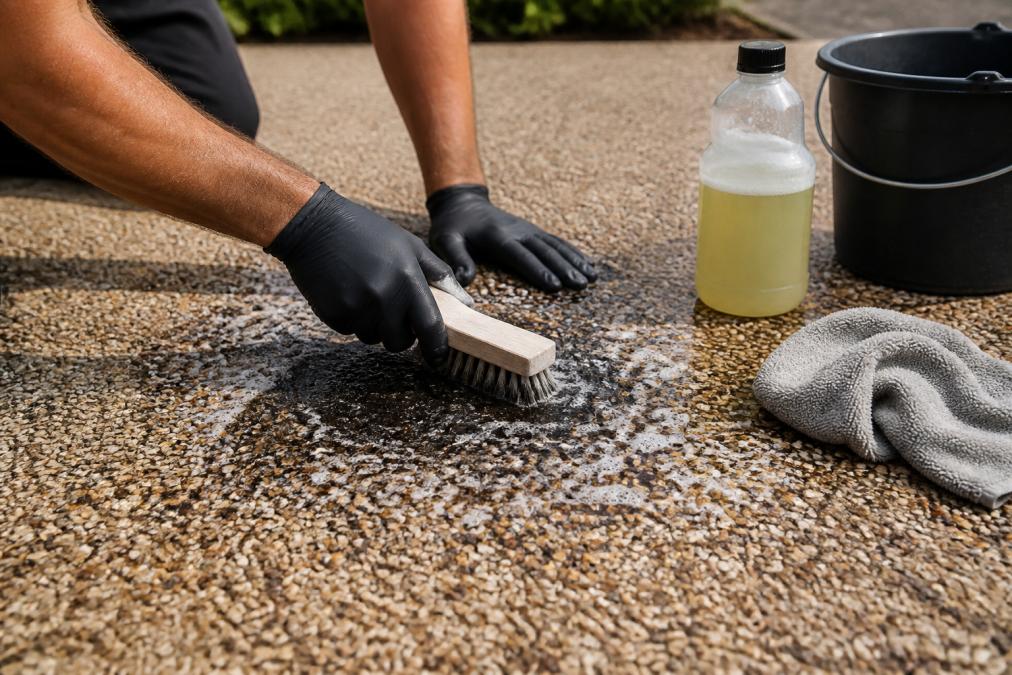
Once the absorbent has done its work, sweep it away and apply your chosen cleaner. For a DIY approach, mix baking soda with water to form a thick paste, spread it over the stain, let it sit for 15 to 20 minutes, scrub with a stiff-bristled brush in a circular motion, then rinse thoroughly.
For stubborn or older stains, a commercial driveway degreaser is usually required. Apply it strictly according to the manufacturer’s instructions, allow it to dwell, then agitate with a brush before rinsing. A pressure washer on a low setting can finish the rinse, but high pressure can damage the resin binder.
Best Cleaning Products for Resin Driveways
Choosing the best cleaning products for resin driveways depends on the severity of the stain. Avoid harsh chemicals, as some can degrade the resin binder over time.
- Baking soda: A gentle, non-abrasive option for light stains and general maintenance.
- Biodegradable degreasers: Effective on heavier oil marks and safer for surrounding planting and lawns.
- Specialist resin cleaners: Formulated to be safe on the binder while lifting ingrained dirt and oil.
Is bleach safe for resin driveways? Generally, no. Bleach is highly alkaline and can discolour the resin and weaken the binder. Stick to pH-neutral or biodegradable products instead.
Avoid using bleach or solvent-based cleaners on resin bound surfaces (pavingexpert.com). These chemicals can break down the resin binder, leading to a weakened surface, discolouration, and loose aggregate that may require professional repair.
For routine upkeep, a simple wash with warm soapy water and a soft brush keeps the surface looking its best. Preventative measures, parking a leaking car elsewhere, using a drip tray, and sealing the driveway periodically, reduce the likelihood of stubborn staining.
For a newly installed resin bound driveway, check the manufacturer’s care guidance before applying any chemical cleaner. Many products carry a guarantee that can be invalidated by using the wrong cleaning agents.
Frequently Asked Questions
Can you use pressure washers on resin driveways?
Yes, but use a wide-angle nozzle and keep the pressure low. High-pressure jets can damage the resin binder and dislodge aggregate over time. For oil stains, a pressure washer alone rarely removes the mark. Use a degreaser or specialist cleaner first, then rinse with a gentle spray. If you’re unsure about the right pressure setting, test an inconspicuous corner before tackling the stain.
Will oil permanently stain a resin driveway?
Fresh oil stains are usually removable if treated quickly. If oil is left to soak into the porous resin surface, it can cause a permanent dark mark. The key is speed: absorb fresh spills with cat litter or absorbent granules, then clean with a suitable degreaser. For older, set-in stains, a poultice or repeated cleaning may be needed to draw the oil out.


