

Table of Contents
- Mistake 1: Inadequate Compaction of the Sub-Base
- Mistake 2: Ignoring MOT Type 1 Sub-Base Depth Requirements
- Mistake 3: Overlooking Driveway Drainage Regulations UK
- Mistake 4: Skipping Geotextile Membrane for Driveways
Last Updated: August 22, 2026
5 Common Mistakes in Driveway Sub-Base Installation
A poorly prepared sub-base undermines even the finest surface material, leading to cracking, sinking, and costly repairs within months. Understanding the five most common pitfalls in driveway sub-base installation helps homeowners and contractors avoid expensive mistakes that compromise durability and performance.
Mistake 1: Inadequate Compaction of the Sub-Base
The most common failure point is insufficient compaction of the driveway sub-base installation material. Aggregate laid loosely without proper compression will settle unevenly, creating depressions and stress points that eventually crack the surface layer above it.
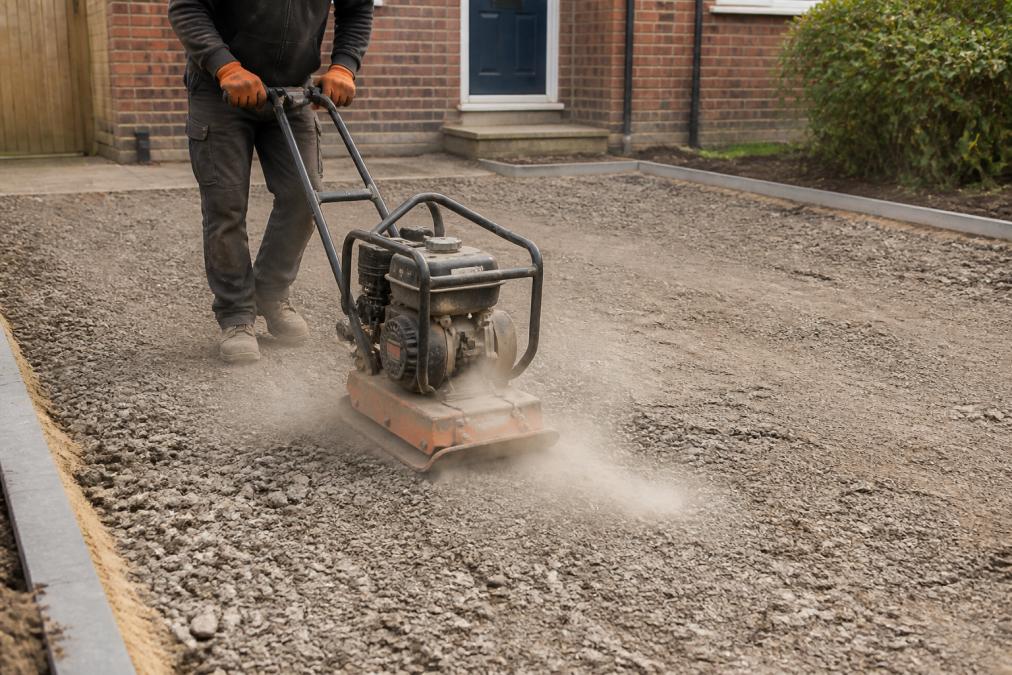
Compaction needs to achieve 95% to 98% of maximum dry density for MOT Type 1 material. Hand-tamping isn’t sufficient for anything beyond small areas. Professional compaction equipment, such as a plate compactor or trench rammer, is essential. Material must be compacted in layers to ensure even density throughout.
Skipping proper compaction leads to rutting, cracking, and surface failure within the first year. Repairing a settled sub-base means removing and replacing the entire surface, multiplying the original cost.
Mistake 2: Ignoring MOT Type 1 Sub-Base Depth Requirements
Driveway sub-base installation depth is determined by expected traffic load and soil conditions. Most residential driveways require a minimum of 100-150mm of MOT Type 1 sub-base, but this varies based on ground bearing capacity and climate (gov.uk).
Norfolk’s variable soil conditions, ranging from clay to sandy substrates, demand different approaches. Poor drainage soils may need thicker bases or additional geotextile support. Shallow sub-bases fail faster under freeze-thaw cycles and heavy rain, both common in UK winters.
Check your soil type before calculating sub-base depth. Clay-heavy sites in Norfolk often benefit from an extra 25-50mm of MOT Type 1 to account for seasonal movement and water retention.
Mistake 3: Overlooking Driveway Drainage Regulations UK
Surface water management is a regulatory requirement. According to UK Building Regulations Part H, driveways must manage surface water runoff to prevent flooding, environmental contamination, and damage to adjacent properties.
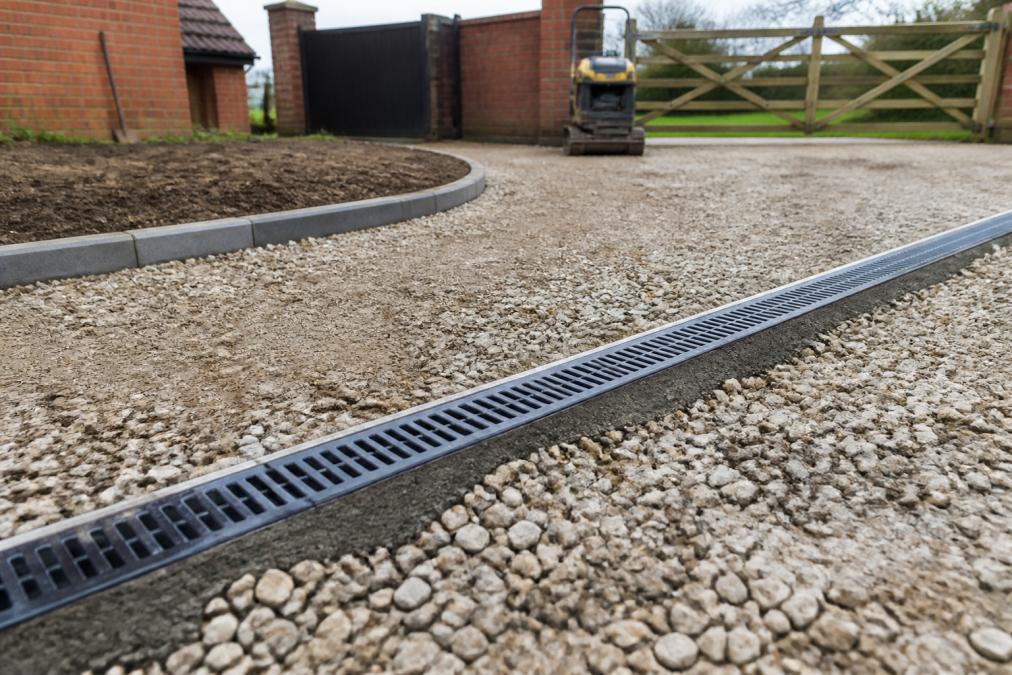
Water pooling on the surface accelerates aggregate breakdown and weakens the foundation. Channel drains or soakaway systems must be integrated into the sub-base design. Proper slope, typically 1:80 to 1:100, directs water away from the property and toward drainage infrastructure.
Drainage failure is one of the most expensive mistakes to fix. Addressing it during sub-base installation costs far less than excavating and replacing a waterlogged foundation later.
Mistake 4: Skipping Geotextile Membrane for Driveways
Geotextile membranes separate the soil sub-grade from the aggregate sub-base, preventing mixing and maintaining structural integrity over time. Without one, fine soil particles migrate into the MOT Type 1 layer, causing the sub-base to lose density and bearing capacity within 2-3 years ([EXTERNAL_LINK: peer-reviewed research on geotextile function in pavements | pmc.ncbi.nlm.nih.gov/articles/PMC7179040/]).
A geotextile like DRIVETEX non-woven fabric also improves drainage by allowing water to flow laterally through the sub-base rather than pooling at the soil interface. Installation is straightforward: lay the geotextile on prepared soil with 300-500mm overlapping seams, then place the MOT Type 1 aggregate on top.
Key Takeaways
| Mistake | Consequence | Prevention |
|---|---|---|
| Inadequate compaction | Rutting, cracking, surface failure | Use mechanical compactors; compact in layers |
| Incorrect MOT Type 1 depth | Settling and structural weakness | Assess soil type; apply 100-150mm minimum |
| Ignoring drainage regulations | Water pooling, aggregate breakdown | Install channel drains or soakaway systems |
| Skipping geotextile membrane | Soil contamination, loss of density | Lay geotextile before aggregate placement |
Driveway sub-base installation done properly is invisible work, the foundation that keeps surfaces flat, stable, and durable for years. For Norfolk homeowners planning a driveway project, these mistakes represent the difference between a 15-year investment and a problem that resurfaces in months. Professional installers, like those at KT Lake Paving and Landscaping, ensure sub-base standards meet British Standards specifications and include the drainage compliance required by UK Building Regulations. A free, no-obligation consultation can clarify the right approach for your specific property and soil conditions.
=== FAQ ANSWERS (audit these too, same rules) ===
[1] Q: How deep should a driveway sub-base be in the UK?
A: Most residential driveways require a MOT Type 1 sub-base depth of 100-150mm, though this can vary depending on soil conditions and expected traffic load. Heavy-use commercial driveways may need 150-200mm. A qualified installer will assess your ground conditions and recommend the appropriate depth for your driveway sub-base installation. Insufficient depth is one of the most common causes of premature failure.
[2] Q: What happens if a driveway sub-base is not compacted correctly?
A: Poor compaction leads to settlement, rutting, and cracking in the surface layer within months or years. The sub-base will shift under vehicle weight, causing the driveway to become uneven and allowing water to pool. This accelerates deterioration and creates safety hazards. Proper compaction using suitable equipment like a plate compactor ensures the sub-base remains stable and supports the wearing course effectively.
[3] Q: Do I need a geotextile membrane under my driveway sub-base?
A: Yes, a geotextile membrane is essential in most situations. It prevents the sub-grade soil and MOT Type 1 aggregate from mixing, which would compromise stability and cause sinking. The membrane also aids drainage and helps prevent weed growth. It’s particularly important on softer ground or clay soils. This is a common mistake homeowners and inexperienced installers overlook, yet it’s critical for long-term driveway performance.
Frequently Asked Questions
How deep should a driveway sub-base be in the UK?
Most residential driveways require a MOT Type 1 sub-base depth of 100-150mm, though this can vary depending on soil conditions and expected traffic load. Heavy-use commercial driveways may need 150-200mm. A qualified installer will assess your ground conditions and recommend the appropriate depth for your driveway sub-base installation. Insufficient depth is one of the most common causes of premature failure.
What happens if a driveway sub-base is not compacted correctly?
Poor compaction leads to settlement, rutting, and cracking in the surface layer within months or years. The sub-base will shift under vehicle weight, causing the driveway to become uneven and allowing water to pool. This accelerates deterioration and creates safety hazards. Proper compaction using suitable equipment like a plate compactor ensures the sub-base remains stable and supports the wearing course effectively.
Do I need a geotextile membrane under my driveway sub-base?
Yes, a geotextile membrane is essential in most situations. It prevents the sub-grade soil and MOT Type 1 aggregate from mixing, which would compromise stability and cause sinking. The membrane also aids drainage and helps prevent weed growth. It's particularly important on softer ground or clay soils. This is a common mistake homeowners and inexperienced installers overlook, yet it's critical for long-term driveway performance.


