

Table of Contents
- Why Professional Driveway Ground Preparation Matters
- Driveway Sub-Base Requirements UK and Long-Term Durability
- Importance of Driveway Drainage Systems in Ground Preparation
- How to Prevent Driveway Sinking Through Proper Foundation Work
Last Updated: August 21, 2026
Why Professional Driveway Ground Preparation Matters
Proper driveway ground preparation is the foundation upon which all successful paving projects are built. Without it, even the finest surface material will eventually fail. The real durability of any driveway depends entirely on what lies beneath the visible top layer. Professional ground preparation ensures that your driveway remains level, stable, and functional for decades rather than developing cracks, ruts, and settlement within a few years. This is particularly important in Norfolk, where variable ground conditions and moisture levels demand careful site assessment before any work begins.
When ground preparation is done correctly, driveways resist the movement caused by seasonal changes, vehicle weight, and water infiltration. Poorly prepared foundations lead to sinking, uneven surfaces, and premature deterioration that forces expensive repairs or complete replacement.
Driveway Sub-Base Requirements UK and Long-Term Durability
The sub-base is the engineered layer that sits directly on the natural ground. In the UK, building standards specify minimum requirements for sub-base thickness and material composition (gov.uk). A properly constructed sub-base typically comprises compacted aggregate, usually Type 1 material, laid to a depth of 100-150mm depending on site conditions and anticipated traffic loading.
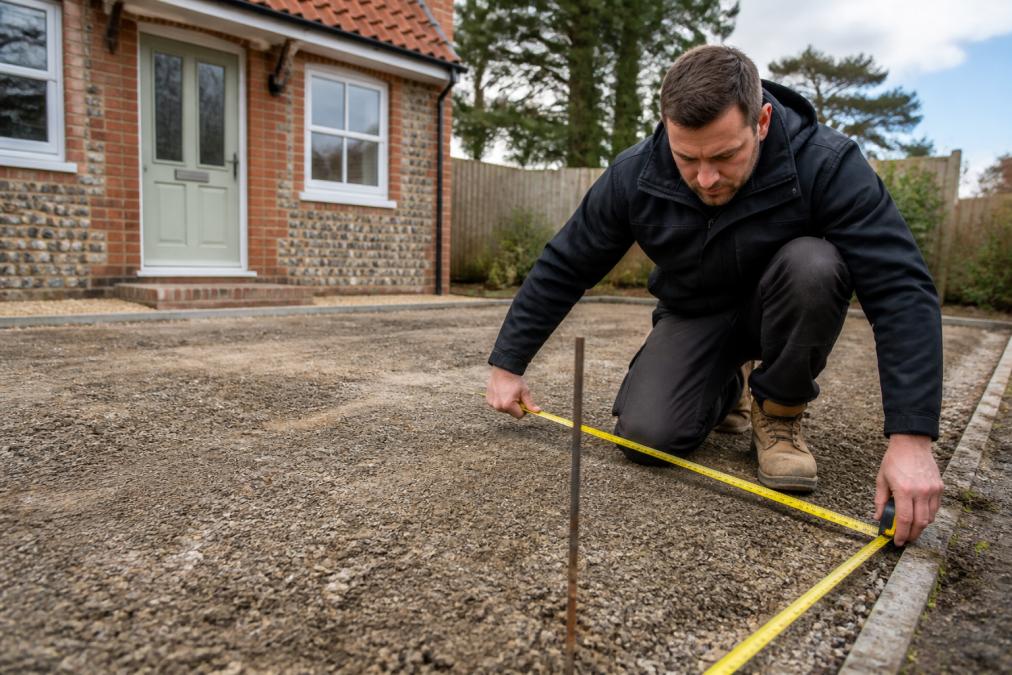
The durability of your driveway depends directly on sub-base quality. When aggregate is properly compacted in layers, it distributes vehicle loads evenly across a wider area, preventing settlement. Inadequate compaction leaves voids that collapse under pressure, creating sunken patches and cracks. The material itself must be of appropriate quality, free from clay, silt, and organic matter that absorb water and lose strength when saturated (gov.uk). Local soil conditions in Norfolk often require careful assessment, as clay-rich soils and high water tables present specific challenges. Professional ground preparation involves systematic testing and layer-by-layer compaction to specification, ensuring consistent material quality throughout the sub-base depth.
Importance of Driveway Drainage Systems in Ground Preparation
Water is the enemy of driveway longevity. Drainage systems integrated into ground preparation prevent water from pooling beneath the surface, where it weakens the sub-base and destabilises the ground. In Norfolk’s climate, where rainfall is regular, effective drainage is essential to preventing premature failure.
A properly designed drainage system typically includes a permeable sub-base layer, edge drainage channels, and falls (slopes) that direct water away from the driveway. Without adequate drainage, water percolates through the surface material, saturates the sub-base, and causes expansion and contraction through freeze-thaw cycles, particularly damaging to resin bound and other surfacing materials.
Professional ground preparation incorporates drainage planning from the outset, assessing site topography, understanding existing water flow patterns, and designing the driveway profile to shed water efficiently. This means selecting appropriate sub-base materials with adequate permeability and installing edge or French drains where necessary.
How to Prevent Driveway Sinking Through Proper Foundation Work
Driveway sinking, the gradual settlement of the surface as the ground beneath compresses, is one of the most common complaints from homeowners who cut corners on ground preparation. Prevention requires proper ground preparation before any surface material is laid.
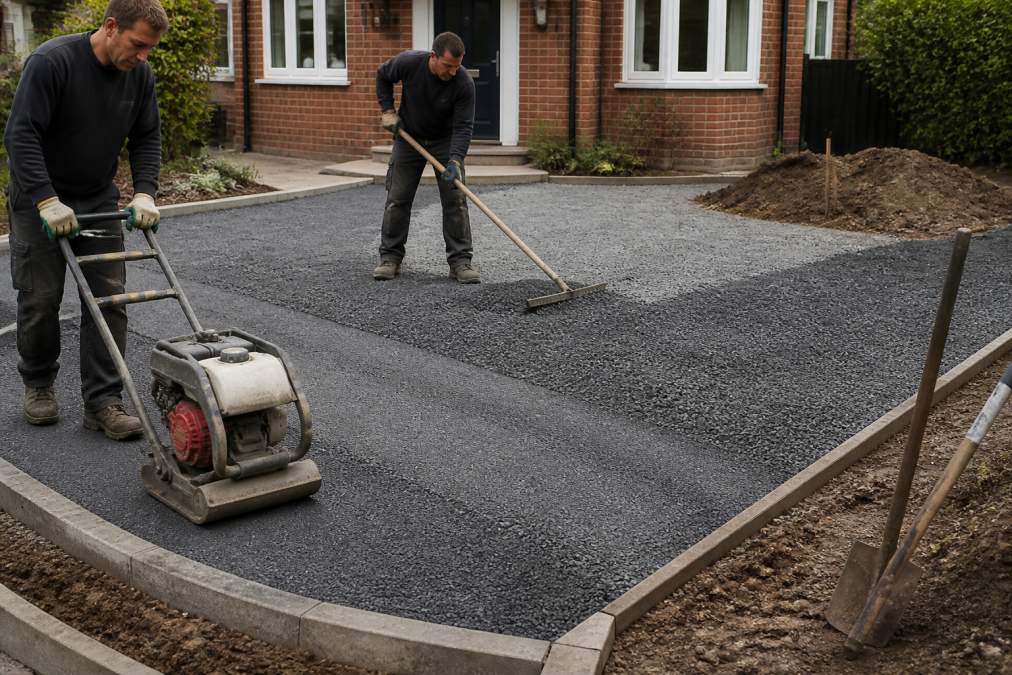
The key steps involve removing unsuitable material, compacting the remaining ground in controlled layers, and installing an engineered sub-base to specification. Unsuitable material includes topsoil, clay, and any organic matter that will decompose or lose strength when wet. This material must be excavated and removed, not buried beneath aggregate. The exposed ground is then compacted using a plate compactor or roller to reduce air voids and increase bearing capacity.
Once the ground is compacted, the sub-base aggregate is laid in layers of 75-100mm and compacted after each layer. This staged approach ensures uniform density throughout the sub-base depth. Professional contractors use compaction testing to verify that the work meets specification. Allowing adequate time for the prepared ground to settle before laying the surface material is critical; freshly compacted ground continues to consolidate for weeks, particularly if the site experiences rain or vibration from traffic (peer-reviewed research).
Professional driveway ground preparation is not a cosmetic choice, it is the engineering foundation that determines whether your driveway lasts 5 years or 25 years. KT Lake Paving and Landscaping brings over 30 years of experience to every project, ensuring that ground preparation meets rigorous British Standards and local soil conditions. As a Brett Approved Premier Installer, the team provides free, no-obligation estimates and stands behind every installation with a 10-year product guarantee. Contact KT Lake Paving and Landscaping today for a professional assessment of your driveway needs.
Frequently Asked Questions
Q: What happens if a driveway is laid without proper sub-base preparation?
A: Without proper sub-base preparation, driveways are prone to sinking, cracking, and surface deterioration within months. Water cannot drain effectively, leading to pooling and frost damage in winter. The surface loses structural support, causing uneven settling and costly repairs. Professional ground preparation prevents these issues by creating a stable, well-draining foundation that meets British Standards.
Q: How does professional driveway ground preparation improve drainage?
A: Professional ground preparation incorporates properly graded layers and drainage systems that direct water away from the driveway structure. Correct slope and sub-base design ensure water flows to the edges and disperses naturally rather than pooling beneath the surface. This prevents water infiltration, frost heave, and the structural damage that leads to premature failure and costly repairs.
Q: Why is proper sub-base work worth the investment for driveway longevity?
A: A well-prepared sub-base extends your driveway's lifespan and prevents expensive repairs caused by subsidence and water damage. Professional preparation meets rigorous British Standards, ensuring the surface remains level and stable. This protects your property's aesthetic value and reduces maintenance costs over time, making the initial investment in quality ground preparation highly cost-effective.


