

Table of Contents
- Is Block Paving Worth It? The Verdict
- Block Paving Driveway Pros and Cons
- Cost of Block Paving Driveway vs Other Materials
- Block Paving Driveway Maintenance: What to Expect
Is Block Paving Worth It for Driveways? A 2026 Guide
Last Updated: July 21, 2026
When deciding whether block paving is right for your driveway, the answer depends on your budget, maintenance tolerance, and expectations. Research from the British Standards Institution shows that properly installed permeable paving can last 20+ years with appropriate maintenance. The real challenge is understanding what "worth it" means for your property and climate.
Is Block Paving Worth It? The Verdict
Block paving delivers genuine value for homeowners who prioritise aesthetic appeal, design flexibility, and the ability to repair individual sections without replacing the entire surface. It works exceptionally well in Norfolk’s temperate climate, where freeze-thaw cycles are moderate and rainfall is manageable. If you’re comfortable with annual maintenance, repointing sand, occasional weed control, and pressure washing, block paving is worth the investment.
Block paving struggles with low-maintenance expectations. Tarmac and concrete offer "fit and forget" durability that block paving cannot match. The permeable nature that’s promoted as an environmental benefit also means water penetrates joints, creating conditions where weeds and moss grow readily unless actively managed.
Block paving is worth it if you value kerb appeal and design flexibility, and you’re prepared for regular maintenance. It’s not worth it if you want a driveway requiring minimal attention after installation.
Block Paving Driveway Pros and Cons
Advantages: The interlocking paver system distributes vehicle weight effectively across a properly constructed sub-base. Individual pavers can be replaced without disturbing the entire driveway, a genuine advantage when a single block cracks. Design flexibility allows curved patterns, mixed colours, and varied finishes that other materials cannot replicate. Permeable paving options meet Sustainable Drainage Systems (SUDS) regulations increasingly common across Norfolk. Clay pavers offer superior durability and premium aesthetics compared to concrete alternatives.
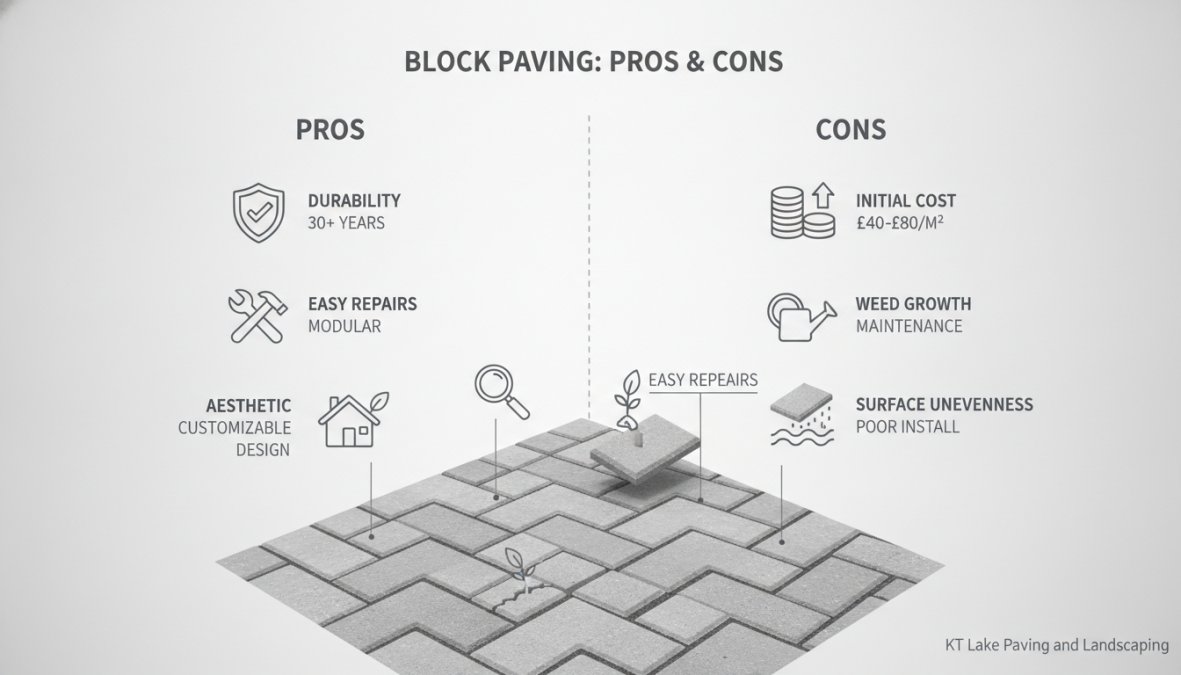
Limitations: Weed growth between joints is relentless, exploiting gaps where jointing sand sits. Resanding becomes an annual or bi-annual task. Vehicle overrun at driveway edges causes pavers to shift and settle unevenly, creating trip hazards. Subsidence and frost heave can displace blocks if the sub-base wasn’t properly compacted. Maintenance costs accumulate through pressure washing, resanding, weed control, and occasional block replacement.
The most common installation failure occurs when the sub-base isn’t properly compacted to the depth and density specified in British Standards. This leads to subsidence within 2-3 years. Always verify that edge restraints are installed correctly to prevent vehicle overrun from displacing outer pavers.
Cost of Block Paving Driveway vs Other Materials
Comparing block paving to alternative driveway materials reveals different value propositions depending on your priorities and timeline.
| Driveway Material | Aesthetic Appeal | Maintenance Demand | Durability | Repairability | Best For |
|---|---|---|---|---|---|
| Block Paving | Excellent | High | 15-20 years | Individual blocks replaceable | Homeowners valuing design and willing to maintain |
| Tarmac | Basic | Medium | 10-15 years | Full resurfacing required | Budget-conscious properties seeking simplicity |
| Concrete | Good | Low | 20-30 years | Patching possible but visible | Long-term durability with minimal intervention |
| Gravel | Basic | Very High | 3-5 years | Constant raking and topping | Temporary solutions or rural properties |
| Resin Bound | Excellent | Low | 10-15 years | Surface replacement needed | Modern aesthetics with lower maintenance |
Block paving sits in the mid-to-premium price range for initial installation, but true cost emerges over 15-20 years when maintenance, repairs, and potential sub-base remedial work are factored in. Concrete and quality tarmac offer better long-term cost-of-ownership for properties prioritising affordability and minimal intervention. In Norfolk, where rainfall is moderate and ground movement is generally stable, block paving performs more reliably than in areas with severe freeze-thaw cycles or clay soils prone to subsidence.
Request a detailed sub-base specification from any installer. The depth, compaction density, and material type directly determine whether your block paving will last 15 years or 25 years. As a Brett Approved Premier Installer, KT Lake Paving and Landscaping specifies sub-bases that meet or exceed British Standards, backed by a 10-year product guarantee.
Block Paving Driveway Maintenance: What to Expect
Understanding maintenance requirements separates realistic expectations from marketing promises. Block paving demands active engagement if you want it to remain attractive and safe.
Annual tasks include resanding between joints. Jointing sand gradually washes away through rainfall and vehicle movement, creating voids where weeds establish. Repointing typically occurs every 12-24 months depending on rainfall and traffic. Pressure washing removes moss and algae but doesn’t address weed roots below the surface.
Weed control requires either chemical treatment or manual removal. Herbicides kill weeds but require seasonal reapplication. Manual removal prevents chemical accumulation but demands regular attention. Combining both methods yields the best results.
Vehicle overrun and edge displacement demand monitoring. Where vehicles consistently overhang the driveway edge, pavers shift and settle. Checking edge restraints annually and relevelling displaced blocks prevents worsening. Ignoring this creates trip hazards and accelerates further movement.
Subsidence and frost heave require professional intervention. If blocks sink unevenly or heave upward during winter, the underlying sub-base has failed. Remedial work involves lifting affected sections, assessing the sub-base, and rebuilding to proper specification, a costly process prevented through professional installation quality.
Most homeowners allocate 4-8 hours annually to block paving maintenance, plus occasional professional attention. Over a 20-year lifespan, this represents a genuine commitment.
Block paving is worth it for Norfolk homeowners who value design flexibility and aesthetic appeal while accepting maintenance responsibility. If you’re ready to invest in a driveway reflecting your property’s character, block paving delivers genuine value. KT Lake Paving and Landscaping helps homeowners make this decision through free consultations explaining exactly what maintenance your chosen surface requires. Our Brett Approved Premier Installer status and 10-year product guarantee ensure proper installation that maximises durability and performance. Get in touch for a free estimate and honest assessment of whether block paving suits your property and lifestyle.
Frequently Asked Questions
How long does block paving last on a driveway?
Quality block paving typically lasts 15-25 years with proper maintenance. Durability depends heavily on the sub-base installation, drainage, and climate. Concrete blocks and clay pavers both perform well, though clay tends to offer slightly longer service life. Regular resanding of joints and addressing weed growth promptly helps extend lifespan significantly.
Is block paving more expensive than tarmac or concrete?
Block paving generally costs more upfront than tarmac or asphalt, but the long-term cost of ownership can be competitive. Tarmac requires frequent resealing and resurfacing every 7-10 years, whilst block paving's main costs are maintenance and occasional joint resanding. Concrete is durable but less flexible for repairs. Obtain free estimates from local installers to compare actual figures for your property.
What are the disadvantages of block paving for driveways?
Common drawbacks include weed growth between joints, the need for regular resanding, potential subsidence if the sub-base is poorly installed, and frost heave damage in cold climates. Vehicle overrun at edges can cause pavers to shift. Maintenance is more labour-intensive than tarmac. Poor installation is a major risk, professional installation with proper edge restraints and drainage is essential to avoid costly repairs.
Does block paving add value to your home?
Block paving improves kerb appeal and can enhance property value, particularly in regions where driveways are a focal point. The increase is modest, typically 1-3% of property value, and depends on overall quality and condition. Well-maintained block paving is more attractive than cracked tarmac, but buyers expect professional installation and evidence of proper maintenance. It's a worthwhile investment for aesthetics and longevity rather than resale premium alone.
Is block paving high maintenance compared to other driveway materials?
Block paving requires more active maintenance than tarmac or concrete. Expect to resand joints every 1-2 years, manage weed growth, and pressure wash seasonally. However, repairs are easier, individual pavers can be replaced without resurfacing the entire drive. The design flexibility and aesthetic appeal often justify the maintenance commitment, especially if you value kerb appeal and long-term durability over minimal upkeep.


