

Table of Contents
- Block Paving vs Gravel Driveway: Key Differences at a Glance
- Pros and Cons of Block Paving
- Pros and Cons of Gravel Driveways
- Cost of Block Paving vs Gravel Driveway: Initial and Long-Term Investment
Last Updated: July 16, 2026
Block Paving vs Gravel Driveway: Key Differences at a Glance
Block paving is a permanent, engineered surface requiring minimal maintenance but costing significantly more upfront. Gravel driveways are affordable and quick to install, but demand regular raking, refilling, and displacement management. The right choice depends on your climate, traffic patterns, and maintenance tolerance.
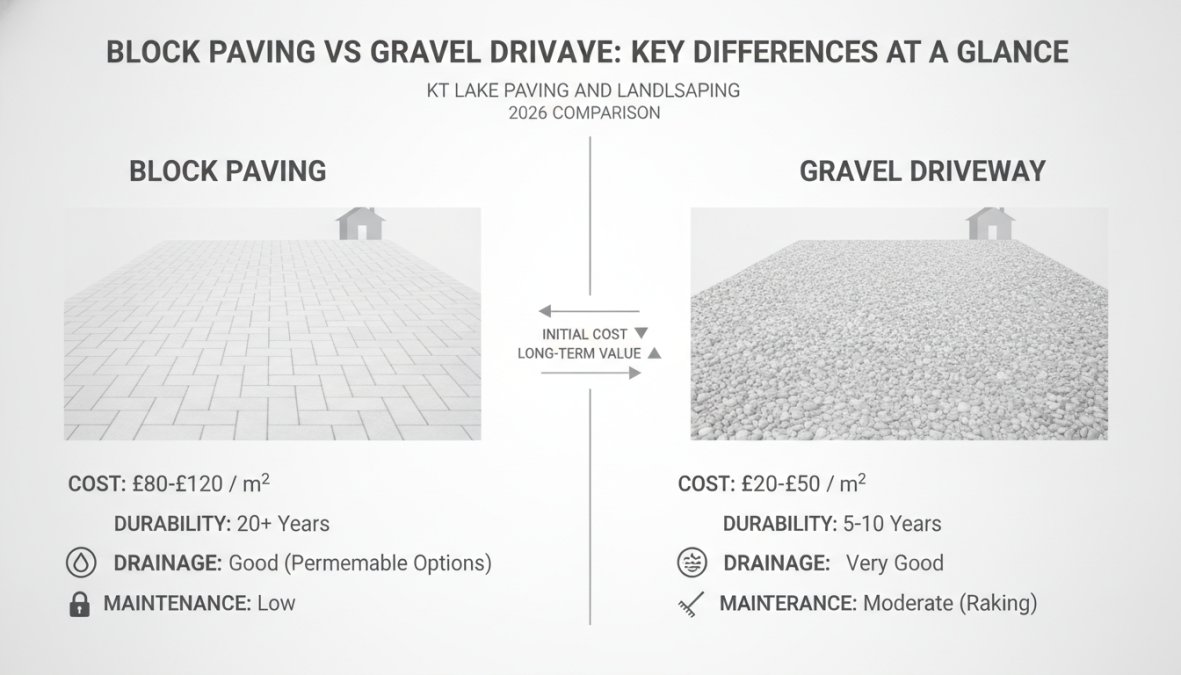
The hidden factor most homeowners miss: your driveway’s sub-base quality matters more than the surface material. Poor preparation leads to rutting and frost heave regardless of material choice. Always invest in proper compaction and geotextile membrane installation.
Pros and Cons of Block Paving
Block paving delivers durability and aesthetic versatility that gravel cannot match. Concrete interlocking blocks withstand vehicle traffic, freeze-thaw cycles, and decades of use without significant degradation.
Key advantages:
- Durability: lasts 25-40 years with minimal surface wear
- Low maintenance: no raking, refilling, or seasonal displacement
- Aesthetic control: hundreds of colors, finishes, and patterns available
- Permeable options: comply with SUDS (Sustainable Urban Drainage Systems) regulations
- Individual blocks can be replaced without affecting the entire driveway
Key disadvantages:
- Higher upfront installation cost
- Weed suppression requires active maintenance (polymeric sand, occasional powerhosing)
- Improper installation leads to settling and rutting
- Joint deterioration over 7-10 years if not resealed
The most common installation mistake: inadequate sub-base compaction. Demand evidence of proper compaction (typically 95% Proctor density) before signing off on installation.
Pros and Cons of Gravel Driveways
Gravel offers immediate affordability and natural appeal. Installation is straightforward: lay geotextile membrane, add 40-50mm compacted stone base, then 30-40mm decorative aggregate.
Key advantages:
- Lowest upfront cost: 60-70% cheaper than block paving
- Quick installation: most driveways complete in 1-2 days
- Excellent drainage: naturally sheds water
- Easy repairs: sunken areas topped up with fresh material
- Suits traditional properties and rural settings
Key disadvantages:
- Requires regular maintenance: raking, refilling every 4-6 weeks
- Displacement on slopes: vehicles cause rutting and material migration
- Weed growth: needs active management
- Shorter lifespan: 5-7 years before significant material loss
- Weather sensitivity: heavy rain causes washout, frost heave affects edges
The hidden cost is labor. A typical gravel driveway needs 2-3 hours of maintenance every 4-6 weeks during active seasons, 30-40 hours annually. Over 10 years, that’s 300-400 hours of work or equivalent contractor costs.
Cost of Block Paving vs Gravel Driveway: Initial and Long-Term Investment
The initial cost gap is substantial but narrows significantly over time. Block paving typically costs 3-4 times more to install than gravel, but the lifespan difference justifies the premium for homeowners staying beyond 10 years.
Initial installation costs (for a typical 40m² residential driveway in Norfolk):
| Material | Sub-base | Surface | Labor | Total | Cost Per m² |
|---|---|---|---|---|---|
| Gravel | £200-300 | £150-250 | £300-500 | £650-1,050 | £16-26 |
| Block Paving | £400-600 | £800-1,200 | £1,000-1,500 | £2,200-3,300 | £55-82 |
Long-term cost comparison (10-year ownership):
Gravel requires £200-400 annually for aggregate top-up and maintenance. Over 10 years, that’s £2,000-4,000 in maintenance, plus complete resurfacing by year 7-8 (£800-1,200).
Block paving maintenance is minimal: joint resealing every 5-7 years (£300-500) and occasional powerhosing (£150-250 every 2-3 years). Total maintenance over 10 years: £800-1,200.
20-year total cost of ownership:
- Gravel: Initial £650-1,050 + maintenance £4,000-8,000 + resurfacing (£800-1,200) = £5,450-10,250
- Block paving: Initial £2,200-3,300 + maintenance £1,000-1,500 = £3,200-4,800
The break-even point for block paving versus gravel is typically 8-10 years. If you plan to stay longer than a decade, block paving delivers superior long-term value.
For current quotes specific to your Norfolk property, contact KT Lake Paving and Landscaping’s free consultation service. As a Brett Approved Premier Installer with over 30 years of experience, they ensure every installation meets British Standards, backed by a 10-year product guarantee.
Maintenance Requirements and Long-Term Care
Block paving demands minimal hands-on maintenance. Polymeric sand in joints prevents weed growth and locks blocks in place. Every 5-7 years, inspect joints for sand loss and resand if gaps exceed 3-4mm. This single task prevents weeds, stabilizes blocks, and extends lifespan by 10+ years.
Powerhosing is acceptable but risky. Low-pressure washing (below 100 bar) removes moss and algae safely. High-pressure washing (above 150 bar) can blast polymeric sand from joints and damage surfaces.
Gravel maintenance is relentless. Spring and fall require 2-3 hours of raking to redistribute displaced material. Winter freeze-thaw cycles push material outward, creating edge displacement. Most homeowners find ongoing gravel maintenance exhausting after 3-5 years.
Durability, Lifespan, and Weather Resistance in Norfolk’s Climate
Norfolk’s maritime climate, freeze-thaw cycles, coastal salt spray, and moderate rainfall create specific demands. Block paving engineered to British Standards (BS 7533) resists frost heave when installed on proper sub-base with adequate drainage. The interlocking design distributes vehicle loads evenly, preventing differential settling.
Gravel driveways suffer more visibly. Freeze-thaw cycles accelerate displacement. Heavy winter rain causes washout on slopes.
Typical lifespan expectations:
- Block paving: 25-40 years with proper sub-base and joint maintenance
- Gravel: 5-7 years before significant material loss
- Resin-bound (permeable): 15-20 years with minimal maintenance
Aesthetic Appeal and Curb Appeal Comparison
Gravel driveways win on initial visual impact, creating authentic charm for period properties. Block paving offers far greater aesthetic control with hundreds of colors, finishes, and patterns available.
The real aesthetic advantage of block paving emerges over time. A gravel driveway looks pristine for 6-12 months, then gradually deteriorates with ruts, thinning material, and weeds. A block paving driveway maintains its appearance for 20+ years, suggesting a well-maintained property when you sell.
Resin-bound surfaces offer a middle ground with sophisticated appearance and permeable drainage benefits. KT Lake Paving and Landscaping specializes in resin-bound installation and offers design consultations to match your property’s aesthetic.
Choosing between block paving and gravel requires balancing upfront cost against long-term value and maintenance tolerance against durability. For most Norfolk homeowners planning to stay beyond 10 years, block paving delivers superior value. For short-term solutions or tight budgets, gravel remains practical.
KT Lake Paving and Landscaping offers professional consultations to assess your property, climate exposure, and traffic patterns. Request a free, no-obligation estimate to see how block paving or permeable resin-bound surfaces can enhance your Norfolk property’s value.
Frequently Asked Questions
Is block paving better than gravel for a driveway?
Block paving and gravel each have distinct advantages. Block paving offers superior durability, requires less frequent maintenance, and provides better curb appeal and aesthetic versatility. Gravel driveways are more affordable upfront and offer excellent drainage. The best choice depends on your budget, climate, traffic volume, and willingness to perform regular maintenance. Block paving typically wins for long-term value and durability, while gravel suits those prioritizing initial cost savings.
Which is cheaper, block paving or gravel driveway?
Gravel driveways have a significantly lower upfront installation cost, making them the budget-friendly choice initially. However, block paving costs less over time due to minimal maintenance requirements. Gravel requires regular raking, weed suppression, and periodic resurfacing to maintain appearance and prevent rutting and displacement. When calculating long-term value, block paving often proves more economical despite higher initial investment. Contact KT Lake Paving and Landscaping for a free estimate comparing both options for your specific project.
Which lasts longer, gravel or block paving?
Block paving significantly outlasts gravel driveways. Quality block paving typically lasts 15-25 years or more with proper sub-base preparation and maintenance, while gravel usually requires resurfacing every 3-7 years. Block paving resists frost heave, rutting, and displacement better than loose aggregate. Gravel's shorter lifespan is due to natural settling, weather erosion, and vehicle traffic displacement. For maximum durability, block paving with proper edge restraint, geotextile membrane, and compaction provides the longest-lasting driveway solution.
Is a gravel driveway high maintenance?
Yes, gravel driveways require consistent maintenance to remain functional and attractive. Regular raking prevents rutting and maintains an even surface. Periodic top-ups are needed as gravel settles and scatters, especially on slopes or with heavy vehicle use. Weed suppression through geotextile membranes or chemical treatments helps control growth. Winter maintenance involves snow shoveling care to avoid scattering stones. Block paving requires far less hands-on maintenance, mainly occasional powerhosing and weed control in joints, making it the lower-maintenance option long-term.
Does block paving add value to your house?
Yes, block paving significantly enhances curb appeal and property value. It provides a finished, professional appearance that improves first impressions and landscaping aesthetics. The durability and low maintenance of block paving also appeal to buyers as a long-term investment. Gravel driveways, while functional, offer less curb appeal and suggest higher future maintenance costs to potential buyers. If property value enhancement is a priority, block paving is the superior choice. KT Lake Paving's Brett Approved installations meet British Standards, further boosting property appeal and buyer confidence.


