

Table of Contents
- How to Maintain a Resin Bound Driveway: The Essentials
- Pressure Washing Resin Bound Driveways: Technique and Safety
- How to Remove Moss from Resin Driveways and Prevent Growth
- Best Tools for Cleaning Resin Driveways Effectively
Last Updated: July 11, 2026
Maintaining a resin bound driveway preserves its appearance and structural integrity. At KT Lake Paving and Landscaping, we’ve spent over 30 years helping Norfolk homeowners protect their resin surfaces. A well-maintained driveway lasts decades, but neglect leads to staining, moss growth, and costly repairs. The key to longevity is consistency: regular cleaning, seasonal inspections, and prompt attention to damage prevent small issues from becoming expensive problems.
Pressure Washing Resin Bound Driveways: Technique and Safety
Use 80-100 bar pressure, high enough to remove debris but gentle enough to protect the resin bond. Sweep loose debris first with a soft-bristled brush, then maintain at least 30 centimeters distance from the surface using a fan setting rather than a concentrated lance. Move the nozzle in smooth, overlapping passes. Cold water works best; hot water weakens the resin bond.
Avoid pointing the jet wash at edges or seams, which are vulnerable to water penetration. Always angle away from borders and use lower pressure near edges.
For heavily soiled areas, apply a mild resin-safe cleaning solution 15 minutes before pressure washing. Never use acidic or abrasive cleaners, these damage the resin and fade the aggregate. Allow 24-48 hours drying time before using the driveway.
How to Remove Moss from Resin Driveways and Prevent Growth
Moss thrives in Norfolk’s damp climate, particularly in shaded areas, and creates a slippery hazard. Remove existing moss with a stiff brush, then apply a moss-killing solution formulated for permeable surfaces. Allow 24-48 hours before rinsing with a garden hose or low-pressure jet wash. Never use bleach or salt-based treatments.
Prevention is simpler than removal. Ensure gutters direct water away from the driveway, trim overhanging branches to increase sunlight, and sweep regularly to remove moisture and organic matter.
Never use a pressure washer to remove moss initially. High-pressure water embeds spores deeper into the surface and accelerates growth. Remove moss manually or chemically first, then rinse gently.
Best Tools for Cleaning Resin Driveways Effectively
A quality soft-bristled broom is essential, use it weekly to remove loose debris. Invest in a 100-bar pressure washer with adjustable settings and a fan-setting lance. Pair with resin-safe cleaning solutions and a long-handled soft brush for corners and edges.
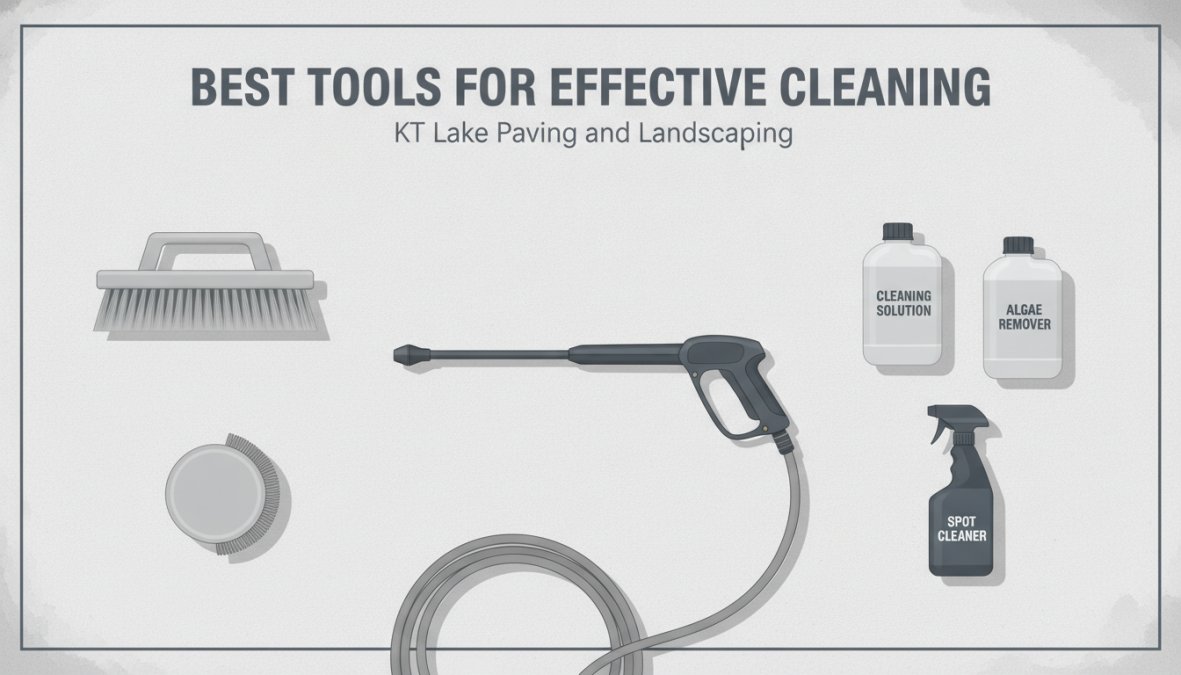
| Tool | Purpose | Frequency |
|---|---|---|
| Soft-bristled broom | Weekly debris removal | Weekly |
| Pressure washer (80-100 bar) | Deep cleaning | Monthly to quarterly |
| Garden hose | Rinsing and light cleaning | As needed |
| Resin-safe cleaner | Stain removal | As needed |
| Long-handled brush | Edge and corner cleaning | Monthly |
| Leaf blower | Seasonal debris removal | Autumn and spring |
Regular Sweeping and Debris Removal
Weekly sweeping with a soft-bristled broom removes leaves, dirt, and particles before they degrade the resin surface. In autumn, sweep twice weekly when leaves fall heavily. Remove snow and ice with a plastic shovel, never metal tools. Avoid rock salt and harsh de-icing chemicals, which damage the resin bond and contaminate the permeable drainage layer.
Sweeping prevents hours of intensive cleaning later. A consistent weekly routine keeps your driveway fresh and prevents buildup that leads to staining and damage.
Weed Prevention and Removal
Weeds penetrate if the resin seal is compromised or cracks develop. Ensure proper edge restraints and an intact resin seal. Remove weeds by hand, grasping firmly at the base and pulling steadily to remove the entire root system. Never use salt-based weed killers.
Removing Oil and Grease Stains
Fresh oil stains should be treated immediately. Blot excess oil with absorbent materials like cat litter, then remove once saturated. Apply a resin-safe degreaser according to manufacturer instructions, allow 24 hours, then rinse thoroughly with a garden hose or low-pressure jet wash.
Prevent stains by parking in different spots and addressing spills immediately. Place absorbent material under vehicles to catch minor leaks.
Avoiding Heavy Loads and Sharp Objects
Resin driveways are durable but have limits. Heavy vehicles parked repeatedly in the same spot can create indentations or cracks. Distribute weight across the driveway. Sharp objects like garden tools, stiletto heels, and dragged furniture scratch or gouge the surface. Use protective mats under furniture legs.
Seasonal Maintenance Schedules
Spring: Sweep thoroughly, inspect for damage, and pressure wash away algae and moss. Address repairs immediately.
Summer: Weekly sweeping and monthly light cleaning. Check drainage after heavy rain.
Autumn: Remove fallen leaves twice weekly to prevent staining. Check gutters and downpipes. Pressure wash before winter.
Winter: Remove snow and ice promptly with plastic tools. Avoid salt and chemical de-icers. Inspect for cracks that allow water penetration.
What to Avoid: Damaging Chemicals and Practices
Never use bleach, acidic cleaners (vinegar, citric acid), or salt-based products, these damage the resin bond and contaminate the permeable layer. Avoid pressure washers above 100 bar, metal brushes, or abrasive pads. Never use hot water pressure washing.
The Importance of Regular Aftercare
Ongoing maintenance keeps your resin surface vibrant and performing well. Walk the entire driveway quarterly and look for cracks, loose areas, or water penetration signs. Early detection prevents expensive repairs. Small cracks can be sealed with resin-based filler products.
Your resin bound driveway is a long-term investment. Spending 30 minutes monthly on maintenance prevents hundreds of pounds in repair costs.
Visual Inspection Checklist
Quarterly inspections prevent problems from developing unnoticed. Look for surface cracks, particularly around edges and seams. Check for loose or missing aggregate, moss, algae, or weed growth in shaded areas. Inspect for oil stains or discolouration. Examine the resin seal for wear or fading.
Maintaining a resin bound driveway requires consistent effort, but the payoff is a surface that remains attractive and functional for decades. KT Lake Paving and Landscaping offers professional maintenance guidance and repair services for Norfolk homeowners. As a Brett Approved Premier Installer with over 30 years of experience, we understand the specific challenges of maintaining resin surfaces in Norfolk’s climate. Reach out for a no-obligation consultation to discover how professional maintenance can extend your driveway’s lifespan.
Frequently Asked Questions
Can you pressure wash a resin bound driveway?
Yes, you can pressure wash a resin bound driveway, but technique matters. Use a pressure washer with a fan setting at low pressure (below 100 bar) to avoid damaging the resin bond and aggregate. Always use cold water and maintain a safe distance from the surface. A jet wash with proper pressure settings is effective for removing debris, moss, and algae while preserving surface integrity.
How often should you clean a resin bound driveway?
Sweep your resin bound driveway weekly to remove loose debris and prevent buildup. Perform a deeper clean with pressure washing every 6-12 months, depending on local weather and foot traffic. Areas prone to moss and algae growth may need more frequent attention. Regular aftercare extends surface longevity and keeps the aggregate vibrant and UV stable.
How do you remove oil stains from a resin bound driveway?
Act quickly when oil spills occur. Blot excess oil with absorbent material, then apply a degreaser specifically designed for porous surfaces. Allow the solution to sit briefly before scrubbing gently with a soft brush. Rinse thoroughly with cold water using low-pressure settings. For stubborn stains, a second application may be necessary. Avoid heavy-duty solvents that can compromise the resin bond.
What should you avoid when maintaining a resin bound driveway?
Avoid parking heavy vehicles, using sharp objects, or applying harsh chemicals that damage the resin bond. Don't use high-pressure jet wash settings (over 100 bar), hot water, or abrasive cleaning methods. Prevent prolonged standing water and avoid placing unsuitable loads on the surface. Never use salt-based de-icers in winter; opt for permeable-friendly alternatives that protect both the aggregate and environmental drainage.


