

Table of Contents
- Best Permeable Driveway Surfacing Options: A Comparison Overview
- Permeable Block Paving & Interlocking Pavers
- Resin-Bound Driveway Systems
- Plastic Grid Systems & Grass Pavers
Best Permeable Driveway Surfacing Options: 2026 Guide
Last Updated: July 4, 2026
Permeable driveways allow water to infiltrate through the material rather than running off into storm drains, reducing flooding risks and supporting groundwater recharge. Many UK councils now require SuDS-compliant (Sustainable Drainage Systems) solutions for new driveways, making permeable options necessary as well as preferable. Selecting the right material involves understanding how each option performs under load, what maintenance it requires, and which suits your soil type and climate.
Before committing to any permeable driveway system, have your soil tested for permeability rate and drainage capacity. Clay-heavy soils may require additional sub-base preparation or alternative solutions like resin-bound systems that don’t rely on ground infiltration.
Permeable Block Paving & Interlocking Pavers
Permeable block paving remains one of the most popular choices for residential driveways. These interlocking concrete pavers feature wider joints than traditional pavers, allowing water to pass through into a specially engineered sub-base layer below.
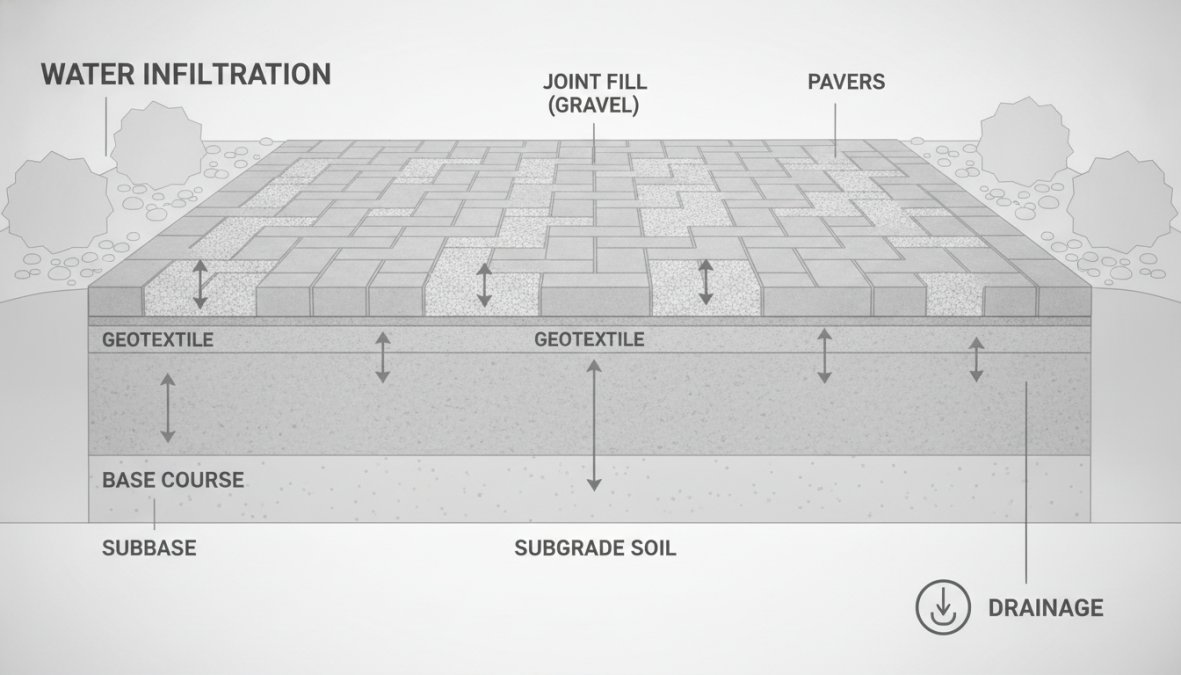
The advantage is balancing aesthetics and function. You get the finished appearance of a traditional block driveway with drainage benefits. Available in numerous colors and patterns, these pavers enhance curb appeal while managing stormwater. Load-bearing capacity is excellent for residential and light commercial use.
Installation requires proper sub-base work. A geogrid layer prevents fine materials from migrating, while 100-150mm of crushed stone allows water infiltration. Maintenance involves occasional weeding and topping up aggregate infill every 2-3 years.
Pros: Excellent aesthetic options; high load-bearing capacity; 20+ year lifespan; effective groundwater recharge.
Cons: Higher upfront cost; requires professional sub-base installation; weeds can establish in joints; joint infill requires periodic top-ups.
Resin-Bound Driveway Systems
Resin-bound surfaces combine decorative aggregate with polyurethane or epoxy resin binder, creating a smooth, solid surface that’s both permeable and visually striking. Water drains through the aggregate layer into the sub-base below.
This option appeals to homeowners prioritizing aesthetic impact. Available in hundreds of color combinations, the result is a contemporary, seamless finish with excellent infiltration rates. The surface is wheelchair-friendly and suitable for freeze-thaw cycles common in Norfolk winters.
Resin-bound systems require professional installation. The aggregate must be graded precisely, resin mixed to exact specifications, and application completed in suitable weather. Poor workmanship results in patchy curing or uneven drainage.
Maintenance is light compared to block paving. The sealed surface resists weed growth, and cleaning requires only sweeping and occasional pressure washing.
Pros: Superior aesthetic appeal; seamless surface eliminates weeds; excellent permeability; 10+ year lifespan; wheelchair-friendly.
Cons: Higher cost than alternatives; requires professional installation; can become slippery when wet; resin can yellow under UV exposure.
Never attempt resin-bound installation in wet conditions or temperatures below 10°C. The resin won’t cure properly, resulting in a sticky surface that fails to harden.
Plastic Grid Systems & Grass Pavers
Plastic grid systems use modular, interlocking grids made from recycled high-density polyethylene (HDPE) to stabilize either gravel infill or living grass while maintaining full permeability. Grids feature open cells that lock loose material in place, preventing rutting and displacement.
Grass pavers work similarly but are filled with soil and turf, creating a lawn-like appearance. This approach maximizes environmental benefit, reducing heat island effect and supporting biodiversity. The trade-off is maintenance intensity, grass pavers require regular mowing, watering during dry spells, and fertilization.
Installation is straightforward. Grids snap together, require minimal sub-base preparation, and can be completed in a single day on residential driveways. This accessibility makes plastic grid systems attractive for DIY-minded homeowners.
Pros: Low upfront cost; modular design allows DIY installation; exceptional permeability; plastic grids last 20+ years.
Cons: Grass pavers require ongoing turf maintenance; gravel grids need periodic material top-ups; surface can shift if sub-base isn’t level; gravel can migrate beyond boundaries.
Plastic grid systems work best on flat to gently sloping driveways with stable sub-bases. Steep slopes or poorly draining soil can cause grids to shift or water to pool.
Comparison of Permeable Driveway Surfacing Options
| Surfacing Option | Upfront Cost | Maintenance Demand | Load Capacity | Permeability | Best For |
|---|---|---|---|---|---|
| Permeable Block Paving | High | Moderate | Excellent | Very Good | Aesthetic appeal + durability |
| Resin-Bound | Very High | Low | Good | Excellent | Contemporary look, minimal weeds |
| Plastic Grid + Gravel | Low | Moderate | Excellent | Excellent | Budget-conscious, DIY-friendly |
| Grass Pavers | Low | High | Good | Excellent | Eco-conscious, distinctive appearance |
Climate-Specific Recommendations for Norfolk Installations
Norfolk’s maritime climate presents specific challenges. The region experiences moderate rainfall spread across most of the year with occasional freeze-thaw cycles. Soil composition varies, some areas have clay-heavy soil with poor drainage, while others have sandy, free-draining conditions.
For clay-heavy soils, resin-bound or permeable block systems outperform plastic grids. These materials don’t rely entirely on ground infiltration; engineered sub-bases manage water effectively. In areas with better-draining sandy soils, plastic grid systems become more viable. Grass pavers also perform well, though Norfolk’s variable moisture means grass may struggle during dry summers without supplemental watering.
Winter performance differs by material. Permeable block paving handles freeze-thaw cycles well. Resin-bound surfaces can become slippery when icy. Plastic grids themselves are unaffected by cold, but gravel infill can compact under ice and snow.
DIY vs. Professional Installation: Feasibility and Risks
Plastic grid systems are genuinely DIY-friendly. Preparation involves leveling the sub-base, laying landscape fabric, and snapping grids together. Most homeowners complete residential installations in a weekend. The main risk is improper base leveling, causing uneven settling or water pooling.
Permeable block paving requires more expertise. The sub-base must be compacted in precise layers, geogrid positioned correctly, and blocks laid to consistent heights. Mistakes result in uneven surfaces or poor drainage. Professional installers have equipment and experience to avoid these issues.
Resin-bound systems are not DIY territory. The resin must be mixed to exact specifications and applied in proper weather conditions. Professional applicators manage these variables; attempting this yourself risks wasted materials and failed installation.
Long-Term Maintenance Cost Analysis
Permeable block paving requires periodic maintenance: weeding joints annually, topping up aggregate infill every 2-3 years, and occasional pressure washing. Budget roughly £100-200 annually. The system typically lasts 20+ years, making total cost of ownership moderate.
Resin-bound systems demand minimal maintenance, primarily sweeping and occasional pressure washing. Annual costs are negligible unless damage occurs. Lifespan is typically 10-15 years.
Plastic grid systems with gravel require annual raking and periodic material top-ups. Budget £50-150 annually. Grids last 20+ years, but infill material requires replacement every 5-7 years.
Grass pavers demand the highest maintenance. Budget £200-400 annually for proper turf maintenance. Lifespan typically 10-15 years before significant degradation.
Permitting and Local Code Navigation in Norfolk
Norfolk’s local planning authority increasingly requires SuDS for new driveways. Most permeable driveway systems qualify as SuDS-compliant, meaning you may not need formal planning permission. However, specific requirements vary by property and location. Properties in conservation areas or with listed building status may face additional restrictions.
The critical factor is demonstrating that your chosen system will infiltrate water at a rate matching the soil’s natural permeability. Soil testing by a qualified surveyor costs £150-300 but provides evidence planners need. Contact your local planning authority before starting installation to prevent expensive remedial work later.
Selecting the right permeable driveway surfacing for your Norfolk property requires balancing aesthetics, drainage performance, maintenance demands, and budget. Whether you prioritize the polished appearance of resin-bound systems, the versatility of permeable block paving, or the affordability of plastic grids, each option delivers genuine environmental and practical benefits over traditional impermeable surfaces.
Contact KT Lake Paving and Landscaping today for a professional assessment of the best permeable driveway surfacing options for your property.
Frequently Asked Questions
What are the best permeable driveway surfacing options for heavy vehicle loads?
Permeable block paving systems and heavy-duty plastic grids offer the best load-bearing capacity for driveways expecting regular vehicle traffic. Interlocking concrete pavers with engineered nib designs provide structural integrity while maintaining permeability rates suitable for stormwater runoff management. Plastic grid systems like TRUEGRID and Ecoraster support industrial-grade loads while remaining 100% permeable, making them excellent for high-traffic residential or commercial applications.
How much does permeable driveway surfacing cost per square foot?
Permeable driveway cost per square foot varies significantly by material type. Plastic grid systems typically range from £15-25 per square metre, while permeable block paving costs £40-80 per square metre. Resin-bound systems are generally £35-65 per square metre. Installation costs add 30-50% to material expenses. Long-term value improves when considering reduced maintenance needs and potential stormwater fee reductions in SuDS-compliant areas.
What maintenance does a permeable driveway require annually?
Permeable driveway maintenance tips include vacuuming or power-washing the surface annually to prevent fines and sediment from clogging joints, inspecting the sub-base for compaction, and replacing infill material in gravel systems as needed. For grass pavers, regular mowing and watering maintain growth. Most systems require professional pressure-washing every 2-3 years. Avoiding heavy salt use in winter and monitoring for algae growth in wet climates extends surface life significantly.
What are the main pros and cons of permeable driveways?
Pros and cons of permeable driveways include significant environmental benefits, reducing stormwater runoff and supporting groundwater recharge, alongside enhanced curb appeal and regulatory compliance with SuDS standards. However, initial installation costs exceed traditional asphalt, maintenance is more involved, and performance depends heavily on proper sub-base preparation. Certain materials require professional installation, and freeze-thaw cycles in harsh climates can affect durability if not properly engineered.


