

Table of Contents
- What Is Resin Bound Aggregate and How Does It Work?
- Resin Bound vs Resin Bonded: Key Technical Differences
- Is Resin Bound Permeable? Drainage and Environmental Benefits
- Resin Bound Driveway Cost: Pricing and Installation Factors
Last Updated: June 21, 2026
Resin bound aggregate is a paving material made by coating natural or recycled stone aggregate in clear polyurethane resin before laying it onto a prepared sub-base. The material has grown rapidly in popularity across Norfolk and the wider UK, delivering a smooth, attractive finish that is fully permeable, SUDS compliant, and long-lasting.
The most important distinction upfront: resin bound paving is not the same as resin bonded paving. Resin bound produces a smooth, porous surface where aggregate is mixed into the resin before laying. Resin bonded scatters loose stone on top of applied resin, creating a rougher, non-permeable finish that sheds aggregate over time.
What Is Resin Bound Aggregate and How Does It Work?
Resin bound aggregate is a surfacing system where natural stone, glass, or recycled aggregate is fully encapsulated in UV-stable polyurethane resin, then trowel-finished onto a solid sub-base to create a seamless, porous surface. Every individual stone is coated, meaning no loose material sits on top and the finished surface resists cracking, weed growth, and oil stains far better than traditional block paving or concrete.
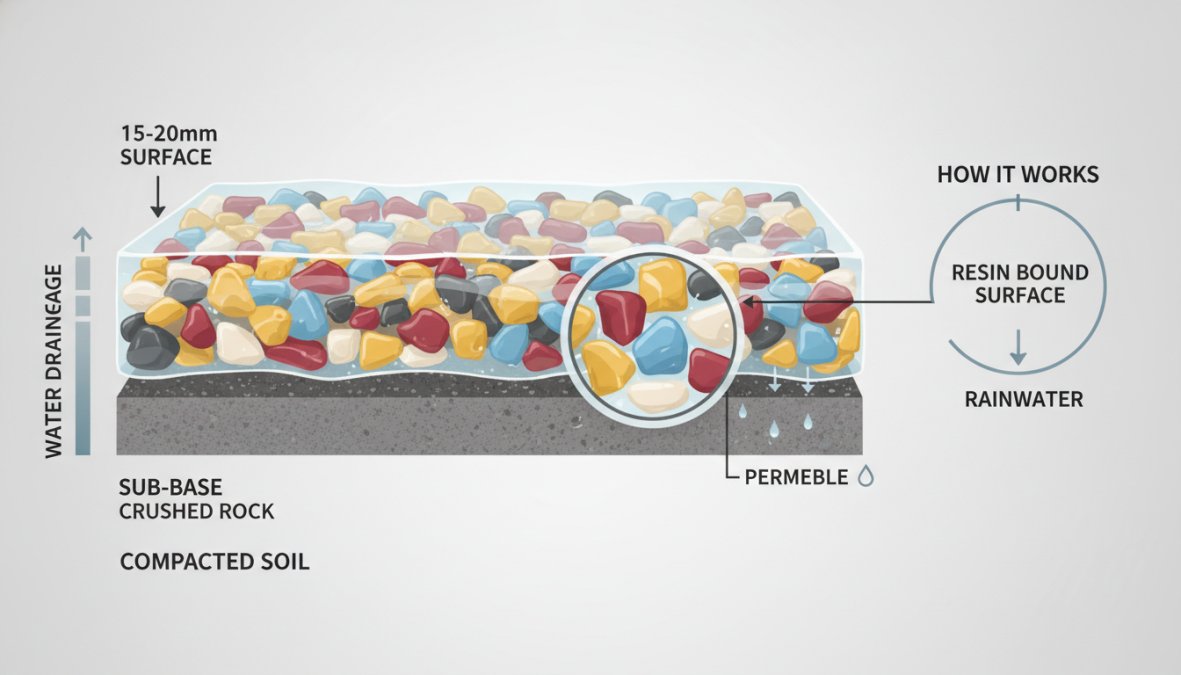
Installation follows a clear sequence: a stable sub-base (typically compacted MOT Type 3) is prepared first, edging is installed, aggregate and polyurethane resin are combined in a forced-action mixer to ensure complete encapsulation, then hand-trowelled to 15-18mm depth. The surface cures within hours and reaches full hardness within 24 hours.
Ask your installer whether they use a forced-action mixer. Drum mixers fail to coat aggregate evenly, leaving dry patches that cause premature failure.
The Sustainable Drainage Systems guidance from the UK Environment Agency confirms that permeable paving surfaces like resin bound help reduce surface water runoff, making them the preferred choice for front garden driveways where planning restrictions may apply.
Resin Bound vs Resin Bonded: Key Technical Differences
Resin bound and resin bonded paving share a name but deliver fundamentally different outcomes in performance, drainage, and longevity.
| Feature | Resin Bound | Resin Bonded |
|---|---|---|
| Aggregate placement | Mixed into resin before laying | Scattered on top of applied resin |
| Surface texture | Smooth, trowel finish | Rough, uneven |
| Permeability | Fully porous, SUDS compliant | Non-permeable |
| Loose stone risk | None | Moderate over time |
| Typical lifespan | 15-25 years | 5-10 years |
| Planning permission | Usually not required | May be required |
| Best use | Driveways, paths, patios | Decorative paths only |
Resin bonded surfaces apply resin directly to the existing surface, then broadcast aggregate over the top. Stones that don’t bond wash or blow away, creating a patchy appearance over time. Resin bound is the technically superior option for driveways, with aggregate fully encapsulated before application, creating a cohesive, load-bearing surface that meets British Standards for permeable surfacing.
For front driveways in England and Wales, permeability carries legal weight. According to planning guidance for householder permitted development, paving over a front garden with a non-permeable surface over 5 square metres requires planning permission. Resin bound surfaces are exempt in most cases; resin bonded surfaces are not.
Choosing resin bonded to save upfront cost is a false economy. The surface typically needs replacing within five to eight years, while a properly installed resin bound driveway lasts fifteen to twenty-five years with minimal intervention.
Is Resin Bound Permeable? Drainage and Environmental Benefits
Resin bound is fully permeable when correctly installed, allowing water to drain through the aggregate matrix into the sub-base below, making it SUDS compliant and suitable for areas where surface water management matters.
Drainage performance depends on aggregate size and sub-base specification. Larger aggregate creates a more open structure with higher drainage capacity. A sub-base of open-graded MOT Type 3 allows water to pass freely rather than pooling. In heavy rainfall typical of Norfolk winters, this permeability prevents puddle formation that plagues impermeable concrete and tarmac driveways.
Environmental benefits extend beyond drainage: permeable surfaces reduce storm drain network load and flood risk; resin bound can incorporate recycled glass or reclaimed stone; the 15-25 year lifespan means fewer replacement cycles than block paving; and no chemical sealants are needed after installation. Because water drains through rather than sitting on the surface, freeze-thaw damage that cracks concrete does not occur, making resin bound particularly well-suited to Norfolk’s climate.
The CIRIA SuDS Manual guidance on permeable paving sets out technical standards for permeable surface design, and resin bound aggregate meets these requirements when installed over an appropriate sub-base.
Resin Bound Driveway Cost: Pricing and Installation Factors
Installed costs across the UK typically range from around £40 to £80 per square metre, driven by several variables.
Factors that affect resin bound driveway cost:
- Sub-base condition: An existing sound tarmac or concrete base can be overlaid directly, saving excavation costs.
- Driveway size: Larger areas reduce cost per square metre due to economies of scale.
- Aggregate choice: Standard natural aggregate is most affordable. Specialist blends or coloured glass cost more.
- Edging requirements: New edging adds material and labour costs but is essential for a clean finish.
- Access and complexity: Tight access, drainage channels, or intricate shapes increase labour time.
A practical checklist before requesting quotes:
- Measure your driveway area accurately (length x width in square metres)
- Note whether an existing hard surface is in sound condition for overlaying
- Identify any drainage channels, manholes, or edging that needs replacing
- Decide on aggregate colour and size preference before getting estimates
- Ask each installer whether they are a Brett Approved installer or equivalent
- Confirm whether the quote includes sub-base preparation or overlay only
- Check whether a product guarantee is included and from whom
Block paving at similar quality typically costs £60-£100 per square metre installed but requires periodic relevelling and jet washing. Concrete is cheaper upfront but non-permeable and prone to cracking. Resin bound sits in a competitive mid-range on cost while outperforming both on drainage, kerb appeal, and long-term durability.
The real cost of a driveway is not the installation price alone. Factor in lifespan, maintenance frequency, and planning compliance. Resin bound aggregate typically delivers the lowest total cost of ownership over a 20-year period compared to block paving, concrete, or tarmac.
Choosing the right driveway surface is one of the most impactful decisions a homeowner can make for both property value and long-term practicality. KT Lake Paving and Landscaping brings over 30 years of experience to resin bound installations across Norfolk, operating as a Brett Approved Premier Installer with a 10-year product guarantee. Get a free, no-obligation estimate and see exactly what a properly installed resin bound driveway will cost for your property.
Frequently Asked Questions
What is the difference between resin bound and resin bonded?
Resin bound aggregate is mixed thoroughly with polyurethane resin before installation, creating a uniform porous surface laid 18-20mm deep. Resin bonded involves applying resin to an existing surface and scattering aggregate on top, resulting in a thinner, less durable finish. Resin bound offers superior durability, better permeability, and longer lifespan, while resin bonded is more cost-effective for temporary solutions.
Is resin bound aggregate permeable and SUDS compliant?
Yes, resin bound aggregate is fully permeable and SUDS compliant. Water drains through the porous surface into the sub-base, reducing surface water runoff and meeting sustainable drainage requirements. This makes it environmentally friendly and suitable for properties in areas requiring water management compliance. The permeability also helps prevent puddles and flooding on your driveway.
How much does resin bound driveway installation cost?
Resin bound driveway costs typically range from £40-£80 per square meter, depending on aggregate choice, sub-base condition, and location. Labor comprises 40-50% of total cost. Factors affecting price include site preparation, excavation depth, decorative aggregate selection, and whether existing surfaces need removal. Norfolk-based installers like KT Lake Paving offer free estimates to provide accurate pricing for your specific project.
How often does resin bound paving need maintenance?
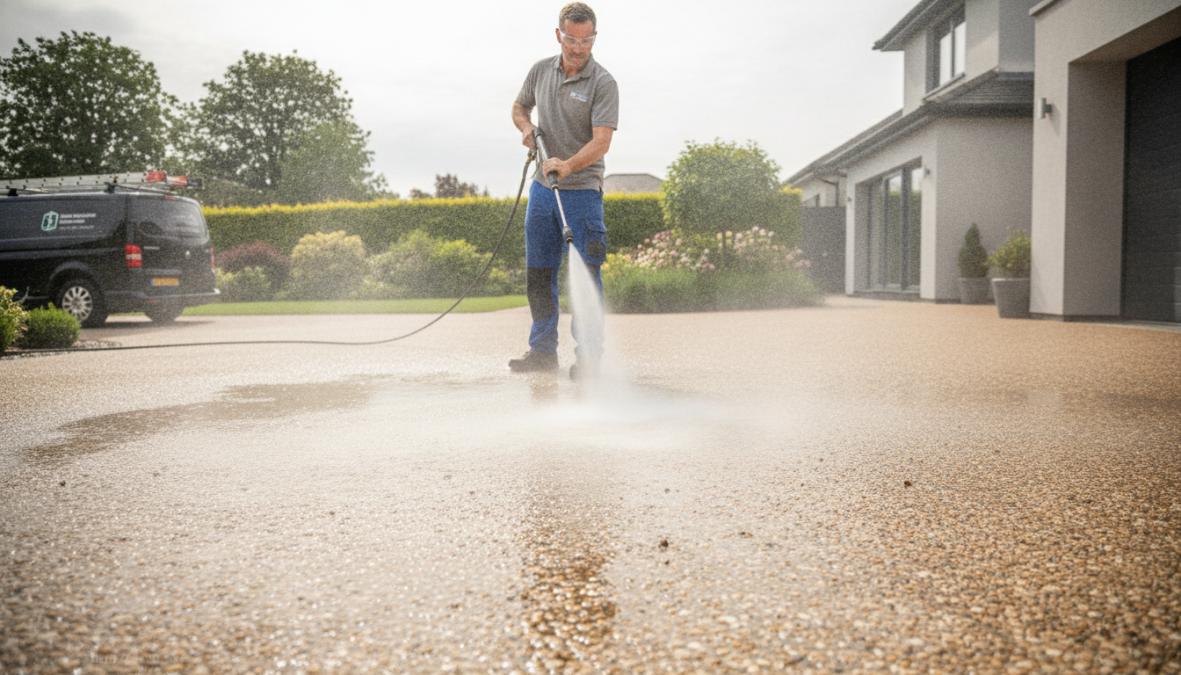
Resin bound paving requires minimal maintenance. Annual pressure washing removes dirt and debris, while weeds can be managed with regular sweeping due to weed resistance properties. Oil stains should be cleaned promptly with appropriate cleaners. With proper care, resin bound surfaces last 15-20 years before resurfacing is needed. UV-stable resins prevent color fading, and freeze-thaw resistance ensures durability in UK climates.


