

Table of Contents
- Key Advantages of Tar and Chip Driveways
- Tar and Chip vs Asphalt: Which Is Right for You?
- Tar and Chip Driveway Cost: What to Budget
- Chip Seal Driveway Lifespan: Durability and Longevity
Last Updated: June 25, 2026
Choosing a driveway surface carries real long-term consequences for your property. At KT Lake Paving and Landscaping, we’ve spent over 30 years helping Norfolk homeowners make that call with confidence. Chip seal surfacing offers a compelling combination of natural aesthetics, grip, and cost-effectiveness that standard asphalt cannot replicate.
Tar and chip driveway is a surfacing method where hot liquid bitumen is applied to a prepared sub-base, then immediately covered with aggregate stone chips that are rolled firmly into the surface to create a textured, durable finish.
Key Advantages of Tar and Chip Driveways
The textured stone surface provides natural slip resistance that smooth asphalt cannot match. This matters particularly in Norfolk’s climate, where wet winters and occasional frost make grip a genuine safety consideration. The aggregate chips create micro-traction across the entire surface, reducing the risk of slipping in wet conditions.
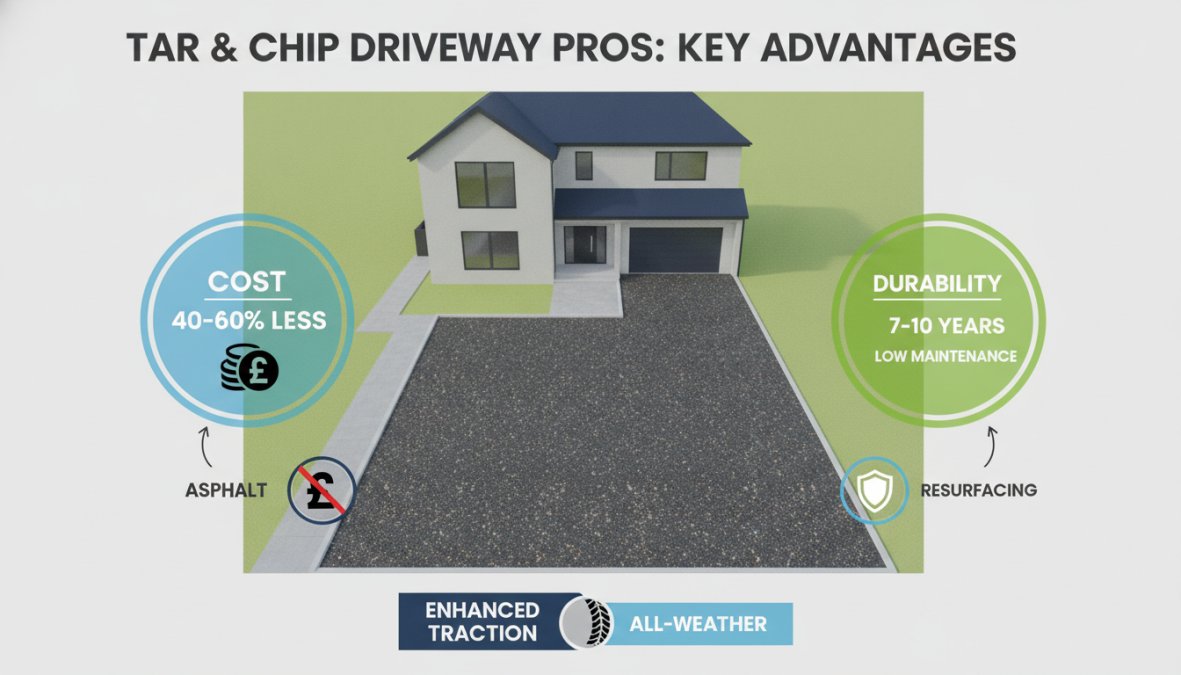
Aesthetic flexibility is another genuine advantage. Unlike plain asphalt, chip seal allows homeowners to select from a range of aggregate colours and stone types, creating a surface that complements the property. Flint, gravel, and slate-toned chips are all popular choices across Norfolk’s mix of traditional and modern homes.
Key tar and chip driveway pros at a glance:
- Natural slip resistance from the stone chip surface
- Wide choice of aggregate colours and textures
- Lower heat absorption compared to plain black asphalt
- Less visible oil staining than smooth asphalt surfaces
- Blends naturally with rural and semi-rural settings
According to guidance from the UK Roads Liaison Group on surface dressing standards, chip seal techniques used in residential settings follow the same fundamental principles as those applied to public road maintenance, confirming the method’s proven engineering basis.
Ask your installer about locally sourced aggregate. Norfolk flint chips give a distinctly regional character to a driveway and tend to be more cost-effective than imported stone.
Tar and Chip vs Asphalt: Which Is Right for You?
The real difference between tar and chip and asphalt comes down to use pattern, budget, and site conditions. Asphalt delivers a smooth, uniform surface that suits high-traffic driveways and contemporary finishes. Chip seal excels in wet conditions and reflects more heat, which reduces surface temperature on warm days. For Norfolk driveways that see heavy rainfall through autumn and winter, that grip difference is practical.
| Factor | Tar and Chip | Asphalt |
|---|---|---|
| Surface texture | Rough, high grip | Smooth, lower grip |
| Aesthetic options | Multiple aggregate colours | Limited (grey/black) |
| Heat absorption | Lower | Higher |
| Repair approach | Section resurfacing | Patch repairs possible |
| Typical lifespan | 10-20 years | 15-25 years |
| Best for | Rural, traditional, budget-conscious | High-traffic, contemporary |
One honest limitation of chip seal: loose chips can shed in the first few weeks after installation, particularly if vehicles turn sharply on the surface. This settles down as the surface consolidates.
Avoid installing chip seal driveways immediately before heavy rain is forecast. The bitumen requires adequate curing time before the surface can handle water exposure without risk of chip displacement.
Tar and Chip Driveway Cost: What to Budget
Tar and chip driveway cost is consistently lower than equivalent asphalt installations. The cost difference comes from material pricing: aggregate stone chips are generally less expensive than refined asphalt mix.
Several variables affect the final figure:
- Driveway size: Larger areas reduce the cost per square metre
- Sub-base condition: An existing stable base requires less preparation work
- Aggregate type: Locally sourced stone costs less than imported decorative chips
- Access and edging: Tight access or complex edging details add labour time
- Location: Norfolk projects vary by distance from aggregate suppliers
The whole-life cost comparison favours chip seal. Chip seal typically requires a reseal every 7-10 years, whereas asphalt may need patching and resealing on a similar cycle. The initial saving on chip seal installation often holds up over a 20-year horizon once maintenance costs are factored in.
The tar and chip driveway cost advantage is real, but the bigger financial win comes from choosing an installer who prepares the sub-base correctly the first time. Poor sub-base preparation is the leading cause of premature driveway failure.
Chip Seal Driveway Lifespan: Durability and Longevity
What separates a chip seal driveway that lasts 20 years from one that fails at 8? The answer is almost always sub-base preparation and installation quality, not the surface material itself.
Chip seal driveway lifespan typically ranges from 10 to 20 years under normal residential use. A professionally installed surface on a well-prepared sub-base, resealed at the right intervals, will comfortably reach the upper end of that range.
Factors that extend chip seal driveway lifespan:
- Correct sub-base depth and compaction before installation
- Using the appropriate bitumen grade for the expected temperature range
- Applying a reseal coat every 7-10 years as the binder weathers
- Avoiding sharp vehicle turns at low speed, which shear the chip surface
- Keeping the surface clear of standing water through adequate drainage
The British Standards Institution guidance on flexible road pavements sets out sub-base specifications that professional installers follow to ensure long-term structural performance. KT Lake Paving and Landscaping’s position as a Brett Approved Premier Installer means every installation meets or exceeds these standards, backed by a 10-year product guarantee from Brett.
Choosing a driveway surface in Norfolk means balancing aesthetics, budget, and long-term performance in conditions that include genuine winter weather and heavy seasonal rainfall. Tar and chip driveway pros are substantial: natural grip, visual flexibility, and lower installation cost than asphalt. KT Lake Paving and Landscaping brings over 30 years of experience, Brett Approved Premier Installer status, and a 10-year product guarantee to every project. Get a free, no-obligation estimate and make your driveway decision with full confidence.
Frequently Asked Questions
What are the main advantages of a tar and chip driveway?
Tar and chip driveways offer several key benefits: they're significantly more affordable than asphalt or concrete, provide an attractive rustic appearance, allow water drainage, and are environmentally friendly. Installation is faster than traditional asphalt, and they can be repaired in sections rather than requiring full replacement. These driveways also offer good traction in most weather conditions and blend naturally with rural or semi-rural properties.
How does tar and chip compare to asphalt in terms of cost and durability?
Tar and chip typically costs 30-50% less than asphalt installation, making it budget-friendly for homeowners. However, asphalt generally lasts 15-20 years, while tar and chip lasts 7-10 years with proper maintenance. Tar and chip requires more frequent resealing and chip replacement, whereas asphalt needs less frequent maintenance. Your choice depends on whether you prioritize initial savings (tar and chip) or long-term durability (asphalt).
What is the typical lifespan of a chip seal driveway?
A chip seal driveway typically lasts 7-10 years under normal conditions, though this can vary based on climate, traffic volume, and maintenance practices. In areas with harsh winters or heavy use, lifespan may be shorter. Regular maintenance, including resealing every 2-3 years and addressing loose chips promptly, significantly extends durability. Proper installation by experienced professionals, like Brett Approved installers, also maximizes longevity.
Is a tar and chip driveway suitable for heavy snow and winter conditions?
Tar and chip driveways can handle winter conditions reasonably well, but they require careful management. You can use a snow plow on tar and chip, though operators must use caution to avoid damaging the surface. Salt and sand can be applied for traction. However, freeze-thaw cycles can accelerate deterioration, so regular sealing and maintenance become even more critical in cold climates. Professional installation ensures proper base preparation for better winter performance.


