

Table of Contents
- Resin vs Tarmac Driveway Comparison: Key Differences
- Resin Driveway Cost Per Square Metre vs Tarmac Pricing
- Durability: Tarmac Driveway Lifespan vs Resin Longevity
- Is Resin Permeable? Drainage and SUDS Compliance
Last Updated: June 30, 2026
Resin vs Tarmac Driveway Comparison: Key Differences
Resin bound driveways use decorative aggregate held together with UV-stable resin, creating a permeable, customizable surface. Tarmac is a traditional asphalt-based material. While tarmac excels under heavy traffic, resin offers superior aesthetic flexibility and environmental compliance through permeability.
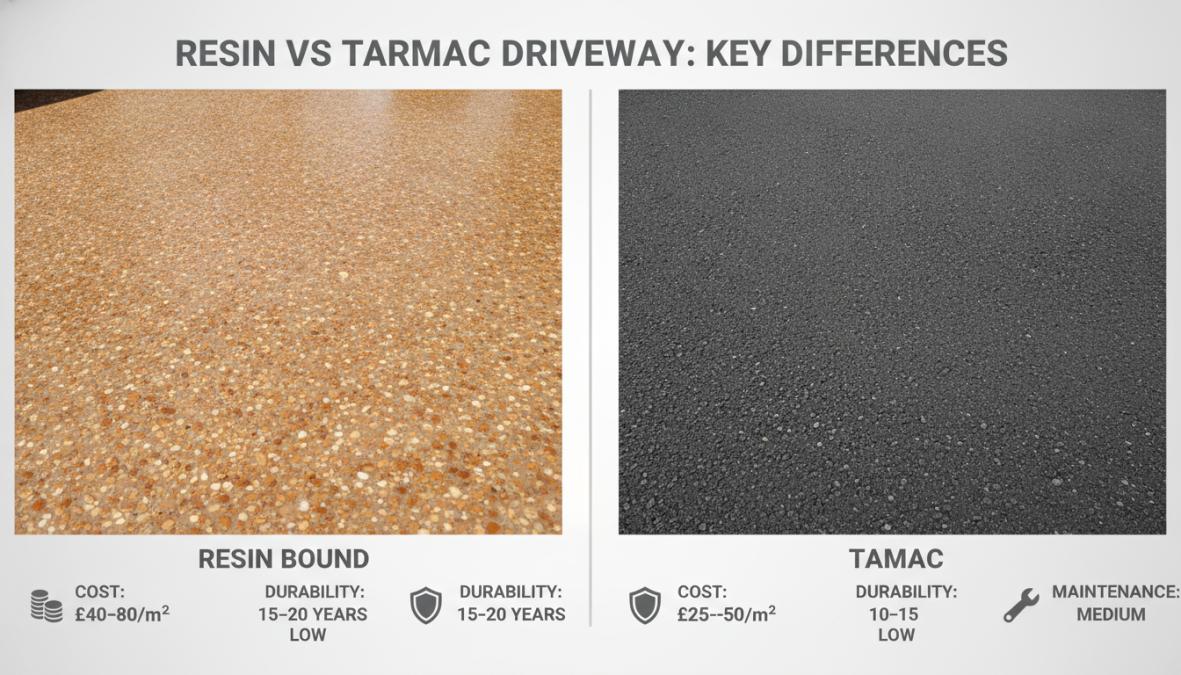
Resin works best if you value kerb appeal and need SUDS compliance. Tarmac wins if you have heavy vehicles or live in a high-traffic area and want the lowest upfront cost.
Resin Driveway Cost Per Square Metre vs Tarmac Pricing
Tarmac costs less upfront but requires seal coating every 2-3 years and resurfacing within 10-15 years. Resin’s higher initial cost is offset by minimal maintenance and longer lifespan, with cumulative costs eventually matching or exceeding tarmac’s total investment over 15-20 years. Tarmac’s lower per-square-metre price masks hidden expenses: potholes, cracks, and fuel spills damage the surface faster than resin, often leading to larger resurfacing projects within years.
Resin costs more upfront but saves money over 15-20 years through reduced maintenance. Tarmac is cheaper initially but demands regular seal coating, patching, and eventual resurfacing that adds substantial cost over time.
Durability: Tarmac Driveway Lifespan vs Resin Longevity
Tarmac typically lasts 10-15 years before requiring significant resurfacing, though this shortens in areas with freeze-thaw cycles or heavy traffic. Resin bound surfaces typically last 15-20 years or longer, with superior resistance to UV damage, fuel spills, and temperature fluctuations. Frost heave, upward ground movement caused by freezing water, damages tarmac by creating cracks and uneven surfaces. Resin’s permeability allows water drainage, reducing this risk.
Professional installation matters enormously for both materials. A poorly prepared sub-base undermines even premium resin, while inadequate groundworks cause tarmac to fail prematurely. KT Lake Paving and Landscaping ensures proper sub-base preparation and installation techniques that maximize lifespan, backed by a 10-year product guarantee.
Is Resin Permeable? Drainage and SUDS Compliance
Resin bound surfaces are fully permeable, allowing water to drain through the aggregate and resin matrix into the ground below. This makes resin SUDS compliant, meeting Sustainable Drainage Systems requirements that many local authorities now mandate. Tarmac is impermeable; water runs off into drainage systems or pools on the surface. Homeowners installing tarmac often need separate permeable paving sections or drainage channels to meet planning requirements, adding cost and complexity.
| Feature | Resin Bound | Tarmac |
|---|---|---|
| Permeability | Fully permeable | Impermeable |
| SUDS Compliant | Yes | No (requires additional drainage) |
| Water Pooling | Minimal | Common |
| Groundwater Impact | Supports recharge | Increases runoff |
| Planning Permission | Easier approval | May require drainage solutions |
If your local authority requires SUDS compliance and you choose tarmac, you’ll need to install separate permeable paving or drainage infrastructure, adding significant cost.
Maintenance Requirements: Tarmac vs Resin Upkeep
Tarmac requires seal coating every 2-3 years to prevent oxidation and water infiltration. Without this maintenance, it deteriorates rapidly, developing cracks that accelerate structural failure. Resin maintenance is minimal: regular pressure washing removes dirt and algae, but no seal coating or annual treatments are necessary. Tarmac’s poor weed resistance contrasts with resin’s seamless installation that eliminates most weed problems. Fuel spills damage tarmac permanently, while resin resists fuel spills, with spilled fuel sitting on the surface rather than penetrating the material.
Weather Resistance and UV Stability
Tarmac gradually oxidizes and fades to dull grey under UV exposure, softening in summer heat and becoming brittle in winter cold. This temperature cycling causes cracking; in Norfolk’s maritime climate, tarmac surfaces age visibly within 5-7 years. Resin bound surfaces with UV-stable resin maintain colour and structural integrity far longer. Freeze-thaw cycles pose particular challenges for tarmac: water entering cracks expands as it freezes, widening cracks and eventually creating potholes. Resin’s permeability and flexibility resist this damage mechanism.
Aesthetic Appeal and Customization Options
Resin bound driveways offer extensive customization through colour selection, aggregate choices, and finish options. Homeowners can select from hundreds of colour combinations or create patterns. Tarmac offers minimal customization, uniformly dark grey or black with limited variation. Resin maintains its designed appearance throughout its lifespan, preserving your aesthetic investment.
Installation Process and Professional Requirements
Both materials demand professional installation. Tarmac installation involves groundwork preparation, sub-base compaction, and hot-laid asphalt application. Resin installation requires more specialized knowledge and equipment, with precise mixing ratios, environmental conditions, and curing time. Tarmac can be used within 24-48 hours, while resin requires 3-5 days before full use, depending on weather conditions.
| Aspect | Resin Installation | Tarmac Installation |
|---|---|---|
| Sub-base Preparation | Critical; must be precise | Important; standard compaction |
| Curing Time | 3-5 days | 24-48 hours |
| Weather Sensitivity | High; temperature and humidity matter | Moderate; must avoid rain |
| Specialized Equipment | Required | Standard |
| Professional Skill Level | High; requires resin expertise | Moderate; more common knowledge |
Planning Permission and Regulatory Considerations
Resin bound driveways often receive easier planning approval because they meet SUDS compliance requirements that local authorities increasingly mandate. Tarmac driveways may face planning challenges if SUDS compliance is required, necessitating permeable paving sections or drainage channels that increase project complexity and cost. Most authorities require driveways to maintain a certain percentage of permeable surface or meet specific drainage standards. Resin’s inherent permeability satisfies these requirements without additional measures.
Choosing between resin and tarmac requires balancing aesthetics, durability, maintenance, and cost across your driveway’s lifespan. Resin offers superior customization, longer durability, minimal maintenance, and regulatory compliance, making it ideal for homeowners prioritizing kerb appeal and environmental responsibility. Tarmac provides lower upfront cost and proven longevity under heavy traffic, though it demands consistent maintenance and ongoing investment. For Norfolk properties where sustainable drainage and aesthetic enhancement matter, resin delivers better long-term value. Contact KT Lake Paving and Landscaping for a free, no-obligation consultation and estimate. With over 30 years of experience as a Brett Approved Premier Installer, they’ll help you select the right surface and ensure installation meets British Standards, backed by a 10-year product guarantee.
Frequently Asked Questions
Is resin cheaper than tarmac for a driveway?
Resin typically costs more upfront per square metre than tarmac, though exact pricing varies by location, sub-base condition, and installer. However, resin's longer lifespan and lower maintenance costs can offset the initial investment over 15-20 years. Tarmac offers lower upfront costs but requires more frequent resurfacing and maintenance. Get free estimates from local installers to compare exact pricing for your property.
How long does a tarmac driveway lifespan compare to resin?
Tarmac typically lasts 15-20 years before requiring resurfacing, while resin bound driveways often last 20-25 years with proper maintenance. Resin's superior UV stability and weather resistance contribute to its longer lifespan. However, tarmac can be cost-effective if you're willing to budget for periodic surface dressing and repairs. Both depend heavily on sub-base quality and climate conditions in Norfolk.
Is resin permeable and SUDS compliant?
Yes, resin bound driveways are fully permeable and SUDS compliant, allowing water to drain through the surface into the sub-base. This reduces flooding risk and meets modern drainage regulations. Tarmac is generally non-permeable unless specially formulated as porous asphalt. If drainage and environmental compliance are priorities, resin offers clear advantages. Proper sub-base installation is essential for both surfaces to function correctly.
Which driveway surface requires less maintenance?
Resin requires minimal maintenance, occasional sweeping and pressure washing every 1-2 years. Tarmac needs more frequent attention: regular surface dressing every 3-5 years, pothole repairs, and weed control. Resin's weed-resistant properties and non-porous surface make it easier to keep clean. Over time, resin's lower maintenance demands reduce long-term costs and effort, making it ideal for busy homeowners.


