

Table of Contents
- How to Maintain Block Paving Driveways: Essential Care Steps
- How to Clean Block Paving and Remove Stains
- Block Paving Weed Prevention and Joint Care
- Frequently Asked Questions
Last Updated: October 10, 2026
How to Maintain Block Paving Driveways: Essential Care Steps
Maintaining block paving driveways keeps them looking fresh, extends their lifespan, and prevents damage, weeds, and costly repairs.
To maintain block paving driveways doesn’t require specialist skills or expensive equipment, most tasks take just an hour or two each season.
Tackle problems early: small cracks widen, weeds spread, and moss builds up, but caught early, each is simple to fix.
Establish a routine: check monthly for damage, clean twice yearly, and re-sand joints every 3-5 years.
| Maintenance Task | Frequency | Time Required |
|---|---|---|
| Visual inspection | Monthly | 10 minutes |
| Pressure washing | Twice yearly | 1-2 hours |
| Weed removal | As needed | 30-60 minutes |
| Joint re-sanding | Every 3-5 years | 4-8 hours |
| Moss/algae treatment | Annually | 1-2 hours |
Start maintenance in spring. Winter damage shows clearly, and you can address issues before summer weather makes them worse.
How to Clean Block Paving and Remove Stains
Clean block paving with a pressure washer on medium pressure; high pressure damages blocks and forces sand from joints.
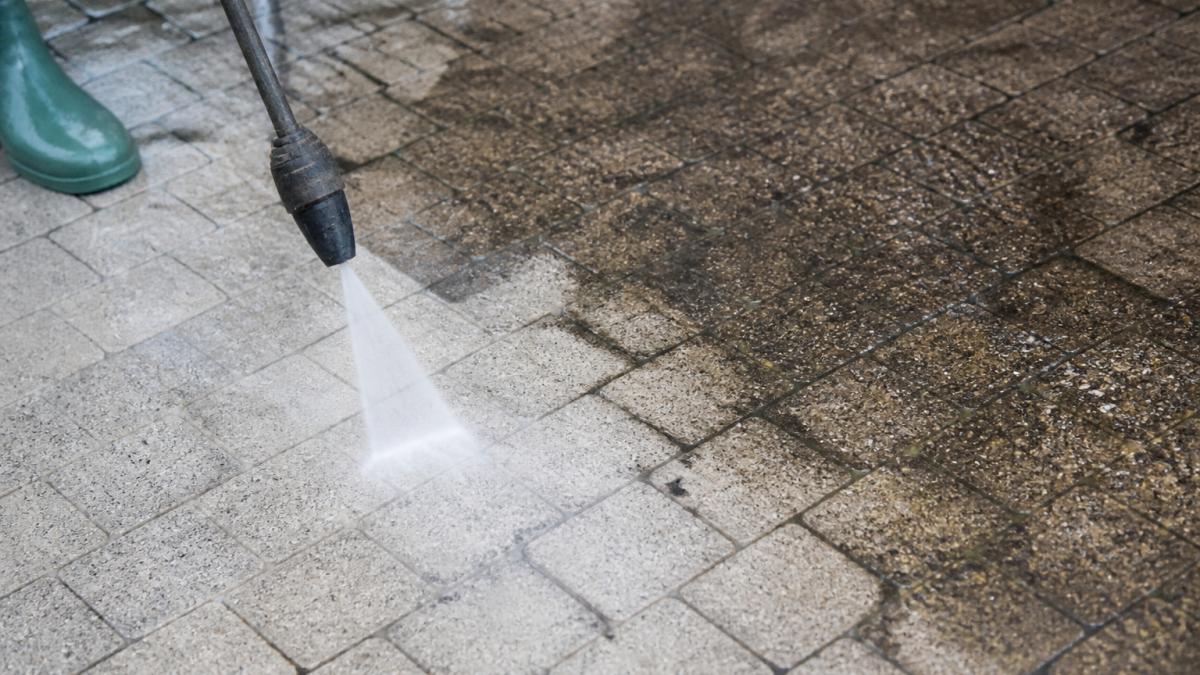
Work systematically across the surface with overlapping passes, then allow 24 hours drying time before use.
For stubborn stains, apply a specialist cleaner: degreaser for oil, acid-based cleaner for rust, or biocide 24 hours before washing for moss and algae.
Never use bleach, which damages colour and harms plants; avoid maximum pressure jet washing, which removes sand and weakens the surface.
Pressure washing at high settings forces sand from the joints, leaving blocks loose and vulnerable. This creates a safety hazard and expensive repairs later.
Block Paving Weed Prevention and Joint Care
Weeds grow where sand is missing; prevent them by keeping joints filled with polymeric sand, which binds when wet and resists weed growth.
Check joints every few months and re-sand every 3-5 years to prevent weeds and maintain the surface.
Remove existing weeds by hand when soil is moist, use a weeding tool to dig out roots, or spray stubborn weeds with contact herbicide.
After removal, sweep polymeric sand into joints and water lightly to bind and seal gaps.
Moss and algae thrive in damp shade; improve drainage, trim overhanging trees, and apply moss-killing treatment in autumn.
Pressure wash twice yearly to remove moss and prevent structural problems.
The single most important maintenance step is keeping joints filled with polymeric sand. This prevents weeds, protects the base, and extends your driveway’s life by years.
Pressure wash twice yearly, address weeds promptly, and re-sand joints every few years to prevent damage and maintain appearance.
For advice on maintaining block paving driveways, contact KT Lake Paving and Landscaping for a free assessment and personalised care schedule.
Frequently Asked Questions
How often should you clean a block paving driveway?
Clean your block paving driveway at least twice a year, ideally in spring and autumn. More frequent cleaning may be needed if your driveway is heavily used, exposed to shade, or in areas with high rainfall. Regular light cleaning prevents dirt and organic matter from building up, which reduces the risk of moss and algae growth and keeps your driveway looking fresh.
Can you use a pressure washer on block paving?
Yes, pressure washers can be used on block paving, but with care. Use a lower pressure setting (below 100 bar) and keep the nozzle at least 30 centimetres away from the surface. High-pressure washing can damage the blocks and dislodge joint sand. Always test on a small, inconspicuous area first, and avoid directing the jet directly into joints to prevent sand loss.
Do you need to replace the sand between block paving?
Yes, re-sanding block paving joints is essential maintenance. Over time, sand washes away due to rain, pressure washing, or foot traffic. When joints become loose or empty, blocks can shift and water can penetrate the sub-base, leading to subsidence or cracking. Re-sand joints every 2-3 years or when you notice sand loss. Use kiln-dried polymeric sand for best results, as it binds better than standard sand.


