

Table of Contents
- Understanding Your Tar and Chip Driveway
- How to Clean Tar and Chip Driveways: Essential Steps
- Best Tools for Cleaning Gravel Driveways
- How to Remove Oil Stains from Driveway Surfaces
Last Updated: August 5, 2026
Understanding Your Tar and Chip Driveway
A tar and chip driveway comprises a base of hot tar or bitumen topped with loose gravel aggregate, creating a durable, cost-effective surface between traditional asphalt and loose gravel. The exposed aggregate means loose stones and debris accumulate more readily than on sealed surfaces. Norfolk’s climate, with regular rainfall and temperature fluctuations, means tar and chip driveways require consistent attention to prevent premature breakdown.
The sub-base beneath your tar and chip surface is equally important. Proper compaction and drainage during installation determine longevity. If the base shifts unevenly, the top layer will crack and develop potholes, making cleaning and restoration increasingly difficult.
How to Clean Tar and Chip Driveways: Essential Steps
The best approach involves methodical debris removal without damaging the aggregate or bitumen layer. Start with dry debris removal using a stiff broom or leaf blower, preventing loose stones from embedding in the tar when wet.
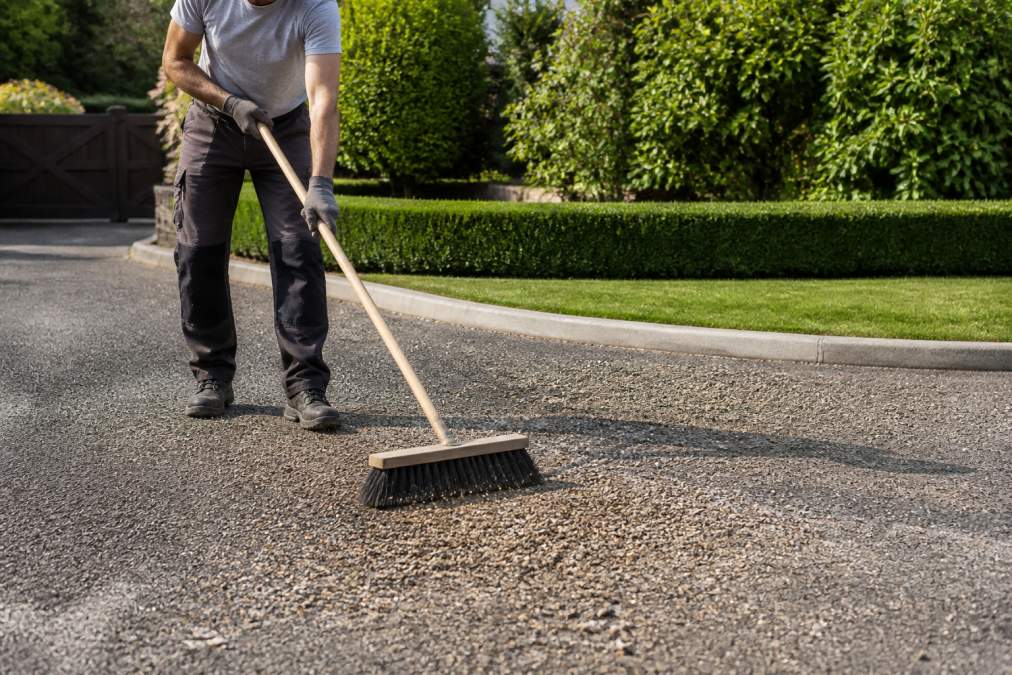
Once dry debris is cleared, use a soft-bristled broom and water with mild detergent for general cleaning. Avoid harsh chemicals that break down the tar binder or discolour the aggregate. Rinse thoroughly to remove all soap residue.
Pressure washing requires caution. High-pressure jets dislodge aggregate and expose tar underneath. If necessary, use low pressure (below 1,500 PSI) and maintain at least 30 centimetres distance, keeping the nozzle moving to avoid concentrating pressure in one spot.
For stubborn moss or algae growth common in Norfolk’s damp climate, use a moss-killing treatment designed for permeable surfaces, then brush away dead growth after several days. Allow your driveway to dry completely after cleaning, typically 24-48 hours, and avoid driving on wet surfaces, as tyres displace aggregate and create bare patches.
Best Tools for Cleaning Gravel Driveways
A stiff broom with natural or synthetic bristles is essential, with bristles firm enough to move loose stones without pulling them free from the tar matrix. A leaf blower with variable speed control clears debris without wetting the surface, particularly useful in autumn when leaves accumulate rapidly.
For pressure washing, a low-pressure washer (1,200-1,500 PSI) with adjustable settings is essential. Look for models with a wide-angle nozzle that disperses pressure over a larger area rather than concentrating it in a narrow jet.
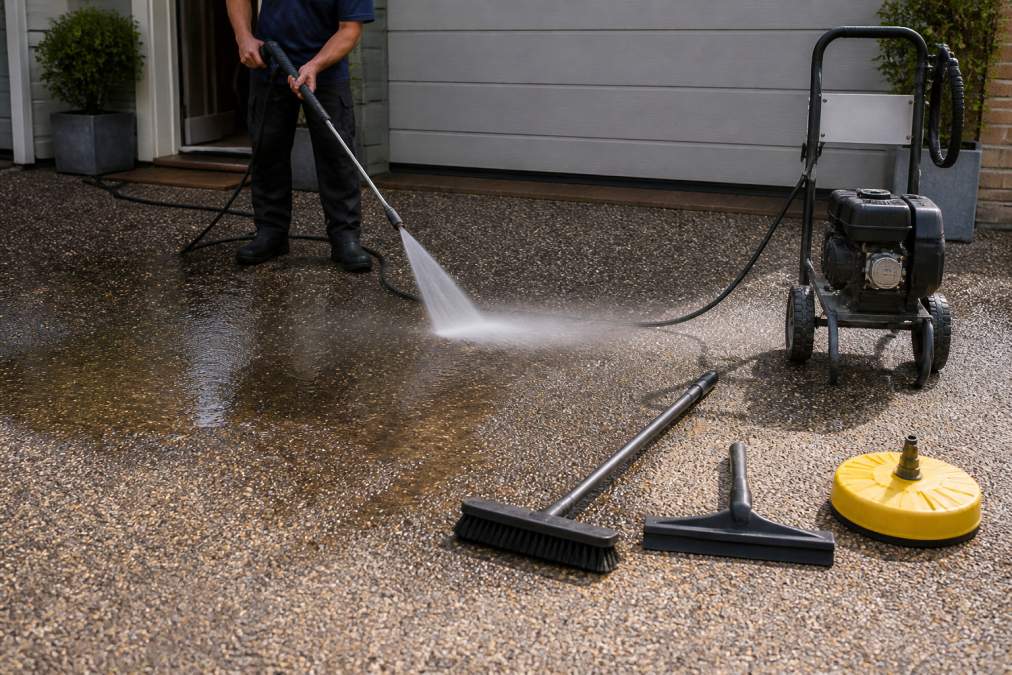
A soft-bristled deck brush works well for applying cleaning solutions and gently agitating the surface before rinsing. Hard-bristled or wire brushes pull aggregate loose and should be avoided. For spot treatments, a handheld scrub brush allows precise application without affecting surrounding areas.
Wear gloves to protect hands from tar residue and chemicals. Eye protection is important when using pressure washers, as debris and spray can cause injury. Sturdy footwear with good grip prevents slipping on wet surfaces. Consider hiring professional cleaning services if your driveway shows significant staining or algae growth.
How to Remove Oil Stains from Driveway Surfaces
Oil stains on tar and chip driveways present a particular challenge because the porous aggregate absorbs petroleum products readily. Fresh spills should be treated immediately by blotting excess oil with absorbent material such as cat litter or sand.
For established stains, commercial degreasers designed for permeable surfaces offer the best results. Apply according to manufacturer instructions and avoid products containing harsh solvents that break down the bitumen binder. Rinse thoroughly with clean water.
A poultice treatment works well for older stains. Mix clay-based poultice powder with water to form a paste, apply to the stain, and allow it to dry completely. As it dries, it draws oil from the tar and aggregate. Sweep away the dried poultice and repeat if necessary.
Prevent future oil stains by addressing leaks promptly and checking vehicles regularly for dripping fluids. Placing absorbent material under parked vehicles catches minor drips before they stain the surface. For severe staining covering large areas, professional assessment determines whether spot repair or full resurfacing makes economic sense.
Maintaining a tar and chip driveway in Norfolk requires regular attention and the right approach to cleaning. Whether dealing with seasonal debris, moss growth, or oil stains, the key is using methods and tools that clean effectively without damaging the aggregate or bitumen layer. KT Lake Paving and Landscaping brings over 30 years of experience in driveway maintenance and restoration across Norfolk. If your tar and chip driveway shows signs of significant wear, cracking, or staining that cleaning cannot resolve, the team offers professional assessment and resurfacing solutions backed by rigorous British Standards and a 10-year product guarantee. Contact them for a free, no-obligation consultation to discuss your driveway’s condition and options for restoration.
Frequently Asked Questions
Can you pressure wash a tar and chip driveway?
Yes, but with caution. Pressure washing can be effective for cleaning tar and chip driveways, but using excessive pressure (above 1500 PSI) may dislodge loose stones or damage the surface. Use a lower pressure setting with a wider nozzle, keeping the washer at least 30 centimetres from the surface. Avoid directing water at edges where the material meets the verge, as this can weaken adhesion and cause erosion.
What is the best way to clean oil stains from a tar and chip driveway?
Fresh oil spills respond best to absorbent materials like cat litter or sand, applied immediately to soak up excess liquid. For set-in stains, use a degreaser specifically designed for driveways, following the manufacturer's instructions carefully. Test any chemical cleaner on a hidden area first. Avoid harsh solvents that can damage the bitumen binder. For stubborn stains, professional cleaning may be more effective than DIY approaches.
How often should a tar and chip driveway be resealed?
Most tar and chip driveways benefit from resealing every 2-3 years, depending on traffic levels and weather exposure. High-traffic driveways may need more frequent attention. Resealing helps bind loose stones, restores the surface's protective layer, and extends driveway lifespan significantly. Regular inspection will reveal when the surface begins to look dull or loose stones become more noticeable, indicating it's time to reseal.
How do you remove weeds from a tar and chip driveway?
Manual removal works for small weeds: pull them out by hand or use a weeding tool to extract roots completely. For larger infestations, a stiff broom can dislodge some growth. Prevent future growth by maintaining good drainage, removing debris regularly, and applying a weed suppressant designed for tar and chip surfaces. Avoid harsh herbicides that may damage the bitumen binder; focus instead on preventative maintenance and physical removal methods.


