

Table of Contents
- Cheaper Alternatives to Resin Driveway Surfacing: An Overview
- Loose Gravel Driveway: The Most Budget-Friendly Option
- Tarmac Driveway Cost UK: Hard-Wearing and Quick to Install
- Block Paving Cost UK: Design Flexibility With Moderate Investment
Last Updated: July 24, 2026
When homeowners consider a new driveway, resin bound surfacing often comes up as a premium option. Yet for many properties across Norfolk, the upfront investment doesn’t align with budget constraints. This guide explores cheaper alternatives to resin driveway surfacing that deliver genuine durability, aesthetic appeal, and functionality without the premium price tag. At KT Lake Paving and Landscaping, we’ve spent over 30 years helping homeowners understand which surface truly suits their needs.
Loose Gravel Driveway: The Most Budget-Friendly Option
Loose gravel remains the cheapest driveway solution available, typically starting from around £60 per square metre when professionally installed. This approach involves laying decorative stone or aggregate over a compacted sub-base, creating a natural, permeable surface that suits rural properties and traditional homes particularly well.
Gravel offers exceptional drainage properties and genuine variety in aesthetic choices, pea gravel, crushed stone, granite chippings, allowing you to match your property’s character. However, gravel requires ongoing maintenance. Stones migrate and scatter over time, requiring regular raking and replenishment. For homeowners seeking the absolute lowest initial cost and willing to accept regular upkeep, loose gravel works.
Gravel performs best on properties with gentle slopes that encourage natural water runoff. Flat driveways tend to develop water pooling, which accelerates stone displacement and weed growth.
Tarmac Driveway Cost UK: Hard-Wearing and Quick to Install
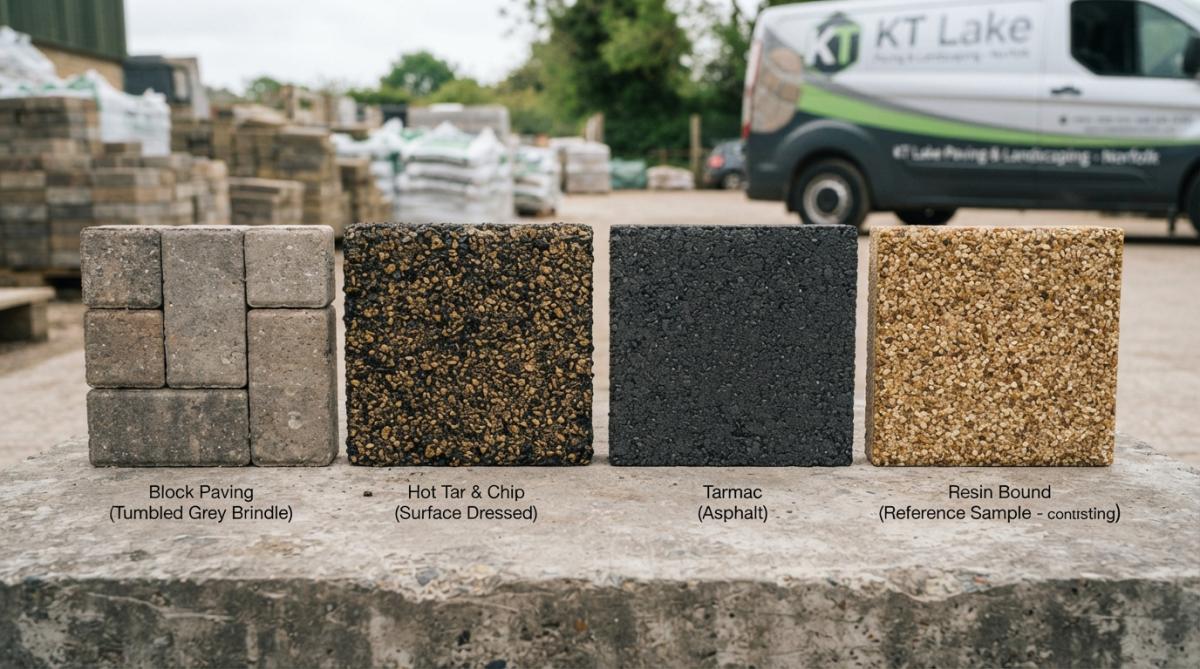
Tarmac driveways represent a significant step up in durability compared to gravel, typically installed from around £90 per square metre. This hard-wearing surface has been the workhorse of UK driveways for decades, offering quick installation and a smooth, grippy finish that performs well in most weather conditions. The lifespan typically reaches 15-20 years with basic maintenance, making it cost-effective over time.
Tarmac softens in hot weather and edges can crumble over time. More significantly, tarmac is impermeable, which means front gardens often require planning permission to manage surface water runoff under current Sustainable Drainage Systems (SuDS) regulations.
Check with your local planning authority before committing to tarmac for a front driveway. Impermeable surfaces may require additional drainage infrastructure or permission, adding cost and delay to your project timeline.
Block Paving Cost UK: Design Flexibility With Moderate Investment
Block paving sits in the middle ground, typically ranging from £90 to £130 per square metre installed, yet offering design flexibility and repairability that justify the investment for many homeowners. Individual blocks can be lifted and re-laid for access to underground services or repairs. Permeable block options comply with SuDS regulations, addressing drainage concerns that plague impermeable alternatives. With proper maintenance, block paving lasts 25-30 years, longer than tarmac and far more durable than gravel.
| Material | Starting Price | Lifespan | Maintenance | Best For |
|---|---|---|---|---|
| Loose Gravel | £60/m² | 3-5 years | High | Rural properties, budget priority |
| Tarmac | £90/m² | 15-20 years | Low | Functional areas, quick installation |
| Block Paving | £90-£130/m² | 25-30 years | Moderate | Design flexibility, long-term value |
| Tar and Chip | £45-£75/m² | 7-10 years | Low | Period properties, rustic aesthetic |
Tar and Chip Driveway: A Rustic Middle Ground
Tar and chip, also called surface dressing, deserves consideration as an underrated alternative. This approach applies hot bitumen tar over a base, followed by stone chippings that bond during compaction, creating a textured, natural-looking surface with costs typically between £45 and £75 per square metre.
The surface delivers excellent grip and traction, particularly valuable in wet or icy conditions common across Norfolk winters. It can be applied over existing concrete or tarmac, potentially reducing groundwork and cost. Durability ranges from 7-10 years, with low maintenance requirements beyond occasional sweeping and minor repairs.
Tar and chip offers the best aesthetic-to-cost ratio for homeowners in rural areas or those with period properties. It bridges the gap between budget gravel and premium block paving elegantly.
Planning Permission Implications Across Norfolk
One critical factor rarely discussed in driveway comparisons is planning permission. Impermeable surfaces, tarmac, concrete, and non-permeable block paving, often require permission or SuDS compliance measures for front gardens under current regulations. Permeable alternatives like gravel, permeable block paving, and tar and chip generally avoid these complications.
Before selecting any surface, confirm requirements with your local planning authority. This step prevents costly surprises mid-project.
Total Cost of Ownership: Beyond Initial Installation
Comparing upfront costs tells only half the story. A gravel driveway requires ongoing maintenance and replenishment. Tarmac needs sealing every 3-5 years. Block paving’s higher initial cost is offset by minimal maintenance and superior lifespan. For a typical 50 square metre driveway over 20 years, block paving’s higher initial investment often proves most economical when maintenance costs are factored in.
DIY vs. Professional Installation: Where You Can Save
Loose gravel and tar and chip offer genuine DIY potential if you’re confident with groundwork and compaction. Tarmac and block paving demand professional installation. Tarmac requires specialist equipment and temperature control that DIY doesn’t accommodate safely. Block paving needs proper sub-base preparation, correct jointing, and compaction; shortcuts lead to premature failure.
Where KT Lake Paving and Landscaping adds genuine value is in sub-base preparation. This invisible foundation determines whether your surface lasts 5 years or 25. As Brett Approved Premier Installers with over 30 years’ experience, the team ensures every project meets rigorous British Standards, backed by a 10-year product guarantee.
Regional Climate Suitability in Norfolk
Norfolk’s maritime climate, with salt spray near the coast, high rainfall, and occasional freeze-thaw cycles, influences which surfaces perform best. Tarmac softens more readily in warm summers and becomes brittle in harsh winters. Block paving handles temperature extremes better, with individual units expanding and contracting independently.
Tar and chip performs reliably across Norfolk’s climate variations, making it particularly suitable for the region. The textured surface sheds water effectively, and the bonded stones resist salt damage better than loose gravel.
Making Your Decision: A Practical Framework
Selecting the right surface depends on five key factors:
Budget Priority: Loose gravel wins. Tar and chip offers the next best value.
Aesthetic Appeal: Block paving provides maximum design flexibility. Tar and chip suits period properties beautifully.
Maintenance Tolerance: Tarmac and tar and chip require minimal upkeep. Gravel demands regular attention.
Longevity Expectations: Block paving delivers 25-30 years. Tarmac manages 15-20 years. Gravel and tar and chip last 5-10 years.
Planning Permission Compliance: Permeable options simplify regulatory approval. Impermeable surfaces may require drainage solutions.
Most homeowners find block paving represents the optimal balance. Yet for rural properties, period homes, or genuinely budget-constrained projects, tar and chip deserves serious consideration.
Choosing a driveway surface involves balancing immediate budget constraints against long-term value and maintenance burden. Cheaper alternatives to resin driveway surfacing genuinely exist and perform reliably when selected thoughtfully. KT Lake Paving and Landscaping helps homeowners navigate these decisions through free, no-obligation consultations and transparent cost estimates. The team’s Brett Approved Premier Installer status and 10-year product guarantee ensure professional standards and genuine peace of mind. Contact KT Lake Paving and Landscaping today for a detailed assessment and quote, the consultation costs nothing, and the clarity proves invaluable.
Frequently Asked Questions
What is the cheapest driveway option in the UK?
Loose gravel is the most budget-friendly driveway option, typically costing around £60 per m² installed. It offers excellent drainage and a natural aesthetic but requires regular maintenance, including raking and topping up as gravel migrates and scatters. Tarmac and tar and chip are also cost-effective alternatives to resin driveway surfacing, offering better durability than gravel whilst remaining more affordable than block paving or resin-bound surfaces.
Is block paving cheaper than resin driveways in the UK?
Block paving typically costs between £90-£130 per m² installed, making it moderately priced compared to other alternatives. Whilst block paving is generally more expensive than gravel or tarmac, it offers superior longevity (25-30 years), design flexibility, and repairability. The higher upfront cost can be justified by lower long-term maintenance and the ability to replace individual blocks rather than resurfacing the entire driveway.
What are the main disadvantages of cheaper driveway alternatives?
Gravel requires frequent maintenance and raking, with weed growth even with control membranes. Tarmac can soften in hot weather and may need planning permission if it's impermeable. Block paving can develop weeds between joints. Tar and chip may crack under extreme weather. Unlike resin-bound surfaces, these alternatives typically have shorter lifespans or higher maintenance demands, though they cost significantly less upfront.
Do I need planning permission for cheaper driveway alternatives?
Permeable surfaces like gravel, block paving, and tar and chip generally don't require planning permission. However, impermeable surfaces like tarmac often do require permission in front gardens to manage surface water runoff under Sustainable Drainage Systems (SuDS) regulations. Always check with your local authority before installation. Professional installers like KT Lake Paving can advise on your specific property's requirements.
How long do cheaper driveway alternatives last compared to resin?
Gravel requires topping up every 2-3 years. Tarmac lasts 15-20 years with maintenance. Tar and chip is durable and resistant to temperature extremes. Block paving lasts 25-30 years with proper care. Resin-bound driveways, by contrast, typically last 15-20 years with a 10-year guarantee from reputable installers. Block paving offers the longest lifespan and best long-term value, whilst gravel requires the most frequent intervention.


