

Table of Contents
- Why Your Driveway Cracks After a Cold Winter
- Understanding the Freeze-Thaw Cycle and Driveway Damage
- Driveway Crack Repair UK: When to Act and How
- Preventing Driveway Cracks in Winter: Essential Maintenance
Last Updated: July 23, 2026
Why Your Driveway Cracks After Cold Winters
When homeowners in Norfolk ask "why is my driveway cracking after a cold winter," the answer lies in the freeze-thaw cycle. At KT Lake Paving and Landscaping, we’ve spent over 30 years helping residents understand this destructive process. Water infiltrates your pavement, freezes, expands, and thaws repeatedly, creating stress that concrete and asphalt cannot withstand indefinitely.
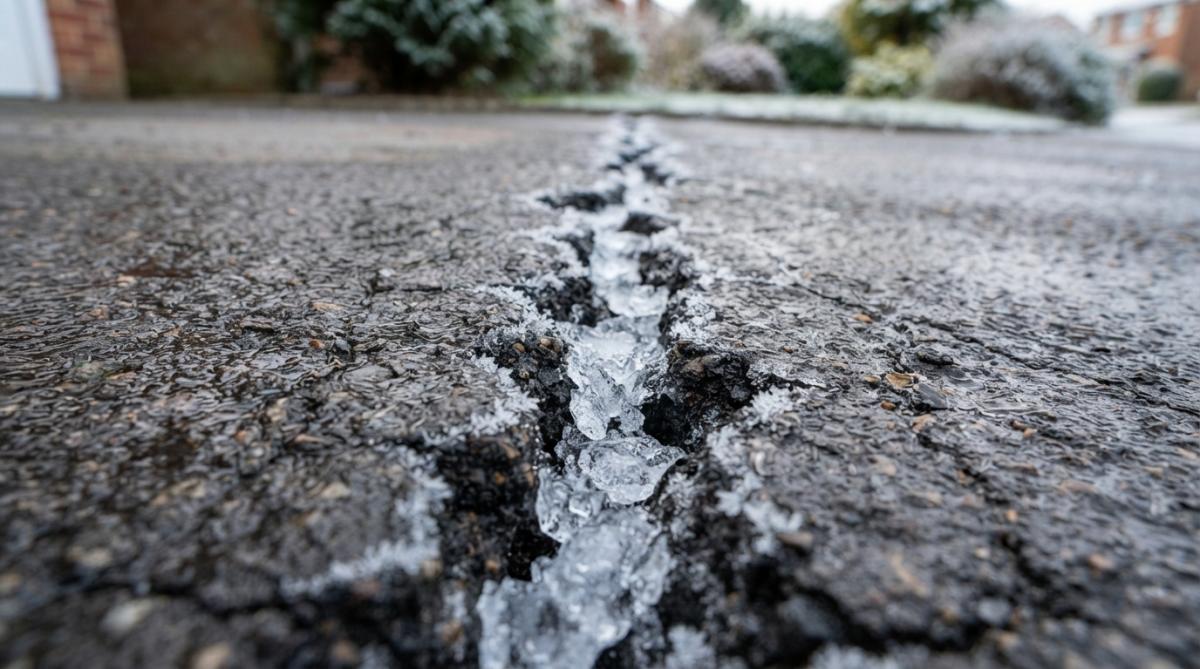
Moisture seeps into tiny pores during autumn rains. Once temperatures drop below freezing, trapped water expands as it turns to ice, taking up roughly 9% more volume than liquid water. This expansion exerts tremendous pressure on the surrounding pavement. When temperatures rise, the ice melts and contracts, leaving small voids. Over dozens of freeze-thaw cycles throughout a single winter, these voids accumulate and interconnect, creating visible cracks by spring.
| Freeze-Thaw Damage Stage | What Happens | Timeline |
|---|---|---|
| Moisture infiltration | Water enters pavement pores | September-November |
| Freezing expansion | Ice forms and pushes outward | December-February |
| Thawing contraction | Ice melts, leaving voids | March-April |
| Crack propagation | Voids link together, forming visible cracks | Throughout winter |
Damage occurs most rapidly during transition seasons, late autumn and early spring, when temperatures fluctuate above and below freezing daily. A single week of freeze-thaw cycling can cause more damage than weeks of steady cold.
Understanding the Freeze-Thaw Cycle and Driveway Damage
Water is the enemy of any driveway in the UK climate. When water enters the sub-base and aggregate layers beneath your surface, it crystallises into ice as temperatures drop. This phase change creates enormous hydrostatic pressure, exceeding 25,000 pounds per square inch in severe conditions, that pushes outward against the pavement structure.
When ice trapped in a hairline crack or pore melts, a small void remains. Repeat this cycle 40, 50, or 100 times across a winter season, and those voids accumulate into visible cracks. Properly installed surfaces with correct compaction and drainage can last 15-20 years even in harsh Norfolk conditions, whilst shortcuts often fail within just a few winters.
Hairline cracks that appear minor in spring will expand significantly during the next winter. A 1mm crack can double in width within a single freeze-thaw season if left untreated.
Thermal expansion compounds the problem. As temperature fluctuates, pavement material expands and contracts. Concrete expands more than asphalt in response to temperature changes. Without proper expansion joints to accommodate this movement, internal stress develops. This stress, combined with pressure from ice formation, creates conditions for cracking.
Driveway Crack Repair UK: When to Act and How
The difference between asphalt and concrete winter damage is significant. Asphalt, being more flexible, tends to develop potholes and surface spalling rather than long structural cracks. Concrete, being rigid and brittle, develops dramatic hairline cracks and larger fractures. Both materials are vulnerable to water infiltration.
Small hairline cracks (less than 3mm wide) can be filled with polyurethane or epoxy crack filler. For cracks wider than 5mm, or if you have multiple cracks across your driveway, professional assessment is essential. A Brett Approved Premier Installer like KT Lake Paving and Landscaping can evaluate whether your driveway can be salvaged or whether replacement is more cost-effective long-term.
Signs that repair is still viable:
- Cracks are isolated to one or two areas
- The pavement surface is otherwise stable
- Cracks are less than 5mm wide
- Frost heave hasn’t occurred
Signs that replacement is necessary:
- Multiple cracks across the entire surface
- Visible frost heave or settlement
- Potholes or surface spalling
- Cracks wider than 8mm
- Water pooling or poor drainage
Professional driveway crack repair involves cleaning the crack, applying sealant, and sometimes injecting polyurethane foam to fill voids beneath the surface. For asphalt, pothole repair requires removing damaged material, ensuring proper sub-base compaction, and applying new asphalt with correct compaction.
The best time to repair cracks is immediately after winter, when damage is visible but hasn’t yet worsened. Waiting until autumn means another freeze-thaw season will expand the damage significantly.
A surface that’s 8-10 years old with minor cracking is worth repairing. A surface that’s 15+ years old with extensive cracking and poor drainage is more economical to replace entirely. Professional installers ensure proper sub-base compaction, correct drainage, and high-quality materials that resist winter damage far better than original installations.
Preventing Driveway Cracks in Winter: Essential Maintenance
The most effective strategy for preventing driveway cracking is preventative maintenance applied before winter arrives. Water management is your primary defence. Ensure your driveway slopes properly for drainage, clear debris from edges, and address any low spots where water pools.
Sealcoating is the single most important preventative measure for both asphalt and concrete. A quality sealant creates a waterproof barrier that prevents moisture infiltration. For concrete driveways, sealcoating should be applied every 2-3 years. For asphalt, every 2 years is recommended. This simple maintenance step can extend your driveway’s lifespan by 5-10 years.
Preventative maintenance checklist:
- Apply sealcoating 4-6 weeks before first frost (September-October)
- Clear gutters and downspouts to direct water away from pavement edges
- Fill any existing cracks before winter to prevent ice infiltration
- Ensure proper slope (minimum 1-2% gradient) for water runoff
- Remove standing water immediately after rain or snow melt
De-icing salts create a secondary problem beyond freeze-thaw damage. Salt accelerates deterioration of both concrete and asphalt by breaking down the binder that holds aggregate together. Consider switching to calcium chloride or magnesium chloride, which are less damaging than sodium chloride.
Apply sealcoating in early autumn, not late autumn. This gives the sealant time to cure fully before the first freeze-thaw cycle.
During winter, remove snow and ice promptly to reduce weight load on your pavement and limit moisture contact. Use plastic shovels instead of metal ones that scrape the surface.
Protecting your driveway from winter damage requires understanding the freeze-thaw cycle and acting before temperatures drop. Small cracks become major problems within a single season if left untreated. KT Lake Paving and Landscaping offers free, no-obligation consultations to assess your driveway’s condition and recommend whether repair or replacement is appropriate. As a Brett Approved Premier Installer with a 10-year product guarantee, we ensure every project meets rigorous British Standards and delivers the durability your Norfolk property deserves. Contact us today for a professional evaluation and discover how proper installation and maintenance can add years to your driveway’s lifespan.
Frequently Asked Questions
What causes driveways to crack after a cold winter in the UK?
Driveway cracking after cold winters is primarily caused by the freeze-thaw cycle. When water enters pores in asphalt or concrete, it expands as it freezes, creating internal pressure. This thermal expansion stresses the pavement structure. When temperatures rise, the ice melts and contracts, leaving gaps. Repeated cycles weaken the material, leading to hairline cracks, surface spalling, and eventually potholes. Poor sub-grade compaction, inadequate drainage, and de-icing salts accelerate this damage.
How can I prevent my driveway from cracking during future UK winters?
Effective prevention involves multiple strategies. Ensure proper drainage around your driveway to minimise water infiltration and moisture saturation. Apply driveway sealant or sealcoating every 2-3 years to protect the surface and reduce porosity. Avoid de-icing salts where possible; use alternatives like grit or sand instead. Fill existing cracks with crack filler before winter to prevent water penetration. If your driveway has poor aggregate base or sub-base compaction, professional repairs may be necessary to restore structural integrity and prevent frost heave.
When should I call a professional for driveway cracks after winter?
Contact a professional if cracks are wider than 6mm, if you notice frost heave (raised or uneven sections), or if cracks are spreading rapidly. Small hairline cracks can often be managed with DIY crack filler, but structural damage affecting the pavement lifespan requires expert assessment. Professionals can evaluate whether the issue stems from poor sub-base compaction, hydrostatic pressure, or surface-level damage, and recommend repair versus replacement. In Norfolk, KT Lake Paving and Landscaping offers free, no-obligation consultations to assess winter damage and discuss solutions.
What is the difference between asphalt and concrete driveway damage in winter?
Both materials suffer from freeze-thaw cycles, but differently. Asphalt is more flexible and typically develops hairline cracks and surface spalling first; concrete is more rigid and prone to larger, wider cracks and structural failure. Asphalt's porosity makes it vulnerable to water infiltration and de-icing salt damage, whilst concrete can experience scaling and aggregate exposure. Both benefit from sealcoating and proper drainage, but concrete often requires professional crack filler and may need resurfacing sooner if structural integrity is compromised. The curing process and initial sub-grade compaction affect how each material ages.


