

Table of Contents
- Resin Driveway vs Concrete: Key Durability Differences
- Resin Driveway Lifespan: What to Expect
- Concrete Driveway Maintenance Tips and Durability Factors
- Pros and Cons of Resin Bound Driveways
Resin Driveway vs Concrete: Durability Comparison Guide
Last Updated: July 15, 2026
When homeowners in Norfolk choose between resin and concrete driveways, durability becomes central to the decision. Both materials age differently, require different maintenance, and perform distinctly under various climate conditions. At KT Lake Paving and Landscaping, we’ve spent over 30 years helping Norfolk property owners navigate this choice with our expertise as a Brett Approved Premier Installer and 10-year product guarantee.
Resin Driveway vs Concrete: Key Durability Differences
The fundamental difference lies in how each material responds to water and temperature. Resin bound surfaces are permeable, allowing water to flow through the aggregate into the sub-base. Concrete is non-porous; water sits on the surface or penetrates cracks.
Resin’s permeability prevents standing water and eliminates freeze-thaw cycles that crack concrete from within. When water freezes inside concrete, it expands and fractures the surface. Resin bound surfaces drain water away before it freezes, sidestepping this problem entirely.
Concrete also suffers from salt damage. In Norfolk’s climate, winter de-icing salts seep into micro-cracks and accelerate deterioration. Resin bound surfaces, being SUDS compliant and fully permeable, don’t absorb salt the same way; water and salt drain through rather than accumulating.
However, concrete has one durability advantage: sheer load-bearing capacity. A well-installed concrete driveway handles heavy vehicles without surface erosion. Resin bound driveways, while rated for standard residential traffic, can show wear under heavy commercial use.
In Norfolk’s wet winters, resin bound’s permeability prevents the freeze-thaw damage that cracks concrete. For light to moderate residential use, resin typically outlasts concrete without maintenance. For heavy commercial traffic, concrete edges ahead, but only if properly sealed.
Resin Driveway Lifespan: What to Expect
A properly installed resin bound driveway typically lasts 15-20 years before showing significant wear. The key to reaching that lifespan is the sub-base. A weak foundation, poorly compacted gravel, or inadequate drainage cuts lifespan in half. Conversely, a well-prepared sub-base with proper slope and permeability can push a resin driveway toward 20+ years.
Resin bound surfaces don’t fail catastrophically. Instead, they degrade gradually, with surface erosion appearing first in high-traffic areas where vehicles park or turn repeatedly. Unlike concrete, resin doesn’t develop potholes or large cracks; it wears evenly. Weed growth is virtually eliminated because the permeable surface doesn’t create the conditions weeds need.
Concrete Driveway Maintenance Tips and Durability Factors
Concrete driveways last 25-30 years on average, but this assumes consistent maintenance. Without sealing and repairs, concrete deteriorates faster in Norfolk’s damp climate.
Surface erosion begins when water penetrates micro-cracks. Once inside, freeze-thaw cycles expand the water and widen cracks. Within 3-5 years of neglect, small cracks become significant damage and potholes develop.
Preventing this requires proactive maintenance. A quality concrete sealer, like Foundation Armor SX5000, which reduces water absorption by over 90%, can extend concrete lifespan significantly. However, sealers degrade over time and require reapplication every 2-3 years. Patch repairs are also visible and don’t match the original surface, whereas resin bound can be recoated seamlessly.
Skipping concrete sealing costs you 10+ years of lifespan. A $500 sealing treatment applied in year 2 prevents $3,000+ in repairs by year 15.
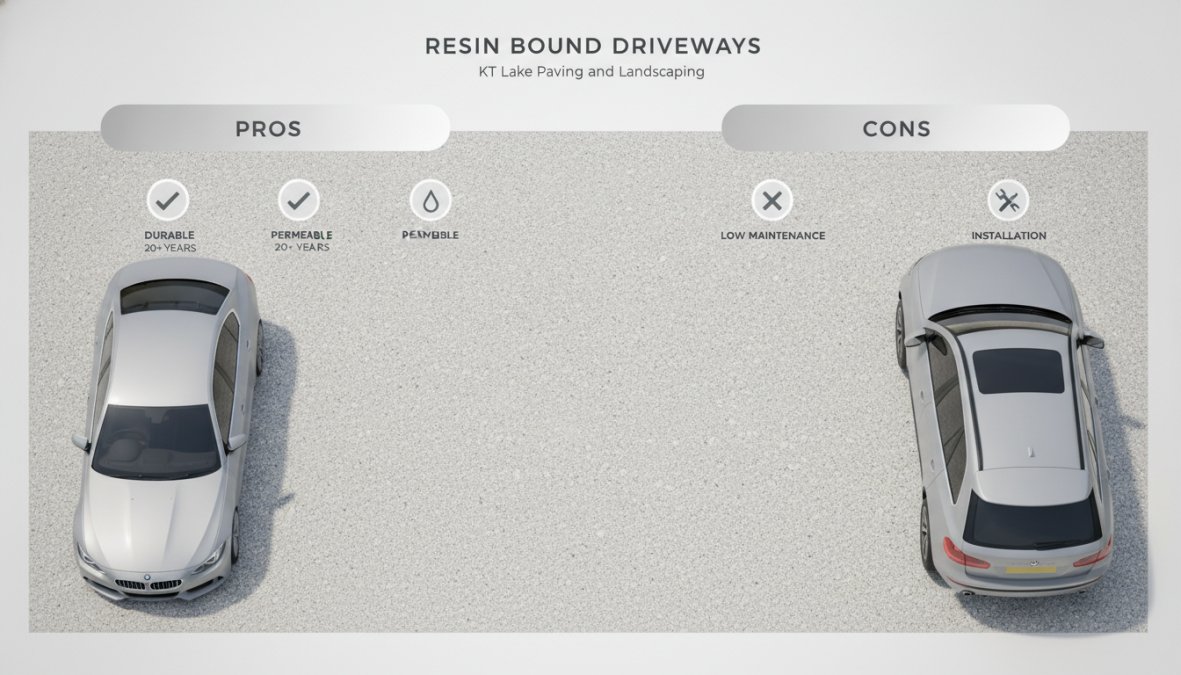
Pros and Cons of Resin Bound Driveways
Resin bound driveways offer genuine durability advantages in Norfolk’s climate, but they have specific strengths and weaknesses.
Pros of resin bound driveways:
Permeability prevents standing water and freeze-thaw damage, making resin ideal for wet climates. The seamless surface means no cracks for water to penetrate. Aesthetic versatility is substantial with over 30 color and aggregate blends available. Maintenance is minimal: a simple sweep and occasional pressure wash keep the surface clean. No sealing, patching, or resurfacing required. Weed growth is virtually eliminated. Installation is faster than concrete, often completed in 1-2 days versus 7+ days for concrete curing.
Cons of resin bound driveways:
Heavy commercial traffic can cause surface erosion in high-wear areas. Initial cost is comparable to or slightly higher than concrete. Installation quality is critical; poor sub-base preparation leads to premature failure. Resurfacing means recoating the entire driveway rather than patching isolated areas.
| Durability Factor | Resin Bound | Concrete |
|---|---|---|
| Freeze-Thaw Resistance | Excellent (permeable) | Poor (water penetrates) |
| Salt Damage Resistance | Excellent | Fair (degrades with de-icing salts) |
| Crack Resistance | Excellent (seamless) | Fair (develops cracks over time) |
| Load-Bearing Capacity | Good (residential traffic) | Excellent (heavy traffic) |
| Typical Lifespan | 15-20 years | 25-30 years (with sealing) |
| Maintenance Effort | Minimal | Moderate (sealing, patching) |
| Weed Growth | None | Moderate (especially at edges) |
| Aesthetic Versatility | Excellent (30+ options) | Limited (color, finish) |
| Permeability | Yes (SUDS compliant) | No (non-porous) |
| Repair Costs | Low | Moderate to High |
For Norfolk homeowners with light to moderate residential traffic, resin bound driveways deliver superior durability in practice. The permeable surface handles Norfolk’s wet winters far better than concrete, avoiding the freeze-thaw damage that shortens concrete lifespan. Resin’s real durability advantage is the elimination of maintenance burden. A resin driveway requires nothing beyond occasional cleaning, while a concrete driveway requires sealing every 2-3 years, patching as cracks develop, and careful winter management.
Choosing between a resin driveway and concrete means balancing upfront cost against long-term durability and maintenance. In Norfolk’s climate, resin bound driveways deliver superior performance for most residential properties, eliminating freeze-thaw damage and drastically reducing maintenance effort. KT Lake Paving and Landscaping specializes in professional resin bound installation backed by our Brett Approved Premier Installer credentials and 10-year product guarantee. Get a free, no-obligation estimate and discover how resin bound can enhance your property’s durability and curb appeal.
Frequently Asked Questions
How long does a resin driveway last compared to concrete?
Resin bound driveways typically last 15-25 years with proper maintenance, while concrete driveways generally last 25-40 years. However, resin driveway lifespan depends heavily on UV stability of the resin used and quality of the sub-base. Concrete's longevity is affected by freeze-thaw cycles and whether it receives regular sealing. Both can be extended with appropriate care, though concrete requires more intensive maintenance to achieve its full lifespan potential.
What are the main maintenance differences between resin and concrete?
Concrete driveway maintenance tips include regular sealing every 2-3 years, pressure washing, and crack repairs to prevent water infiltration. Resin bound driveways require less frequent maintenance, mainly occasional cleaning and weed prevention. Concrete is prone to potholes, surface erosion, and salt damage in harsh climates, while resin is more resistant to these issues. However, resin can develop UV discolouration if not protected, whereas properly sealed concrete maintains better colour stability over time.
Does concrete crack more easily than resin in extreme weather?
Yes, concrete is more susceptible to cracking in freeze-thaw cycles common in colder climates. Water penetrates concrete, freezes, expands, and causes cracks. Resin bound surfaces are permeable and don't trap water, reducing freeze-thaw damage. However, resin can become brittle in very cold conditions if the wrong resin formulation is used. Both surfaces benefit from proper sub-base preparation and drainage, but resin's permeable design gives it an advantage in wet climates and areas prone to standing water.
Is a resin driveway more durable than concrete for heavy vehicles?
Concrete typically has higher load-bearing capacity for heavy vehicles due to its rigid structure. However, modern resin bound systems offer excellent durability for residential and light commercial use. Concrete can develop potholes and surface damage under repeated heavy loads, while resin's flexibility prevents cracking. For heavy commercial traffic, concrete is the stronger choice, but for typical residential vehicles and light commercial use, quality resin bound surfaces with proper sub-base requirements provide comparable durability with lower maintenance.
What makes a good sub-base for durability in either surface?
A stable, well-compacted sub-base is critical for both resin and concrete durability. It should be 100-150mm of quality aggregate, properly graded and compacted to prevent settling. Poor sub-base preparation is a leading cause of premature failure in both surfaces. For resin bound driveways, the sub-base must be stable but doesn't need to be non-porous. For concrete, a permeable sub-base with adequate drainage prevents water accumulation beneath the slab, reducing freeze-thaw and cracking. Professional installation ensures sub-base requirements are met to maximise lifespan.


