

Table of Contents
- Why Choose Tar and Chip for Your Driveway
- Tar and Chip vs Asphalt: Key Differences
- Tar and Chip Driveway Lifespan and Durability
- Understanding Tar and Chip Driveway Cost
Last Updated: July 13, 2026
Why Choose Tar and Chip for Your Driveway
Tar and chip has become an increasingly popular cost-effective alternative for Norfolk homeowners. KT Lake Paving and Landscaping has spent over 30 years helping property owners discover that tar and chip surfaces deliver impressive durability and aesthetic appeal at a fraction of traditional asphalt costs. This driveway solution combines liquid asphalt emulsion with aggregate stone chips, creating a hybrid surface that’s neither pure gravel nor standard asphalt. Unlike conventional asphalt, tar and chip applications happen quickly and cure within days rather than weeks, providing excellent traction and weather resistance from day one.
The key advantage most guides miss: tar and chip surfaces actually improve with light traffic during the first few months as loose stones settle and bond more firmly to the bitumen base. This creates a naturally self-sealing effect that strengthens the surface over time.
Tar and Chip vs Asphalt: Key Differences
Asphalt consists of hot-mixed aggregate and bitumen that arrives heated and must be laid immediately. Tar and chip uses room-temperature liquid asphalt emulsion sprayed onto a prepared sub-base, followed by aggregate stone that bonds as the emulsion cures over 7-10 days.
Installation speed favors tar and chip significantly. Asphalt requires specialized equipment including dump trucks, pavers, and compaction rollers, plus traffic restrictions. Tar and chip needs simpler equipment: a spray truck and spreader. This means less noise, less disruption, and faster completion.
Cost comparison favors tar and chip in most scenarios. Tar and chip typically costs 30-40% less than equivalent asphalt installations, making it particularly attractive for driveways and rural access roads. However, asphalt offers superior performance in high-traffic commercial applications and extreme climates.
| Feature | Tar and Chip | Asphalt |
|---|---|---|
| Installation Time | 1-2 days | 2-4 days |
| Curing Period | 7-10 days | 3-7 days |
| Initial Cost | Lower | Higher |
| Traction Quality | Excellent | Good |
| Lifespan | 5-7 years | 15-20 years |
| Maintenance | Annual | Every 2-3 years |
| Weather Resistance | Very good | Excellent |
| DIY Feasibility | Moderate | Very difficult |
Aesthetically, asphalt presents a uniform dark appearance, while tar and chip offers a rustic, textured look with visible aggregate stones in earth tones. For Norfolk properties seeking curb appeal with natural character, tar and chip delivers what standard asphalt cannot match.
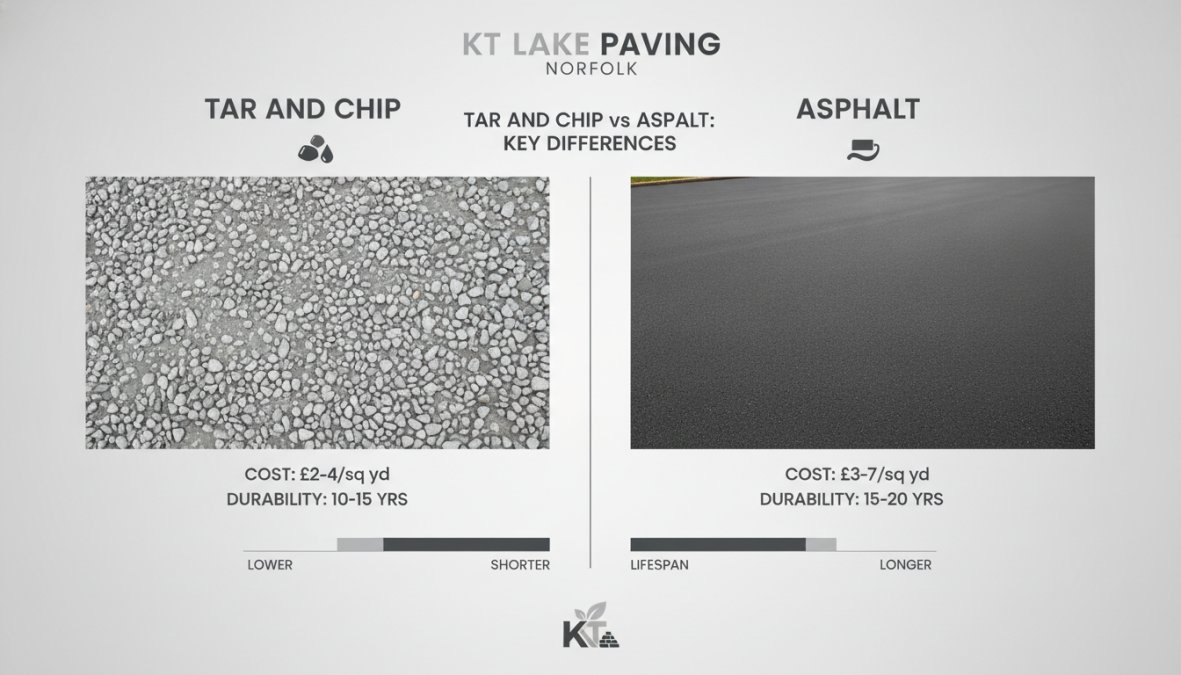
Drainage also differs. Asphalt creates an impermeable surface that sheds water quickly but can develop ponding. Tar and chip allows some water permeability while providing effective drainage, reducing standing water issues on residential driveways, particularly valuable in Norfolk’s variable weather conditions.
Tar and Chip Driveway Lifespan and Durability
A properly installed tar and chip driveway typically lasts 5-7 years before requiring resurfacing, though many well-maintained examples in Norfolk have exceeded this timeframe. Lifespan depends on traffic volume, climate exposure, and maintenance consistency.
The binder gradually oxidizes over time as it’s exposed to UV radiation and temperature cycling. This is natural and expected; it signals that resurfacing will eventually become necessary rather than indicating failure. Light residential driveways often reach 7-8 years before resurfacing becomes essential.
Weather resistance in tar and chip is genuinely strong despite the shorter overall lifespan compared to asphalt. The surface sheds water effectively, resists pothole formation, and handles freeze-thaw cycles reasonably well when properly installed.
A common misconception is that tar and chip is fragile or temporary. In reality, the surface is durable enough for regular residential use. What ends its serviceable life is not structural failure but rather surface oxidation and aggregate loss, conditions that simply require resurfacing rather than complete reconstruction.
When a tar and chip surface reaches the end of its useful life, resurfacing is straightforward: the existing surface can be cleaned, loose material removed, and a fresh coat of asphalt emulsion and aggregate applied directly over the old surface. This resurfacing process costs significantly less than replacement and requires minimal sub-base work. Many properties benefit from 2-3 resurfacing cycles before the sub-base needs attention, extending effective lifespan to 15-20 years with proper maintenance.
Understanding Tar and Chip Driveway Cost
Pricing for tar and chip installation depends on quantity, dates, and delivery logistics specific to your property and location in Norfolk. The best approach is requesting a free, no-obligation estimate from KT Lake Paving and Landscaping.
Several factors influence cost beyond basic square footage. The condition of the existing sub-base significantly impacts pricing; substantial preparation, compaction, or drainage improvements increase costs. Aggregate type selection also affects pricing, with premium stone colors costing more than standard local aggregates.
Cost-effectiveness emerges as tar and chip’s strongest economic argument. Initial installation costs substantially less than asphalt, making it accessible for property owners with limited budgets. Resurfacing costs are even more compelling, refreshing a tar and chip surface typically costs 40-50% less than initial installation.
The true cost advantage of tar and chip emerges over time. While initial installation costs less, the real savings come from affordable resurfacing cycles and minimal maintenance requirements compared to asphalt alternatives.
Maintenance Requirements for Tar and Chip Surfaces
Keeping a tar and chip driveway in optimal condition requires consistent but straightforward maintenance. Annual maintenance includes light sweeping to remove accumulated debris, which prevents organic matter from trapping moisture against the surface.
Sealcoating is the primary maintenance task. This involves applying a thin protective layer of asphalt emulsion or specialized sealant annually or every two years, depending on weather exposure and traffic volume. Resealing is significantly simpler than asphalt sealcoating and can often be completed in a single day.
Drainage maintenance prevents water-related damage that can compromise the sub-base. Ensuring gutters, downspouts, and surface water direct away from the driveway edges prevents saturation that weakens the foundation. In Norfolk’s climate with variable precipitation, maintaining proper drainage is particularly important.
Pothole repair, when needed, is simple and inexpensive. Small potholes can be filled with cold-mix asphalt or tar and chip repair compound, requiring only a shovel and tamper. Winter maintenance in Norfolk requires minimal special attention; salt and sand can be applied normally, though avoiding heavy snow plowing directly against surface edges prevents aggregate loss.
Making the Decision: Why Choose Tar and Chip for Your Property
The decision to install a tar and chip driveway depends on your specific circumstances, priorities, and timeline. For Norfolk homeowners seeking cost-effective solutions with strong curb appeal, tar and chip delivers compelling advantages. This surface treatment works exceptionally well for properties where budget constraints are real but quality matters, driveways receiving moderate traffic, and homeowners willing to commit to annual maintenance.
KT Lake Paving and Landscaping, as a Brett Approved Premier Installer with over 30 years of industry experience, brings professional expertise to tar and chip installation that ensures optimal performance. The company’s 10-year product guarantee from Brett and commitment to British Standards provide confidence that your investment is protected. Free, no-obligation estimates allow you to understand exact costs and timeline for your specific property before making any commitment.
Frequently Asked Questions
How long does a tar and chip driveway last?
Tar and chip driveways typically last 5-7 years with proper maintenance, though lifespan varies based on climate, traffic volume, and care routines. In harsh weather conditions or areas with heavy use, you may need resurfacing sooner. Regular maintenance, such as sealcoating and prompt pothole repair, can extend durability significantly and protect your investment.
Is tar and chip cheaper than asphalt?
Tar and chip generally offers lower initial installation costs compared to traditional asphalt. However, pricing depends on quantity, dates, and delivery. For an accurate comparison and current pricing, contact KT Lake Paving and Landscaping for a free, no-obligation estimate. They can provide a detailed breakdown tailored to your specific project needs.
What maintenance does a tar and chip driveway require?
Tar and chip requires regular maintenance including periodic sealcoating to refresh the asphalt emulsion binder, raking to redistribute loose aggregate, and prompt pothole repair. Avoid using salt in winter; instead, use sand for traction. These maintenance tips help preserve surface texture and extend the lifespan of your driveway significantly.
Can you put tar and chip over an existing driveway?
Tar and chip can be applied over existing surfaces if proper sub-base preparation is performed. The existing surface must be compacted and level. Professional paving contractors assess drainage and base condition before installation. KT Lake Paving and Landscaping offers free consultations to evaluate your driveway and recommend the best approach for resurfacing.
Choosing the right driveway surface requires balancing cost, aesthetics, durability, and maintenance expectations. Tar and chip offers a compelling solution that delivers strong performance at accessible pricing. Get started with KT Lake Paving and Landscaping to explore how a tar and chip surface can enhance your Norfolk property’s value while fitting your budget and maintenance preferences.


