

Table of Contents
- How to Maintain Resin Driveways: Core Practices
- Can You Jet Wash Resin Driveways Safely?
- How to Remove Oil Stains from Resin
- How to Remove Weeds from Resin Driveway
How to Maintain Resin Driveways: Essential Care Guide
Last Updated: July 12, 2026
Resin driveways are increasingly popular with homeowners seeking durability, aesthetic appeal, and environmental benefits. However, they require consistent care to preserve appearance and structural integrity. At KT Lake Paving and Landscaping, we’ve helped hundreds of Norfolk homeowners protect their resin investments through proper maintenance. The good news: basic upkeep takes just minutes per month, yet extends your driveway’s lifespan by years.
The critical difference between pristine driveways and those showing significant wear comes down to preventive care. Resin surfaces are permeable, making them more forgiving than asphalt or concrete, but understanding what damages them is essential.
How to Maintain Resin Driveways: Core Practices
Regular maintenance centers on three fundamentals: debris removal, surface inspection, and prompt stain treatment. Sweep with a soft-bristled broom weekly to remove loose stones, leaves, and dirt. This prevents debris from collecting in surface pores and reduces moss or algae growth in damp conditions.
Monthly visual inspections catch small issues before they become expensive repairs. Look for loose stones, cracks wider than 1/8 inch, or areas where aggregate is separating from the resin binder. Norfolk’s damp climate makes this especially important, as trapped moisture accelerates deterioration.
Keep a maintenance log on your phone. Take monthly photos from the same spot to track gradual changes and [document care for warranty claims](/our-resin-bound-guarantee/).
For general cleaning, use soapy water and a soft-bristled brush, then rinse thoroughly with a garden hose. Avoid harsh chemicals or acidic cleaners, which degrade the resin binder.
New resin driveways require careful aftercare. Allow 7-10 days for full curing before heavy use. During this period, avoid parking vehicles and keep foot traffic minimal to prevent aggregate shifting or improper bonding.
| Maintenance Task | Frequency | Time Required | Why It Matters |
|---|---|---|---|
| Sweep debris | Weekly | 5-10 minutes | Prevents moss, algae, and pore clogging |
| Visual inspection | Monthly | 10 minutes | Catches small issues before they spread |
| Soapy water cleaning | Monthly or as needed | 15-20 minutes | Removes surface dirt without chemicals |
| Pressure wash (low pressure) | Quarterly | 20-30 minutes | Deep clean without damaging surface |
| Stain treatment | As needed immediately | 5-15 minutes | Prevents permanent discoloration |
Can You Jet Wash Resin Driveways Safely?
Yes, but pressure and technique matter significantly. The most common mistake is using full pressure, which dislodges aggregate from the resin binder and creates visible damage. Safe pressure ranges between 80 and 100 bar (roughly 1,160 to 1,450 PSI).
British Standards guidance on resin bound surfaces
Always use a fan nozzle set at 25-40 degrees, never a pencil jet. Keep the nozzle at least 12 inches from the surface and maintain a consistent sweeping motion at walking pace. Never hold the jet in one spot.
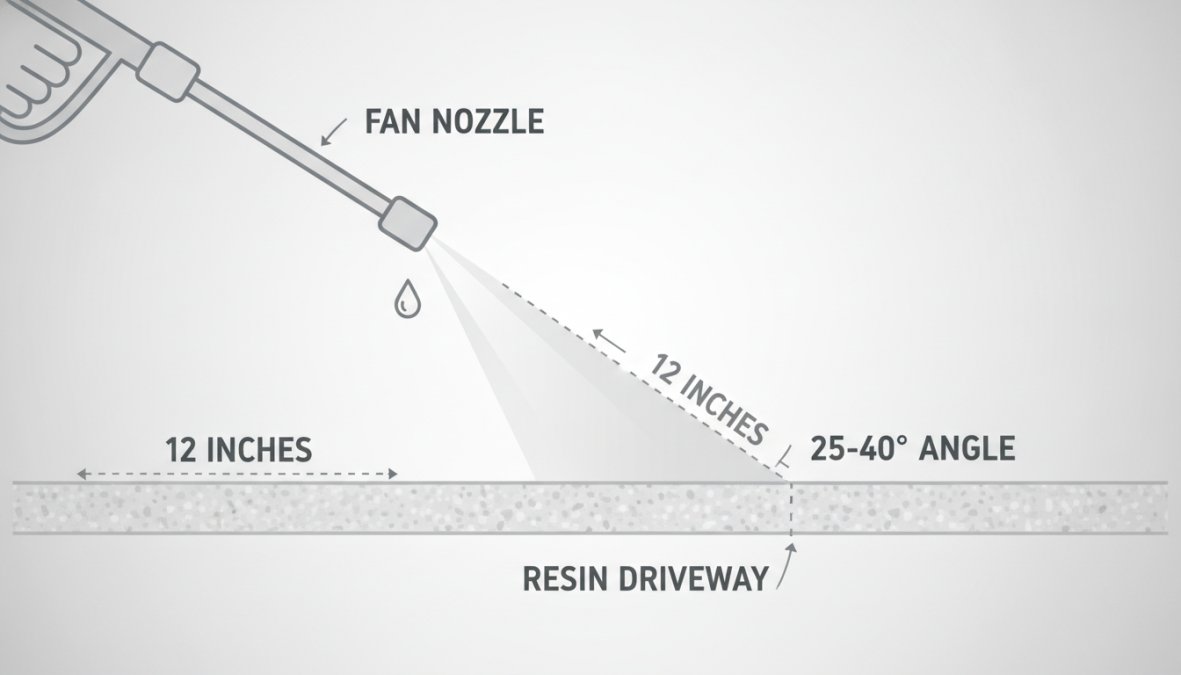
For routine cleaning, a garden hose with soapy water handles most needs. Reserve pressure washing for quarterly deep cleans or stubborn stains. If uncertain about settings, hire a professional, incorrect pressure can cost hundreds to repair.
Never use a pressure washer on new resin driveways within the first 6 months of installation. Premature pressure washing can cause aggregate to shift or resin to fail bonding with the base layer.
How to Remove Oil Stains from Resin
Oil stains are common in Norfolk’s damp climate. The key is speed: address spills within hours before oil penetrates deeper.
For fresh spills, use absorbent material like kitty litter or sand. Sprinkle over the spill, let sit 15-30 minutes, then sweep up. This prevents deeper penetration.
For set-in stains, use a pH-neutral degreaser formulated for porous surfaces. Apply according to instructions, let sit 10-15 minutes, then scrub gently with a soft brush. Rinse thoroughly. Repeat every few days rather than scrubbing aggressively in one attempt.
The most effective prevention is parking over cardboard or a drip tray if your vehicle leaks, catching oil before it contacts the resin surface.
For deeply set stains unresponsive to degreaser, professional cleaning services offer stronger treatments and specialized equipment. Given the cost of repairs versus professional cleaning, this is often the most economical choice for severe staining.
How to Remove Weeds from Resin Driveway
Weeds are the most visible sign of neglect, yet easily preventable. Because resin driveways are permeable, seeds germinate when organic matter accumulates in cracks or pores.
Prevention is far more effective than removal. Regular sweeping removes debris that seeds need to establish. Weekly sweeping is essential in Norfolk’s wet climate.
For existing weeds, remove by hand when soil is damp by grasping at the base and pulling firmly to extract the entire root. Larger weeds may require a hand tool or weeding fork. Leaving root fragments allows regrowth.
For persistent weeds, apply herbicide formulated for permeable surfaces, targeting only active weeds. Avoid applying to the entire driveway as preventive treatment, this is unnecessary, damages the surface, and contaminates groundwater.
For long-term prevention, consider applying polymeric sand or specialized jointing compound to surface cracks. This fills gaps where seeds settle, reducing establishment sites. Ensure any product is compatible with resin driveways and won’t clog the permeable surface.
Maintaining a resin driveway in Norfolk requires no expensive equipment or specialized knowledge. Consistent habits, sweeping, inspecting, and treating stains promptly, keep your surface looking new for years. When you need professional help with deep cleaning, stubborn stains, or repairs, KT Lake Paving and Landscaping brings over 30 years of experience and Brett Approved Premier Installer credentials to the job. Contact us for a free consultation and discover how professional maintenance can extend your driveway’s lifespan.
Frequently Asked Questions
How often should you clean a resin driveway?
Most resin bound and resin bonded driveways benefit from light sweeping every 1-2 weeks and a thorough cleaning every 3-6 months, depending on local weather and debris levels. In high-traffic areas or wet climates where moss and algae growth is common, monthly cleaning may be necessary. A structured maintenance schedule helps preserve surface integrity and extend the life of your permeable surface.
Can you jet wash resin driveways, and what pressure setting is safe?
Yes, you can jet wash resin driveways, but only with care. Use a pressure washer set to no more than 100 bar (1450 psi) with a fan nozzle held at least 30cm from the surface. Never use a pinpoint nozzle or high-pressure settings, as these can dislodge loose stones and damage the resin bond. Always test on a small, inconspicuous area first to ensure compatibility.
What is the best way to remove oil stains from a resin driveway?
For oil stains, use a pH-neutral degreaser specifically formulated for permeable surfaces. Apply the product according to manufacturer instructions, allow it to sit briefly, then gently scrub with a soft brush and rinse with soapy water. For fresh spills, absorbent materials like sand or cat litter can prevent staining. Avoid harsh chemicals that may damage the resin or compromise drainage. For stubborn stains, professional cleaning may be more effective.
How do you prevent weeds from growing on a resin driveway?
Regular sweeping removes seeds and debris that encourage weed growth. Maintain proper drainage to reduce moisture that promotes germination. For existing weeds, remove them manually by hand-pulling or use a pH-neutral weed killer designed for permeable surfaces. Avoid high-strength herbicides that can damage the resin and affect SUDS compliance. A consistent maintenance schedule is the most effective prevention strategy.


