

Table of Contents
- Top Alternatives to Block Paving for Driveways
- Permeable Driveway Options: Eco-Friendly Solutions
- Gravel Driveway Pros and Cons: Budget-Friendly Appeal
- Resin Bound Driveway Cost and Installation Considerations
Last Updated: July 8, 2026
When homeowners in Norfolk consider driveway alternatives to block paving, newer materials offer better drainage, lower maintenance, and enhanced aesthetics. According to British Standards Institution guidance on sustainable drainage, permeable surfaces now meet stricter environmental requirements that traditional block paving struggles to satisfy. Below, we’ll evaluate each alternative based on cost, durability, maintenance, and your specific needs.
Top Alternatives to Block Paving for Driveways
Resin bound surfaces lead the market for premium finishes, while permeable pavers offer traditional aesthetics with modern environmental benefits. Gravel solutions remain budget-friendly, and asphalt provides cost-effective baseline options.
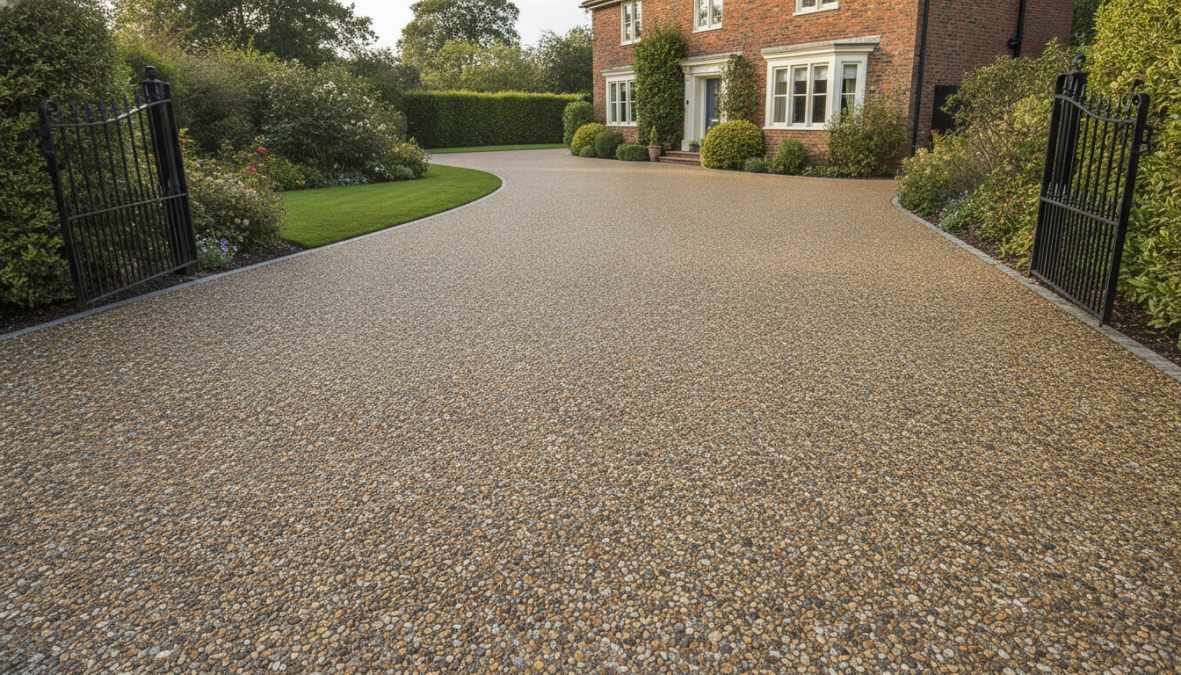
Resin bound systems mix natural stone with UV-stable clear resin, creating a joint-free surface that prevents weed growth and allows water drainage through to the sub-base. The finish feels smooth underfoot, suits wheelchairs and pushchairs, and comes in dozens of natural stone colors. A proper sub-base with geotextile fabric and correct compaction determines longevity. Block paving relies on sand joints that shift over time, creating ruts and uneven surfaces. Resin bound systems lock everything in place permanently.
Permeable Driveway Options: Eco-Friendly Solutions
Permeable driveway options have become essential for properties in flood-prone areas and for homeowners committed to sustainability. These systems allow rainwater to infiltrate rather than running off into storm drains, reducing flooding risk and recharging groundwater. They align with UK Building Regulations and SuDS (Sustainable Drainage Systems) requirements increasingly mandated by local councils.
Resin bound surfaces are fully SuDS compliant and offer the smoothest, most durable permeable option. SureSet resin bound paving uses UV-stable formulations that resist yellowing and maintain color for 15+ years while handling heavy vehicle traffic.
Permeable pavers represent another category: interlocking concrete units with wider joints than traditional pavers, allowing water infiltration between units while maintaining a segmented aesthetic.
EcoGrid and similar gravel stabilization systems combine sustainability with affordability. These modular plastic grids hold gravel in place while remaining fully permeable, with load-bearing capacity reaching 25-tonne axle loads.
When selecting a permeable system, verify it meets your local council’s SuDS requirements. Norfolk properties in designated flood zones must use approved permeable surfaces. Contact your local authority before committing to any installation.
Gravel Driveway Pros and Cons: Budget-Friendly Appeal
Gravel driveway pros and cons present a trade-off between initial cost and long-term maintenance. Loose gravel costs significantly less than any other material but requires regular raking and replenishing every 2-3 years. Crushed stone (angular fragments) compacts better than pea gravel (smooth rounded stones), reducing displacement.
Gravel stabilization mats address these problems. IBRAN gravel mats use heavy-duty plastic honeycomb structures that lock gravel in place. Installed correctly over a compacted sub-base with geotextile fabric, stabilized gravel systems eliminate rutting and reduce maintenance by 70%.
| Gravel Type | Cost per m² | Compaction | Durability | Maintenance |
|---|---|---|---|---|
| Loose crushed stone | Low | Moderate | 2-3 years | High (raking, replacement) |
| Loose pea gravel | Low | Poor | 1-2 years | Very high (migration) |
| Recycled asphalt | Low-Medium | Good | 3-4 years | Medium (occasional top-up) |
| Stabilized gravel (with mat) | Medium | Excellent | 5-7 years | Low (occasional cleaning) |
Loose gravel on slopes creates serious drainage problems. Water channels through stones, eroding the sub-base and creating washouts. If your driveway has any gradient, use stabilization mats or choose a bound surface instead.
Resin Bound Driveway Cost and Installation Considerations
Resin bound driveway cost varies based on square meterage, existing surface condition, and aggregate choice, but delivers superior long-term value compared to block paving. Installation requires professional expertise. The process begins with surface preparation: existing concrete or tarmac must be clean, dry, and structurally sound. The resin and aggregate mix is then troweled onto the prepared surface, creating a seamless finish. Curing time varies by weather; cool or damp conditions extend curing to 48-72 hours.
Professional installation matters enormously. Improper mixing ratios, incorrect application temperature, or inadequate curing time causes premature failure. DIY attempts often fail; VUBA kits suit only refreshing small areas over existing concrete, not full driveway construction.
The cost advantage emerges over 10-15 years. Unlike block paving requiring re-sanding every 5-7 years, resin bound surfaces need only occasional cleaning and seal coating every 7-10 years. No weeds penetrate. No ruts develop.
Resin bound surfaces cost 30-50% more initially than block paving, but cost 40-60% less over 15 years when factoring in maintenance, repairs, and replacement.
Comparing Alternatives: Which Surface Works Best for Your Needs
Selecting the right driveway alternative depends on your priorities, property characteristics, and long-term vision. For maximum durability and minimal maintenance, resin bound surfaces outperform all alternatives. The seamless finish eliminates joint-related problems, the permeability satisfies environmental regulations, and the aesthetic appeal enhances property value.
For budget-conscious homeowners willing to accept higher maintenance, stabilized gravel offers genuine value. Permeable pavers split the difference, with a traditional aesthetic that suits period properties. Research from The Concrete Centre sustainability guidance shows that permeable systems reduce stormwater runoff by 95% compared to traditional impermeable surfaces, delivering measurable benefits in flood-prone areas.
Installation: DIY vs. Professional Services
DIY installation works for gravel but fails for resin bound surfaces. Gravel installation is genuinely DIY-friendly, requiring only spreading material and basic compaction. Gravel stabilization mats require more precision; improper sub-base preparation causes the grid to shift under vehicle weight.
Resin bound installation is not DIY-suitable. The process requires specific equipment, exact temperature and humidity conditions, and professional-level technique. Professional installation costs more upfront but eliminates failure risk and provides a 10-year product guarantee. Contact us today for a free, no-obligation estimate and discover how the right driveway surface can enhance your Norfolk home for decades to come.
Frequently Asked Questions
What is the cheapest alternative to block paving for a driveway?
Loose gravel is typically the most budget-friendly option, though it requires regular maintenance and raking. Stabilized gravel systems using mats or grids offer better durability at moderate cost. For pricing on specific alternatives to block paving for driveways in Norfolk, contact KT Lake Paving for a free, no-obligation estimate tailored to your property and budget.
Are permeable driveway options better for drainage than block paving?
Yes, permeable driveway options like resin bound surfaces, interlocking permeable pavers, and stabilized gravel systems allow water to drain through the surface into the sub-base, reducing surface runoff and supporting SuDS compliance. Standard block paving requires careful joint design for drainage. Resin bound and permeable pavers are particularly effective for managing stormwater on residential properties.
What are the main pros and cons of a gravel driveway?
Gravel driveway pros include low initial cost, ease of installation, and natural appearance. Cons include regular raking needed, gravel migration into surrounding areas, dust in dry weather, and mud formation in wet conditions. Stabilized gravel systems (using mats or grids) significantly reduce these drawbacks by preventing displacement and rutting while maintaining the natural look.
How much does resin bound driveway cost compared to other alternatives?
Resin bound driveway cost typically falls in the mid-to-premium range, more than loose gravel but competitive with quality interlocking pavers. Pricing depends on quantity, surface area, existing base condition, and delivery. For accurate resin bound driveway cost information and a personalized quote for your Norfolk property, KT Lake Paving offers free estimates with no deposit required and a 10-year product guarantee.


