

Table of Contents
- How to Maintain Resin Bound Driveways: Daily and Routine Care
- Best Tools for Cleaning Resin Driveways
- Pressure Washing Resin Bound Driveways: Techniques and Safety Tips
- How to Remove Oil Stains from a Resin Driveway
Last Updated: June 15, 2026
Knowing how to maintain resin bound driveways is the difference between a surface that looks pristine for a decade and one that deteriorates within a few years. This guide from KT Lake Paving and Landscaping covers debris removal, oil stain treatment, seasonal care, and the right tools for Norfolk homeowners. Resin bound surfacing is durable but requires a specific maintenance approach, get it wrong and you risk discoloration, weed growth, and premature aggregate loss.
How to Maintain Resin Bound Driveways: Daily and Routine Care
Resin bound driveways combine natural aggregates with clear polyurethane resin over a solid sub-base, creating a porous, UV-stable surface. That porosity means debris, moss, and organic matter need regular attention.
Daily and weekly tasks:
- Remove leaves and loose debris using a leaf blower or stiff bristle brush
- Sweep in a single direction to avoid pushing material into the aggregate
- Check drainage channels after heavy rainfall
- Inspect edges for early weed or moss growth
Avoid metal rakes or sharp-pointed tools, which dislodge aggregate from the resin matrix.
Sweep or blow your resin bound driveway at least once a week during autumn. Decomposing leaves trap moisture against the surface, creating ideal conditions for moss and algae growth, which are far harder to remove once established.
For monthly care, apply a pH-neutral cleaner diluted in water, work it in with a stiff bristle brush, then rinse thoroughly. Never use bleach, solvent, or strong acid, these break down the resin binder. According to guidance from the British Standards Institution on surface treatments, chemically incompatible cleaning agents on bound surfaces can compromise structural integrity over time. Apply a softwash biocide treatment once or twice a year, particularly in shaded areas where moss colonises fastest.
Best Tools for Cleaning Resin Driveways
Most people reach for the wrong equipment, some choices actively cause harm.
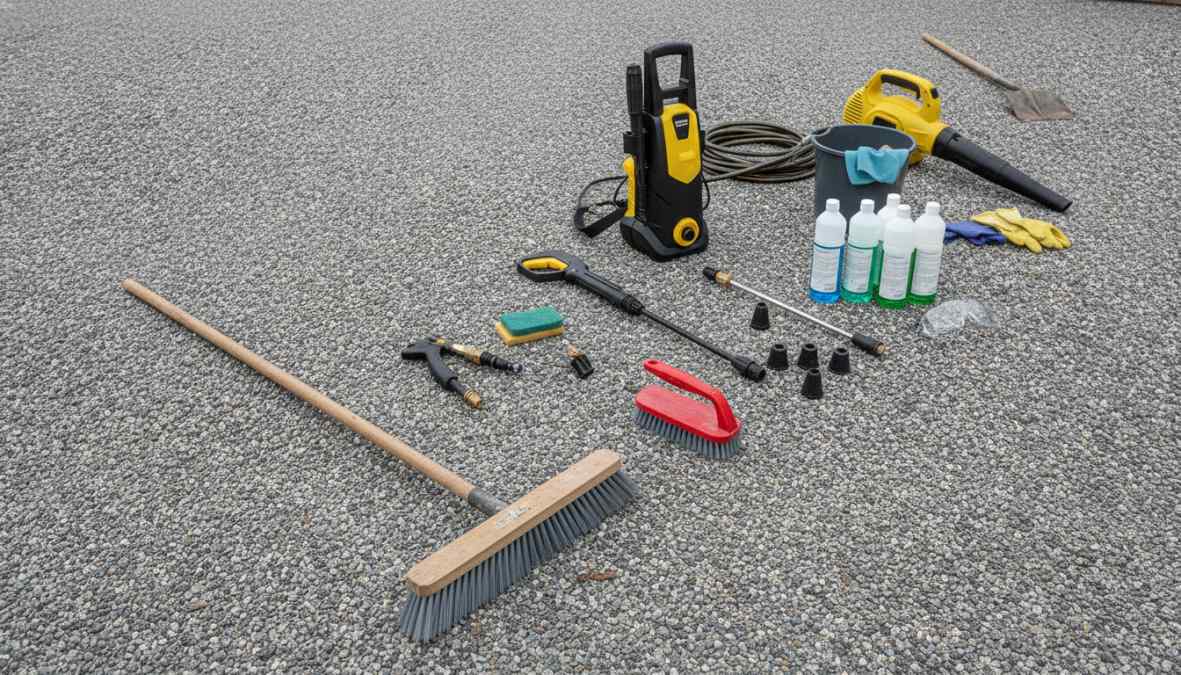
The tools that work:
- Leaf blower: Ideal for dry debris. Faster and less abrasive than sweeping.
- Stiff bristle brush (plastic or nylon): The workhorse for general cleaning. Avoid wire-bristle brushes.
- Pressure washer with a low-pressure setting: Effective for deeper cleans when used correctly.
- Garden sprayer: For applying biocide or diluted cleaner evenly.
- Absorbent cloth or paper: For blotting fresh oil spills before they set.
- Plastic scraper: For lifting hardened material without gouging the surface.
What to avoid:
- Metal tools with sharp points or edges
- Wire brushes or abrasive pads
- Solvent-based cleaners
- Rock salt or grit as a de-icer
A practical checklist before any cleaning session:
- Surface is free of loose debris (sweep or blow first)
- Cleaning solution is pH-neutral and resin-safe
- Pressure washer is set to low pressure (below 100 bar)
- Drainage channels are clear
- Weather is dry or overcast (avoid cleaning in direct summer heat)
Pressure Washing Resin Bound Driveways: Techniques and Safety Tips
Pressure washing done correctly removes ingrained dirt and algae efficiently. Done incorrectly, it strips aggregate and voids your installer’s guarantee.
The single most important rule: use a low-pressure setting. Most resin bound surfaces tolerate up to 100 bar, start at 70-80 bar and test an inconspicuous area first. Never use a zero-degree nozzle; it concentrates force into a point that dislodges aggregate and damages the binder.
Step-by-step pressure washing process:
- Clear loose debris with a leaf blower or brush before starting
- Set the pressure washer to 70-100 bar maximum
- Fit a fan or rotary nozzle, never a zero-degree jet
- Hold the lance at least 30cm from the surface
- Work in overlapping passes, moving consistently to avoid dwelling on one spot
- Rinse from the highest point toward the drainage channel
- Allow the surface to dry fully before applying any treatment
Never use a pressure washer on a resin bound driveway that is less than 48 hours old or that shows signs of existing aggregate loss. High-pressure water will worsen loose areas and spread damage. If aggregate is lifting, contact a professional before cleaning.
For routine cleaning, a garden hose with a jet nozzle and pH-neutral cleaner is gentler and sufficient for most Norfolk driveways. As noted in exterior cleaning guidance from the Property Care Association, appropriate pressure and technique prevents premature surface degradation and extends driveway longevity significantly.
How to Remove Oil Stains from a Resin Driveway
Response time is the key variable. A fresh spill absorbed within minutes leaves almost no trace; a stain left 24 hours or more bonds with the aggregate and becomes considerably harder to remove.
For fresh spills:
- Cover immediately with an absorbent cloth, paper towels, or cat litter
- Leave 10-15 minutes, then remove carefully without spreading the spill
- Apply a pH-neutral cleaner or resin-safe degreaser
- Work in with a stiff bristle brush using circular motions
- Rinse thoroughly with clean water
For older or set stains:
- Apply a resin-safe degreaser and leave to dwell per the product label
- Agitate with a stiff bristle brush
- Rinse with a low-pressure washer or garden hose
- Repeat if necessary, allowing the surface to dry between applications
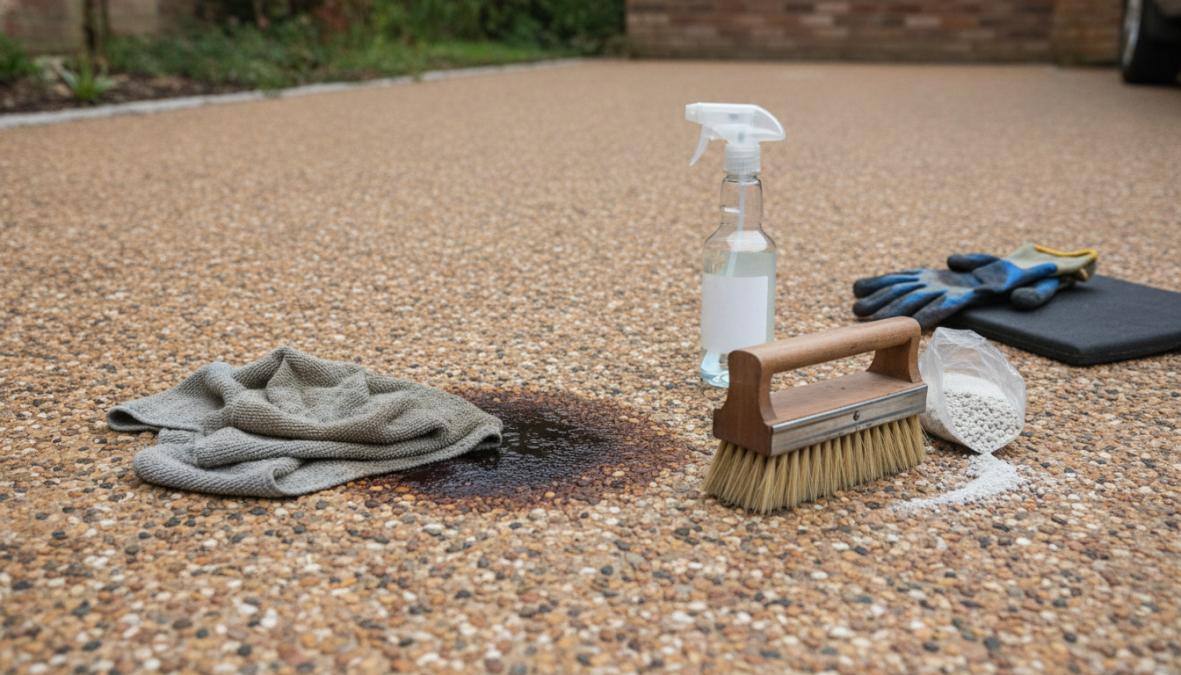
Avoid washing-up liquid or household degreasers not formulated for exterior use, many contain solvents or high-alkaline compounds that strip the resin binder, leaving a dull patch even after the stain is gone.
The most effective stain removal strategy for resin bound driveways is prevention: keep an absorbent cloth or a bag of cat litter in the garage for immediate spill response. A two-minute reaction time will save you an hour of scrubbing later.
According to surface care guidance from the Resin Bound Paving Association, using products specifically formulated for resin bound surfaces prevents secondary damage that often goes unnoticed until the surface starts to deteriorate.
Winter Maintenance and Seasonal Care for Resin Driveways
Winter is where most resin bound driveway maintenance goes wrong. Rock salt and sharp grit accelerate aggregate loosening and cause discoloration that is difficult to reverse.
Safe winter de-icing alternatives:
- Use a plastic shovel to remove snow before it compacts
- Apply warm water (not boiling) to light ice
- Use a resin-safe de-icer specifically formulated for bound surfaces
- Lay non-slip matting at entry points rather than grit
For Norfolk homeowners, frost is more common than heavy snow. Keeping the surface clear of standing water before a freeze prevents ice formation at the aggregate level, which causes micro-cracking over multiple freeze-thaw cycles. Address minor aggregate loss or surface cracking before winter, freeze-thaw expansion turns a small repair into a large one.
Dos and Don’ts: A Quick Reference for Resin Driveway Care
| Do | Don’t |
|---|---|
| Sweep or blow debris weekly | Use metal tools or sharp points |
| Use pH-neutral cleaner | Apply bleach or solvent-based products |
| Pressure wash on low-pressure setting | Use zero-degree jet nozzles |
| Apply biocide treatment twice yearly | Allow moss to establish before treating |
| Blot oil spills immediately | Leave spills to set overnight |
| Use plastic shovel in winter | Spread rock salt or grit |
| Inspect surface edges regularly | Ignore early weed growth at borders |
The resin matrix itself is weed-resistant, but seeds deposited by wind or birds can germinate in debris at edges or in surface damage, keep borders treated with a suitable herbicide. Avoid abnormal loads: skips, heavy delivery vehicles, and plant machinery exceed what the sub-base is designed to handle. If heavy equipment access is unavoidable, lay protective boards to distribute the load.
Maintaining a resin bound driveway in Norfolk requires the right routine, the right products, and a willingness to act quickly when problems appear. KT Lake Paving and Landscaping has over 30 years of experience installing and advising on resin bound surfaces across Norfolk, and as a Brett Approved Premier Installer, the team works to standards backed by a 10-year product guarantee. For a free, no-obligation consultation on installation, repair, or maintenance advice near you, get in touch with KT Lake Paving and Landscaping and protect the long-term value of your driveway.
Frequently Asked Questions
How do you clean a resin bound driveway?
To clean a resin bound driveway, start by removing loose debris with a leaf blower or soft brush. Then use a pH-neutral cleaner diluted in water and scrub with a stiff bristle brush. Rinse thoroughly with clean water. For tougher marks, a low-pressure setting on a pressure washer can be effective. Avoid harsh chemicals or acidic detergents, as these can damage the aggregates and affect the surface's aesthetic appeal over time.
Can you pressure wash a resin bound driveway?
Yes, pressure washing resin bound driveways is safe when done correctly. Always use a low-pressure setting, typically no higher than 1500 PSI, and keep the nozzle at least 30cm from the surface. High pressure can dislodge the aggregates and compromise the integrity of the resin. A fan-tip nozzle is preferable over a pinpoint jet. Combine with a pH-neutral cleaner for best results without risking surface damage or discoloration.
How do you remove weeds from a resin bound driveway?
Preventing weeds in resin bound driveways starts with a properly installed sub-base, which blocks most growth. If weeds do appear, usually around edges, remove them by hand or with a plastic weeding tool to avoid scratching the surface. Apply a biocide treatment designed for resin surfaces to deter regrowth. Avoid using metal tools or salt-based weed killers, as rock salt and harsh chemicals can cause surface damage and discoloration to the aggregates.
What should you not use on a resin bound driveway?
Avoid using rock salt, de-icers containing chemicals, sharp sand, or acidic detergents on a resin bound surface. These can cause discoloration, weaken the bond between aggregates, and lead to long-term surface damage. High-pressure washing with a pinpoint jet is also harmful. Never allow abnormal loads or heavy vehicles not accounted for in the original design to park on the surface, and keep sharp points, like stiletto heels or metal tools, away from the resin.
How often should a resin bound driveway be cleaned?
For most homes, a light clean every four to six weeks is enough to maintain your resin bound driveway's aesthetic appeal. A more thorough wash with a pressure washer or pH-neutral cleaner is recommended two to four times per year, depending on foot and vehicular traffic levels and local weather. In autumn, more frequent debris removal is advisable as fallen leaves can cause staining if left sitting on the surface for extended periods.
Does resin bound paving need sealing?
Unlike some other driveway surfaces, resin bound paving is naturally porous and does not typically require sealing. The resin itself acts as a binder that holds the aggregates together and provides weather resistance. Applying an unnecessary sealant can actually reduce permeability, which is one of the key benefits of resin bound surfaces for drainage. Focus instead on regular cleaning, biocide treatments for moss, and prompt stain removal to maintain longevity and durability.


